
Narcissi: A Woman Named After the Flower, Not the Man
The little black book in the little black cell

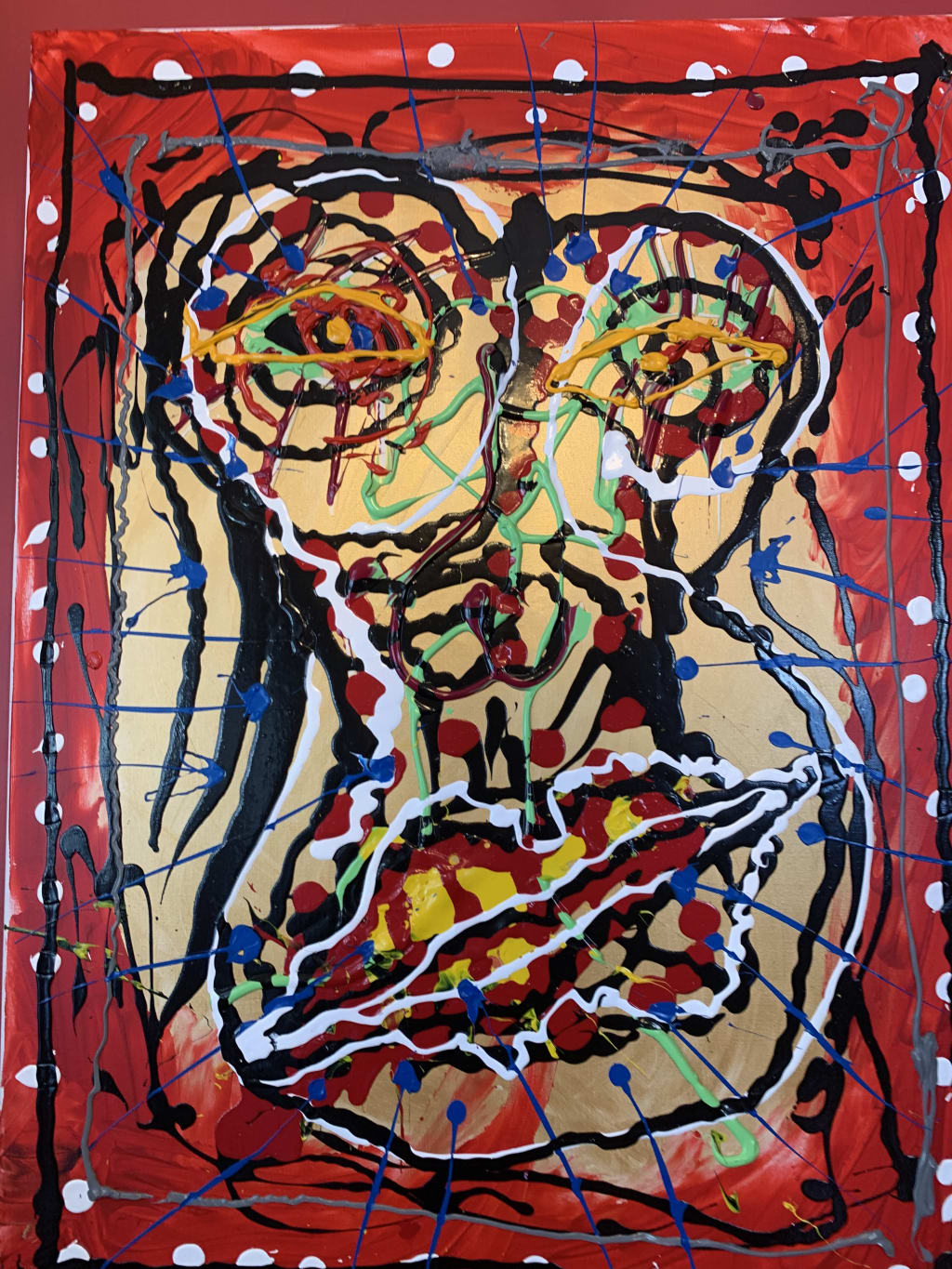
The dull glow of the slop slid under the door. Narcissi and Amantha sat, looking at it. A little glow in the absolute black. Just enough to illuminate itself but nothing around it. Just enough to let you know it was there and when it was gone. It was the only light Narcissi had seen in five years. It dawned on her she didn’t even know where she was. Was she miles underground or were there trees and sunlight just through the back cement wall?
“I want you to have this.”
In the darkness a thump hit Narcissi’s leg. A little notebook, pure black in the darkness of the lightless prison cell.
“What is it?”
“Keep it. It’s where some money I hid is. I stole it from my husband.”
“Okay.”
“I won’t get out, you know. They keep on sending hit men to kill me, and I keep on killing them. Every time I do, they tack more years on to my sentence. I either live in here, or get killed in here, so I have no use for the money.”
“Amantha?”
“Yes?”
“Do you know where we are?”
“What do you mean?”
“Like, what state? Are we underground? Or is this jail a huge complex of cement in the desert? It just dawned on me, that I have no clue where I am.”
“I don’t know either. I think it’s a giant complex, like you said, and we’re twenty boxes of cement deep inside of the complex.”
“But wouldn’t it be strange if the world was just beyond six feet of concrete. On the other side of one of these walls.”
“That’s torture to think about.”
“But also, kind of beautiful.”
“It’d be a twisted joke, but yeah, in a way.”
“What do you think dying will be like, when they come for you?”
“Probably painful.”
Narcissi didn’t reply. When they did not speak, neon black was the only thing they noticed. They listened to each other breath and felt the rough fabric of their beds. The two cans of bioluminescent food liquid still sat at the end of the cell. Neither one moved towards it. It felt like a tiny moment and a colossal one at the same time. How many days had they sat in the same position, in the same all-consuming darkness, and felt this way? It was the emotionally neurotic feeling that being trapped in complete darkness gave. Narcissi, years ago, fantasized seeing the sun again, and people’s faces and buildings. But now, an overwhelming anxiety took hold of her at the thought. A thrashing fear of darkness.
Months went by in the darkness. It was soon now; in a couple days they would release her. Six years, seven months, and three days Narcissi Medicus was incarcerated in darkness, locked in a single ten by ten room, and fed liquified slop.
“Name.”
“Narcissi Medicus.”
“Do you have someone to pick you up?”
“Where are we?”
“Just north of New Orleans. About twenty miles from the city.”
Jesus, she thought, I’ve been twenty miles from home this entire time.
“No. I’ll walk.”
“Your clothes are in that box. Put them on.”
“Can I have some privacy?”
“You’re not a free woman until you’re on the other side of the cement. Put your clothes on and put ours in the same box.”
The slurking dope slaves whizzled through the dyspiphany labyrinthine of towering cement living sepulchers gorged on Wizard of Oz bodies sleeping in poppy field dreams. People trading in nightmares for waking insomnium, amorgue-hearted death junkies with malevolved insextual like bug eyes and dopamanic brains perverted through the streets howling Ginsburgian poetry through Black Tongues and Flaming Lips. Cockroaches skittered and skattered like squirmy epileptic pinballs. Flies swarmed and swamped the air in buzzing zurriud black clouds like coked-out chainsmokers crawling the walls in frenzied putridness.
The Orwellian Social Machines surrounded every crusty corner of the earth, oozing through masks of sarcasm to the real faces of sardonic Columbine minds, pineal glands pried open like A Clockwork Orange eyeball to the subhumanoid skum of the city. The colossal Hitchcockian grey cement buildings loomed. North Korean Brutalism style architecture, odd towering cement buildings with jutting edges and nonsensical angles as if made by giant molds and designed by Howard Roark. Hundred story tall slices of cement pyramids with slanted-traveling elevators of glass up each outside edge of the triangle of tinted skyscraper glass and grey concrete. Glass cubes sprung from the walls and hung from the flat cross sections of the pyramid slices in checkerboard patterns. Spiraling cement staircases. Stacks of cement and glass boxes. Dead and industrial, but whimsical and fantasy-like at the same time. It was a fascist, institutional draconian psychedelia. But off setting the dead grey cement, were ceiling gardens full of climbing vein-like ivy and rose bushes and genetically engineered poppies containing every color of the rainbow in their petals collectively. Blooming, them, from cement windowsills and roof gardens and boxy grey decks that were built precisely stacked and symmetrical, like ladder rungs for Titans to climb to Mount Othrys. The cement buildings covered the city in a Nazi swath of grey and cold institutional gloom. Only the flowers and ivy crawling all over the titanic masses of synthetic stone brightened it to life. It had been so long since she had seen the world, that now, the Vivid Contrast of flowery crowns on the Cyclops crude cement made Narcissi feel the sensory dysphoria and cognitive dissonance of the twilight ridden Ghettropolis.
She had lost weight, a starved half-anorexia-built form bending to walk. She hadn’t taken a shower in six years, had lost weight, and had hair down to her knees, that was now in a weave up high that Amantha had done for her. Her eyes slowly adjusted to the light. The grey light in the cement box was the most beautiful thing she had ever seen. Even now, just twenty minutes out of the darkness, having a thought of going back made her mouth go dry and adrenaline pump ragged razor-wire of fear through her body. It had been so long she had forgotten how bad it really was. Being trapped without sight in a tiny cage. Six years of darkness, not even memories, but more of an achingly long nightmare that would never end. And now, it had.
She looked at the trees, and the glimmer of cars, the cacophony of the architecture. At the grey Alevolent sky. The darkness was there. Just knowing a place like the one she had spent the last seven years in existed sent guttural shivers down her spine.
It was three in the morning when she decided to stop walking and found a bridge to rest under. The prison had given her back her butterfly knife, her clothes, and nothing else.
After twenty minutes of walking car slowed down and stopped. Narcissi ran to catch up with the car.
“Get in,” the driver said and opened the passenger door. She climbed in and the car began to roll.
Narcissi left alone and walked down the street. A flyer caught her eye, a job wanted ad for blood drive workers. She snatched the flyer and kept walking.
A bus ticket to Mexico City was ninety dollars, round trip. A train ticket was two hundred and forty-six dollars. She paid for a train ticket and waited for the train to arrive. It was a twenty-two-hour long trip. She had a thousand dollars left, a flyer for a blood drive job, and a faint hope that twenty-thousand dollars really was sitting in a storm drain in Mexico City. The little black book with black pages and black cover named the street and city where the money was supposed to be.
The train ride was uneventful. Landscapes flew by. Trees and little homes and empty fields. When the train stopped at its destination, Narcissi was still asleep, but was awoken by the man getting up.
“Is this Mexico City?” She asked still half asleep.
“Yes, I believe so.”
She grunted and then got up. People were standing in the isle, trying to exit the train. She stood there, without any luggage, and waited.
“Where to?”
“Corner of Seventh Street and fifth.”
“You got it.”
The taxi began to crawl out of the mess of yellow cars and out onto the street. Buildings passed by. Big concrete Hitchcockian slabs of glass and metal and grey cement. Mexico City had become a manufacturing epicenter not long ago, and now smokestacks spewed black twirling clouds of cancerous smoke all around. The city was an industrial place. The shops were closed like cement hibiscuses for the night with metal grates over the glass shop windows. Soda cans and plastic bags like urban tumbleweeds filled every gutter and every corner of every curb, but the streets were completely frozen in a total absence of life.
“Where are all the homeless people?” She asked the cabby.
“There are none.”
“What do you mean?”
“Everybody is given a choice, work, or work in the prisons for one tenth the price.”
“How close are we?”
“About ten minutes.”
The stygian grey industrialinated earth wrapped around every side of taxi, grey boxes of immigrant slavery. All around her people screwed toothpaste caps on toothpaste bottles for sixteen hours a day for pennies. Stacks of them in endless lines. The cab stopped.
“Can you wait just down the block. I’ll be twenty minutes. I have cash.”
The man nodded his head.
Narcissi handed him thirty-five dollars and got out. It was the street corner, a dirty third world street corner; she kicked a crumpled up can of beer laying on the cement that skittered into a wet plastic bag. She looked around. The only thing she could see was chain link fence, windowless cement factories, and the smokestacks leading up to an ashy grey sky. There was something in the air, like a sour oily grit that built a layer of slimy film over her teeth. It was the ghost town of industrial revolution. She looked down the street, there was a metal manhole cover. There were two finger sized holes on each end of the round metal cover. She stuck her fingers in the holes and heaved the manhole cover up and off of the service box. She dropped it on the cement. It clattered and then sat still. She looked down into the black service box, and then sat with her legs inside of it. She dangled them around inside. Her leg hit a metal ladder. So she started to climb in, slowly, her legs going in weak tremorings from the empty void beneath her and the memory of darkness. Down. Down. Into the darkness. She could hear the skittering and skattering of sewer rats scampering around beneath her. It made her feel better. In a moments time her foot hit a solid landing, so she stood and let go of the ladder. And then there was a smaller tunnel, higher up on the concrete wall. Narcissi stood there for a second, and then reached in. There was something in there, a bag, covered in grit and spiderwebs. She stood there holding a black leather purse. She lay it down on the cement landing and unzipped it, just a little.
She whispered to herself, “Oh Jesus.”
She stood alone on the street full of oily gritty air, a creatural statuesque phantasm, with the expensive purse hung over her left shoulder. Everything was drenched in grey and brown, dirty metal fences, grey sidewalk, black asphalt, grey factories, gravel lots. All of it completed the dreary, void-of-life-stretch of industrial bleak, morgue-like landscape. Just down the street the taxi waited, and she began to walk.
About the Creator
danny glaza
I am a twenty-five-year old male who has written twenty novels. Science fiction Satires are my subject, and I write almost entirely about woman as main characters.
Keep reading
More stories from danny glaza and writers in Humans and other communities.
The CEO of Everything
They say "jack of all trades, master of none," but they forgot to mention the part where the jack of all trades is also the camera woman, the makeup artist, and the person currently yelling at a tangled Wii microphone cable in a her own bathroom while recording herself singing and trying to make it look realistic and professional. (As professional as you can make it with nothing but a cell phone camera and a mic that doesn't work)
By Sara Wilson7 days ago in Humans



Comments
There are no comments for this story
Be the first to respond and start the conversation.