
My Best Friend Died, And No One Took It Seriously
I asked for help. But everyone moved on like nothing happened.

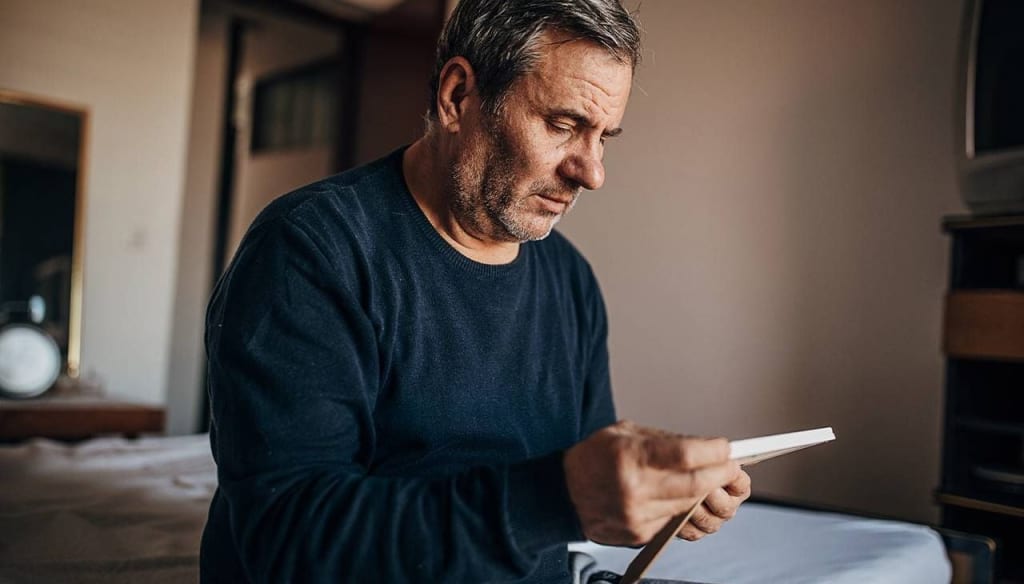
I told my therapist I wasn't sleeping. Said I'd lie in bed for hours, staring at the ceiling. Most nights, it was past three before I even started to drift off. Then I'd get up like nothing was wrong and head to school.
The office was small. Beige walls. Cheap carpet. Two chairs that didn't match. A box of tissues on the table, like she thought that would help.
My therapist didn't say much. Not really. Just looked down at her notes and nodded.
"Food doesn't taste like anything," I continued. "At lunch, I move it around until the school bell rings. I haven't eaten properly in weeks."
I took a gulp of water and told her why.
"My best friend died last month. He was hit by a train."
My therapist paused, then said, "Everyone feels down sometimes."
I thought she'd say something else. Or say my grief made sense. But she just handed me a pamphlet and said the pain would pass.
At home, I sat on my bed and read the first line. Coping with low mood: strategies for young people. It didn't mention grief. It didn't mention loss. Just said that if I stayed active, things would eventually get better.
I trusted my therapist. Thought she knew how to handle situations like this. And that it really was just a rough patch. But looking back, what hurt most wasn't what she said.
It's that I walked out thinking maybe she was right.
There was an empty seat in science class where my friend used to sit. The school never replaced it. Just left the table pushed out a little, like nobody wanted to be the first to move it.
I kept looking over without meaning to. So did a few others. Some glanced at the seat and then back down at their books. No one said anything about it. After a week or so, most of them stopped noticing. I didn't.
One of my teachers asked about a missing assignment. I told her I forgot. She looked disappointed but didn't say much.
"I'll give you extra time," she said. "You've got until Friday."
A couple of people looked over when she said it. One of them leaned in and whispered something, but I couldn't hear what it was. Someone nearby rolled their eyes. I kept my head down and waited for the bell.
That afternoon, I walked home and locked my bedroom door. Leaned against the side of my bed. I didn't cry. Didn't say anything. Just sat there, worn out, thinking how pointless it felt to keep pretending I was okay.
One of my teachers said I looked tired. I told her I hadn't been sleeping. She smiled and said, "Join the club."
At home, I didn't say much either. I lived with my mom and brother. We all had our routines. So I ate dinner, then went to my room and stayed there until I collapsed from exhaustion.
Some nights I lay on my bedroom floor with the light off. Other nights I scrolled through my social media feed. I'd look at the time, then check it again an hour later, and not know what had happened in between.
I read somewhere that nearly one in four people under 18 in the UK who try to get mental health support are turned away or dismissed. In the US, nearly 60% of young people with depression don't get any treatment.
When I read those statistics for the first time, I wasn't surprised.
I'd followed the advice. Said what was wrong. Told people I trusted. And nothing changed. So I learned to stop asking for help.
Not because things got easier.
But because no one ever asked if I was okay.
My mom called me downstairs one evening to ask about my grades. She'd gotten a phone call from school. I told her everything was fine. Said I was just behind. And that I'd catch up soon.
She looked at me for a moment and said, "Are you sure?"
I said yes.
Mom was a single parent. Always working. Always thinking about bills and how to make the money last. She already had enough to deal with. And I knew she cared. Just not in a way where we talked about feelings. So I kept it short. Said I was tired and went back upstairs.
My best friend used to text me at night. Memes, song links, homework answers. Half the time it wasn't anything important. Sometimes we didn't say goodbye. Just let the conversation fade. So out of habit, I checked my phone like something might come through.
My mom knocked on the door to tell me she was going to bed. "Need anything?" she asked.
"No," I said.
She didn't come in.
I thought about messaging someone else. Just to say I'd had a bad day. But I didn't know how to put my feelings into words. So I put the phone down and stared at the ceiling. And that night, I didn't sleep.
Just sat on the floor until sunrise and it was time to get ready for school.
I was waiting in line at the pharmacy when I heard someone say it.
"Everyone feels down sometimes."
Same words my therapist had used.
The woman behind the counter said it softly. Probably meant it as comfort. But the man she was speaking to just nodded, paid, and walked out.
I used to think the hardest part of managing grief was speaking up. And that once I said what was wrong, someone would take it seriously.
That didn't happen.
Over time, I started noticing I wasn't the only one. Others tried to speak up and got told to wait. The ones who stayed quiet got called resilient.
So what should happen then?
When a person who's struggling looks like they're okay?
No one thinks twice.
I wasn't falling apart in public. I didn't yell. Didn't break down. I just stopped sleeping. Stopped caring about the stuff I used to like. And when I told someone, they said it was normal to feel down after losing a friend.
No one said, "I'm glad you told me." No one checked in the next week. Or the week after that.
People saw me in the hallway. In class. Getting on with it. So they figured I was fine. And after a while, I started to think maybe my therapist was right.
Maybe this really was what grief looks like. Or maybe it wasn't grief at all.
What does that teach a young person?
That if they don't collapse on cue, it doesn't count?
That pain needs proof?
And that if grief is real, someone will notice?
No one tried to comfort me. And even now, I still remember what it felt like after I spoke up. The way people moved on like nothing happened.
That was the hardest part.
Not the grief.
But realizing it didn't seem to matter.
Now, when someone tells me they've lost a friend, I try not to brush past it. I stay in the conversation a little longer. Ask something else. Let them know I heard them. Most people aren't looking for answers. They just don't want to feel like they're on their own.
Even hearing, "That sounds really hard," can mean the world.
Especially if no one else has said it.
About the Creator
General gyan
"General Gyan shares relationship tips, AI insights, and amazing facts—bringing you knowledge that’s smart, fun, and inspiring for curious minds everywhere."
Keep reading
More stories from General gyan and writers in Humans and other communities.
15 Best One-Word Horror Movies of All Time, Ranked
When it comes to horror movies, some of the most powerful titles are also the simplest. A single word can evoke fear, curiosity, and unease all at once — think Scream, It, or Saw. These one-word titles have become cultural landmarks, proving that you don’t need a long or complicated name to deliver unforgettable scares.
By General gyanExclusive • 3 months ago




Comments
There are no comments for this story
Be the first to respond and start the conversation.