
‘Mank’ Is an Idiosyncratic, Cynical Look Into an Alternate History
Mank is NOT a love letter to cinema

READ THE REST OF THIS REVIEW ON OUR WEBSITE: https://moviebabble.com/2020/12/17/mank-is-an-idiosyncratic-cynical-look-into-an-alternate-history/
...
Citizen Kane. Decent flick. Odds are you were forced to study it endlessly in your Intro to Film course in college — it’s second only to Breathless among the films you were most likely to hate due to over-examination. But there’s a reason various critic groups and esteemed filmmakers typically put Citizen Kane at the top of their best movies ever lists — it’s really, really good! Kane is a touchstone of film history, one of the select few films to forever change the course of the art form. It’s a scathing satire of big business and politics, a tragic fall from grace, and a rightfully iconic character study.
However, sometimes I get the sense the conversation around Kane skews far too much into film theory and canonization instead of remarking upon how insanely entertaining it is to this day. Even putting aside the devasting drama and technical mastery, it’s a zippy blast. Charles Foster Kane dancing at a party? Absolute king shit. Susan Alexander’s singing teacher? Hilarious. A cockatoo jump scare as a scene transition? Umm, weird, but I’m here for it!
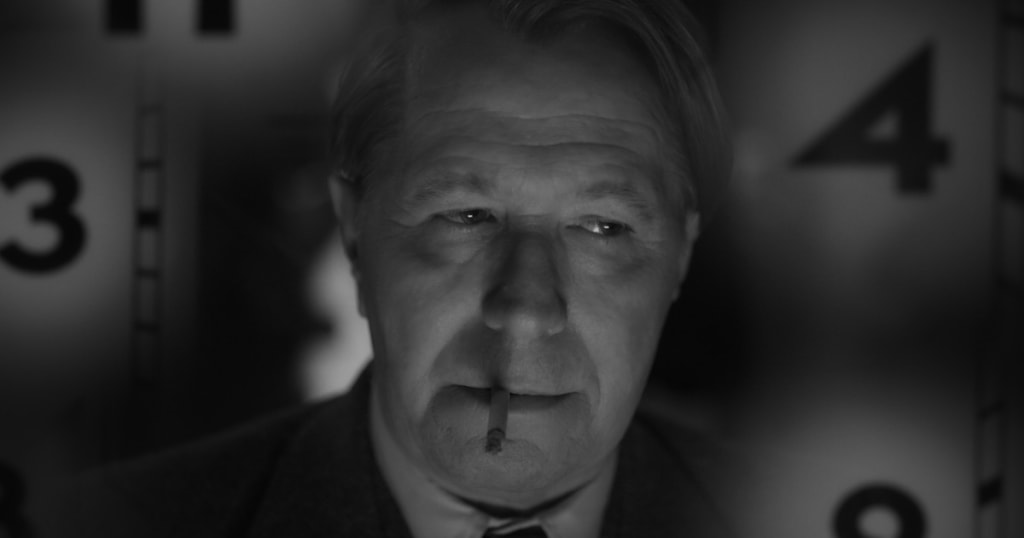
Which brings us to Mank, a movie made by a guy who also knows how to blend searing ideas with virtuosic entertainment value. David Fincher’s latest is a great companion piece to Kane, studying the life of screenwriter Herman J. Mankiewicz and his many witticisms.
A Look Into the Past(?)
But let’s get something straight: Mank is not historically accurate. It also doesn’t intend to be, which is a key distinction to make when discussing it. Based on the script Fincher’s father Jack wrote through the 90s and early 2000s, the backbone of Mank‘s story is Pauline Kael’s infamous article Raising Kane, which asserted screenwriter Herman J. Mankiewicz was the sole creative vision of Citizen Kane, and that Orson Welles wrote almost none of it.
In the many years since Raising Kane‘s publication in 1971, Kael’s essay has been debunked and criticized the world over. Peter Bogdanovich later published a rebuttal to Raising Kane entitled The Kane Mutiny, wherein he lambasted Kael’s assertions and backed his long-time friend Welles. Ironically, it later came out that Kael stole from UCLA professor Howard Stuber when writing her essay.
So, what exactly did happen? Like in many things, the truth lies somewhere in between. Mankiewicz did in fact write the initial draft, but Welles later sculpted and cleaned the script into what it became. Perhaps Kael had a few interesting ideas on auteur theory, and how ultimately, many pursuits might be more collaborative than we think, but her research was beyond sketchy.
But while Mank may start from a similar perspective to Kael’s, it never attempts to relitigate this debate. It’s not about deciding who deserves screenwriting credit, and certainly is not a feature-length essay on why Orson Welles is a hack who stole from a writer much more clever than him. He plays a part in this version of the story, but it’s pretty minimal. Put your 1000-word defenses of Orson Welles in the recycling bin; Mank isn’t interested.
Mank uses its viewpoint to explore the life of, well, Mank! (I have absolutely no data to back this up, but Mank may break the record for the most times a movie says its title.) Specifically, how key factors in his life and worldview influenced what ultimately ended up in the script of Citizen Kane, from his relationship to William Randolph Heart to the 1934 California gubernatorial race. We find Mank (Gary Oldman) in 1940 while he recovers from a car crash. His days consist of heavy boozing, dictating the script to his secretary Rita Alexander (Lily Collins), the occasional call from Welles himself (Tom Burke), and more heavy boozing. Similar to Citizen Kane, Mank then operates nonlinearly, flashing back to Mank’s time in Hollywood throughout the 1930s to show his influences for the script.
About the Creator
MovieBabble
The Casual Way to Discuss Movies! Head over to moviebabble.com to see all our content!
Keep reading
More stories from MovieBabble and writers in Humans and other communities.
Did ‘Catfish’ Open our Eyes to the Risks of Online Dating?
It’s been 10 years since the release of Catfish. Since then, we’ve watched as society’s view of internet dating has flipped. At one time, finding a partner online was essentially considered a final resort for sad and lonely people. Often this method was associated with crazy cat ladies and basement-dwelling gamer guys. Nowadays, it’s common for single people to have at least one dating app on their phone. In fact, the dating game now resembles the platforms we use for finding restaurants or searching for holidays. But for most people using these platforms, or the online arena in general, there’s always that one risk: the infamous catfish.
By MovieBabble5 years ago in Humans
Practical Tips For Singles Struggling With Commitment Fears
Fear of commitment does not manifest itself without cause. Such fears have their roots in the past heartbreak, childhood or observing unhealthy relationships during childhood in many single people. Unprocessed emotional wounds have the ability to provide protective walls. This makes the mind perceive long-term relationships as something vulnerable, lost or disappointing. Not to face pain once again, other people sabotage promising relationships unconsciously. The awareness that fear of commitment is a defense mechanism most of the times and not a personal weakness is the initial step towards effective change and emotional development.
By Grace Smith5 days ago in Humans
Tatt~Master
— Assembly Line Tatt Machine ~ Impressions to Impress — As I begin to understand more about the Tattoo Phenomenon. I've written silly, yet verbatim, dating site anecdotes in 'Frazzled.' So let me ask you: Would you be More attracted to someone slathered with tattoos, or Less?
By Jay Kantor5 days ago in Humor



Comments
There are no comments for this story
Be the first to respond and start the conversation.