
Madida a Modern Legend
Nelson Rolihlahla Mandela

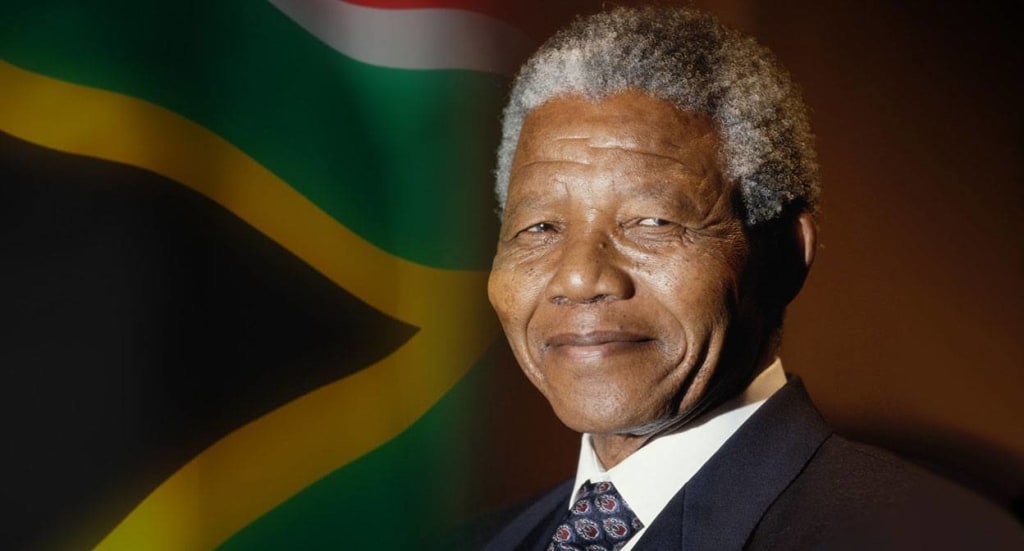
Nelson Mandela, a name etched in the annals of history, stands as a testament to the indomitable human spirit. His journey, a poignant blend of struggle, sacrifice, and triumph, continues to resonate with profound impact across generations. More than just a political figure, Mandela emerged as a moral compass, guiding humanity towards a brighter future defined by justice, equality, and reconciliation.
Born in 1918 in the Eastern Cape of South Africa, Mandela witnessed firsthand the dehumanizing effects of apartheid. This system of institutionalized racial segregation, designed to perpetuate white supremacy, permeated every facet of South African society. Black Africans were relegated to second-class citizens, denied basic human rights, and subjected to systemic oppression. This deeply ingrained injustice ignited a fire within young Mandela, fueling his unwavering commitment to dismantling the apartheid regime.
His early activism with the African National Congress (ANC) marked a turning point. The ANC, a multi-racial organization dedicated to achieving freedom and equality for all South Africans, provided a platform for Mandela to channel his growing disillusionment with the status quo into concrete action. He quickly rose through the ranks, becoming a prominent voice within the movement, advocating for non-violent resistance and civil disobedience.
However, the escalating brutality of the apartheid regime forced the ANC to adopt more militant strategies. Mandela, recognizing the need for a more forceful response to the escalating violence, embraced armed struggle as a necessary means to achieve liberation. This decision, while controversial, underscored his pragmatic approach and unwavering dedication to the cause of freedom.
His defiance inevitably led to his arrest in 1962. Convicted of sabotage and sentenced to life imprisonment, Mandela was incarcerated on Robben Island, a notorious penal colony off the coast of Cape Town. For 27 long years, he endured the harsh realities of imprisonment – solitary confinement, forced labor, and the constant threat of violence. Yet, even within the confines of this brutal institution, Mandela's spirit remained indomitable. He emerged as a leader among prisoners, inspiring hope and fostering a sense of solidarity amongst his fellow inmates.
Robben Island became a microcosm of the struggle against apartheid. Mandela, despite his physical confinement, continued to engage in political activity, utilizing the limited avenues available to him to communicate with the outside world and maintain contact with the ANC. His unwavering commitment to the cause of freedom, even in the face of immense adversity, served as a powerful symbol of resistance and a beacon of hope for those fighting against oppression.
Mandela's release from prison in 1990 marked a pivotal moment in South African history. The world watched with bated breath as this iconic figure, after decades of incarceration, stepped back onto the world stage. Instead of seeking retribution, Mandela chose the path of reconciliation. He engaged in dialogue with his former oppressors, extending an olive branch to the white minority population and emphasizing the importance of national unity. This remarkable act of forgiveness and magnanimity not only paved the way for a peaceful transition to democracy but also redefined the very concept of reconciliation.
The 1994 elections, which saw the ANC emerge victorious and Mandela elected as the first democratically elected president of South Africa, marked a watershed moment. The peaceful transition of power, achieved through negotiations and compromise, demonstrated the power of dialogue and the triumph of the human spirit over the forces of division. Mandela's leadership during this critical period was instrumental in ensuring a smooth and peaceful transition, fostering a sense of national unity and healing the deep wounds of the past.
Mandela's impact transcended the boundaries of South Africa. His message of peace, reconciliation, and human dignity resonated with people across the globe. He became a global icon, inspiring activists and leaders worldwide to strive for a more just and equitable world. His unwavering commitment to human rights, his unwavering belief in the inherent dignity of all people, and his unwavering pursuit of a more just and equitable society continue to inspire generations.
In an era of increasing polarization and social unrest, Mandela's example serves as a powerful reminder of the transformative power of dialogue, compassion, and the unwavering pursuit of a just and equitable society. His life story is a testament to the enduring power of the human spirit to overcome even the most insurmountable obstacles.
As we reflect on Mandela's extraordinary life, we are reminded of his enduring message: "It always seems impossible until it's done." His legacy challenges us to confront injustice, embrace diversity, and strive for a world where every individual, regardless of race, religion, or background, is afforded the opportunity to reach their full potential.
About the Creator
Lisa Ann Bastiaan
Fueled by curiosity and a passion for truth, I delve into mysteries, science, and human psychology. Through storytelling, I uncover the unknown, spark discovery, and ignite meaningful conversations about the fascinating.
Keep reading
More stories from Lisa Ann Bastiaan and writers in Humans and other communities.
The Crucifixion: A Moment That Changed Everything
The crucifixion of Jesus Christ, a pivotal event in Christian theology, stands as a moment that irrevocably altered the course of human history. It was an act of profound love and sacrifice, a turning point that transcended the boundaries of time and continues to resonate deeply with believers and non-believers alike.
By Lisa Ann Bastiaanabout a year ago in Humans
The CEO of Everything
They say "jack of all trades, master of none," but they forgot to mention the part where the jack of all trades is also the camera woman, the makeup artist, and the person currently yelling at a tangled Wii microphone cable in a her own bathroom while recording herself singing and trying to make it look realistic and professional. (As professional as you can make it with nothing but a cell phone camera and a mic that doesn't work)
By Sara Wilson6 days ago in Humans
What is Application Development? A Detailed Guide to 2026
Think about the last app you used today. Maybe you checked the weather, ordered coffee, or scrolled through social media during your commute. Behind each of those taps and swipes is a world of planning, coding, testing, and refining. That's application development, the art and science of building software that actually works for people.
By Supreme Technologies2 days ago in Humans
How to Succeed at the Benson Directory®
Congratulations and welcome to the Benson Directory® employee #22391! As our newest call handler, you will have the privilege of speaking with dozens of unique and interesting people on a daily basis as well as the opportunity to earn bonuses for high performance. Contained within this handbook you will find a set of ease to follow instructions designed to help you settle in to your new role and begin paving the way to success.
By S. A. Crawford6 days ago in Fiction



Comments
There are no comments for this story
Be the first to respond and start the conversation.