
Luxury Poverty
Is what we live in


We can’t afford a home, but we’ve got the newest iPhone.
We’re drowning in student debt, but still rocking designer sneakers.
We live in a crummy 2-room apartment with roommates, but we’ve got an 85-inch smart TV mounted on the wall.
It’s easy to wag your finger and say, “That’s why people are broke. They buy toys instead of saving!”
But that’s too simple.
We’ve flipped the economy upside down.
How We Got Here
It used to be that big life essentials (houses, cars, education) were within reach for middle-class families, while consumer electronics were luxury purchases.
Now, a house will crush you under a mortgage for life, while a flatscreen TV costs less than my last trip to the supermarket.
A “big purchase” meant furniture, appliances, or a family vacation every few years.
Electronics weren’t on that list. For multiple reasons, obviously. Not only for the money. But money was one factor. A computer was something schools had, not households. Because they were freaking expensive compared to average salaries.
A TV was a heavy box in the living room, not an 85-inch rectangle mounted on the wall of every bedroom, living room, and kitchen.
But over the past 30 years, the script flipped. Drastically.
Technology got cheaper and cheaper, while the basics of adult life (housing, healthcare, and education) spiraled into pure absurdity.
It’s not that people are choosing sneakers over savings accounts. It’s that the sneakers are the only flex we can afford.
Why not buy a little joy?
The big stuff feels impossible. And it is, in most cases.
We’re not going to save our way into homeownership on an entry-level salary when rent alone eats 40-50% of it. And a car payment, another 25%.
But we can drop $200 on shoes. And feel cool. For a bit.
Cheap Luxury
Flat-screen TVs, AirPods, fast fashion, even international flights at the right time of year, all of these things have dropped dramatically in relative price.
Global supply chains and mass production turned yesterday’s status symbols into today’s impulse buys.
Meanwhile, the “boring necessities” have become financial traps.
Median home prices in the U.S. have nearly quadrupled since the ’90s, in Western European countries it looks similar, or even worse.
Meanwhile, wages have barely moved in two to three decades. Some did, of course. Some industries flourish. But generally speaking… not so much.
We’re broke, because essentials are absurdly expensive.
Feels Like a Scam
This weird trade-off isn’t an accident.
It’s the outcome of an economy built on consumption, of course. We love buying stuff. And we’re constantly nudged toward the purchases that feel good right now because they’re accessible.
We’re to blame, in part.
The system prefers us to be entertained and distracted rather than stable and secure. A citizen with a paid-off house and no debt doesn’t feed the machine nearly as well as one juggling rent, loans, and a dozen subscriptions.
Luxury poverty isn’t about “bad personal choices.”
It’s the logical result of a system where essentials are rigged against you, while non-essentials are cheap enough to keep you happy (for a short while).
What Now?
There are two ways to respond to this reality:
Reject the small luxuries entirely. No sneakers, no gadgets, just beans, rice, and aggressive budgeting. Don’t think that’s plausible.
Recognize the trap, play smarter. If the economy makes the big essentials unattainable, maybe the flex isn’t the new iPhone. It’s building a small cushion of freedom wherever you can. Less debt, fewer commitments, fewer subscriptions, and more happiness in things that don’t cost money.
The Bottom Line
Luxury poverty is the illusion of wealth without the foundation of security.
It’s better than actual poverty, which we have enough of in the world. Let’s not forget that. But it’s still not great.
And I don’t see that changing anytime soon. Unfortunately.
About the Creator
Reader insights
Outstanding
Excellent work. Looking forward to reading more!
Top insights
Easy to read and follow
Well-structured & engaging content
Heartfelt and relatable
The story invoked strong personal emotions
Expert insights and opinions
Arguments were carefully researched and presented
Eye opening
Niche topic & fresh perspectives
Masterful proofreading
Zero grammar & spelling mistakes
On-point and relevant
Writing reflected the title & theme
A Historic Declaration
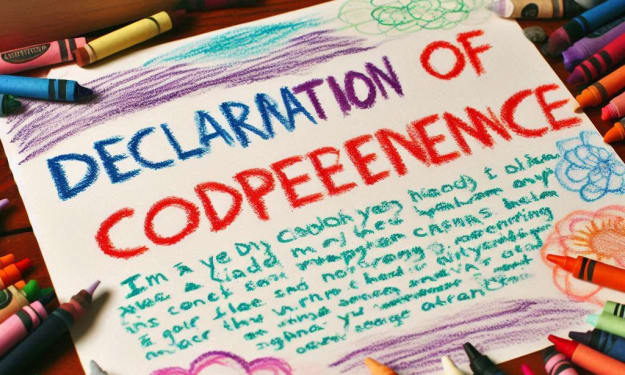
We the People of the Husbands of the United States of America, in Order to form a more perfect Union, and I mean you...with me...establish Justice, insure domestic Tranquility, provide for the common defence, promote the general Welfare, and secure the Blessings of Liberty to ourselves, after Puberty, do ordain and establish this Declaration of Co-Dependence.
By Gerard DiLeo4 days ago in Humans
Toxic Patriarchy and Divine Masculinity: Understanding the Difference
The words “masculinity” and “patriarchy” get used so often that people sometimes forget they are not the same thing. Masculinity itself is not harmful. It is a natural expression of strength, protection, clarity, and grounded presence. The problem begins when masculinity is twisted into something controlling, fearful, or dominating. That twisted version is what many people call toxic patriarchy. It is not the same as divine masculinity, which is the healthy, balanced, and life‑giving expression of masculine energy found in spiritual traditions around the world. Understanding the difference helps us see that the issue is not men or masculinity itself, but the systems and beliefs that distort it.
By Julie O'Hara - Author, Poet and Spiritual Warrior5 days ago in Humans
Review of 'Man on the Run'
My wife and I saw Man on the Run, a nearly 2-hour documentary on Amazon Prime, about Wings, Paul McCartney's group that flew around the world from shortly after The Beatles broke up in early 1970 to shortly after John Lennon was murdered at the end of 1980, making a Beatles reunion forever impossible.
By Paul Levinson2 days ago in Beat



Comments (8)
Nice job! All very true. Read, "Weapons of Math Destruction" to see how the cost of higher education has increased in the US since the 80s. I just learned last week that if you go to tech conferences in the US, when they're done, a bunch of widescreen tvs are left behind, because it's cheaper to buy a new one for $100 than it is to bring it back with you. That blows my mind. Older friends of mine have said for 25 years, "Why do you rent? Your rent is cheaper than my mortgage payment." Ok, Boomer. In order to get that house, I need a down payment, usually $20%. Unless I buy a rat-infested former crackhouse, I'll have to spend minimum $300,000 for a place, which means I need $60,000. Where in the hell am I going to get $60,000 when rent, student loans, car loans, food, and utilities have cost me every penny I make (or more, some years), even on a razor-thin budget, with no subscriptions, no vacations, nothing, since I was 23?
Luxury poverty is a real thing. Growing up, I played football with a lot of guys from poor families. They always had much nicer shoes ($300+ in 2012), phones, clothes, etc. and would give me all sort of grief about it. It’s a trap and I genuinely hope society can escape because those guys, despite being WAY less financially stable than my family, had no idea how to handle money responsibly. I think their parents must have been the same, because it was their money/public supports that bought all that junk.
Luxury poverty really flips priorities do you think it’s worth chasing small joys when the big essentials feel out of reach?
I was nervous at first - thinking you might be blaming people for their predicament, but then I was pleasantly surprised. You make an excellent point! I remember when my dad (a boomer) finally admitted that they had an easier time financially.
you are absolutely right
Great info. I was surprised to see that median home prices have increased that much since the '90s. Where did you get your information on median wages? It looks to me like they more than doubled since 1995. We need more easy reads like yours that provide insightful and useful information. Nice work!
Great article, and good points Burke. I live in the U.K. I see my daughter struggling a lot with food, childcare, and her own bills, all this while still living with me. I help her out when I can, and many say I'm not teaching her responsibility for it. However, I'd rather help her, so she can buy the things she and her kids need, rather than waste a tormenting life time trying to buy a house, because her kids need their upbringing and mum now. Time won't hold on for them.
This is spot on! 👌 💸