
Lost in Translation ( Thailand)
The Time I Accidentally Joined a Village Wedding in Thailand

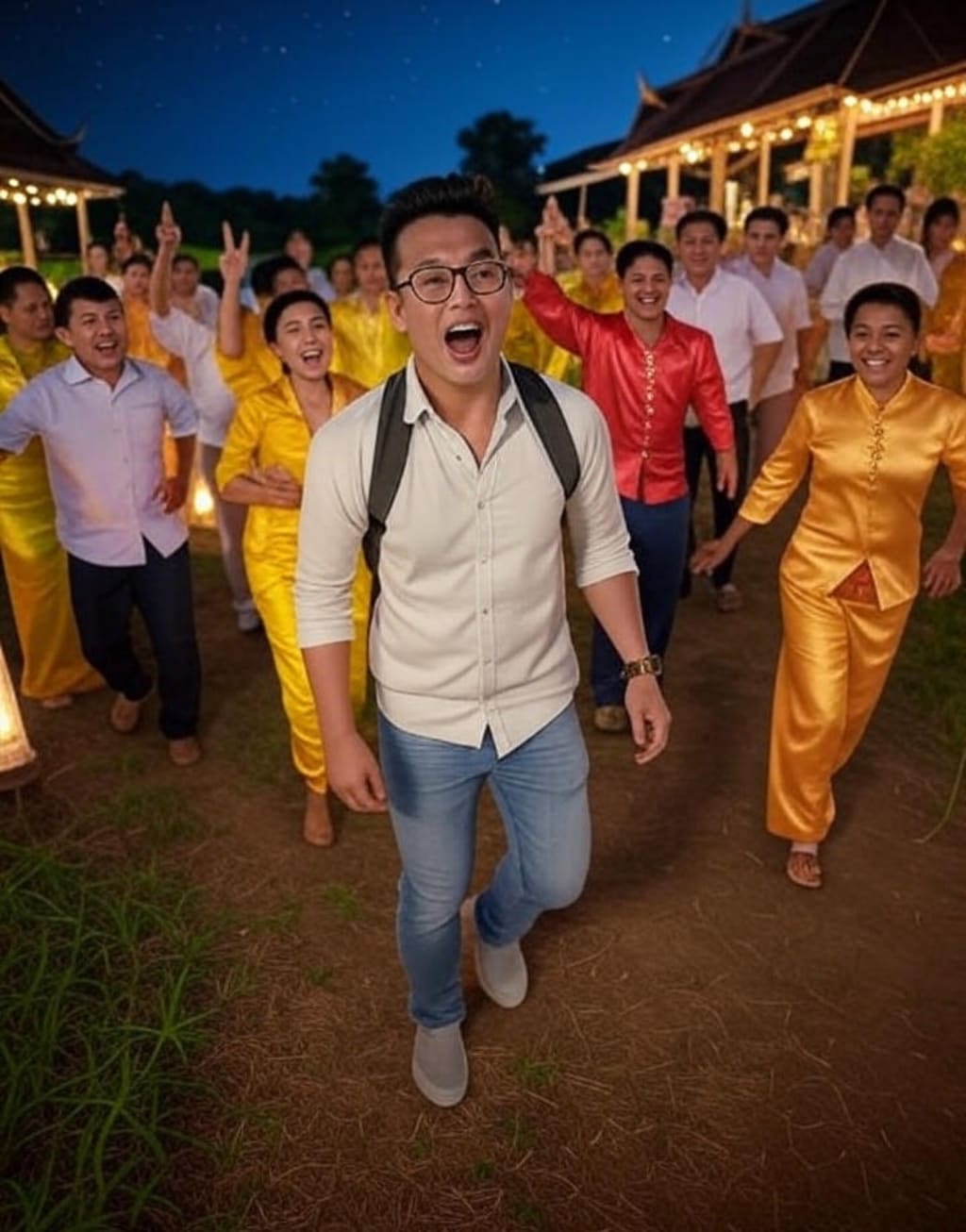
It was 6:18 AM on Sunday, jan 25, 2025, when my alarm jolted me awake in a guesthouse in rural Thailand. I’d been traveling solo for three months, chasing cheap flights and spicy street food across Southeast Asia. At 28, I was a freelance writer with a knack for stumbling into adventures, but nothing prepared me for the day I accidentally crashed a village wedding. What started as a language blunder turned into a night of laughter, feasting, and a connection I’ll never forget—a story that still makes me cringe and grin in equal measure.
I’d arrived in Ban Pae, a tiny village in northern Thailand near Chiang Rai, the night before. My plan was simple: hike to a nearby waterfall, snap some photos for my travel blog, and enjoy a quiet day off the tourist trail. The guesthouse owner, a wiry man named Somchai, greeted me with a toothless smile and broken English. “You like village life?” he asked, pouring me tea from a chipped mug. I nodded, imagining a peaceful stroll. He pointed to a dirt path behind the guesthouse. “Waterfall that way. Good luck!” I thanked him, grabbed my backpack, and set off, oblivious to the chaos awaiting me.
The morning air was thick with humidity, cicadas humming in the trees. The path wound through rice paddies, the green stalks glistening with dew. I was lost in thought, plotting my next blog post, when I heard music—lively beats of drums and flutes echoing through the valley. Curiosity tugged me off the trail toward the sound. Soon, I stumbled into a clearing where a crowd had gathered. Colorful banners hung between bamboo poles, tables groaned with food, and people in bright silk outfits danced under a canopy. It looked like a festival, and I figured it was safe to watch from the edge.
That’s when the trouble began. A woman in a pink sarong, her face painted with traditional markings, spotted me. She waved enthusiastically, shouting something in Thai. I smiled awkwardly, waving back, assuming it was a friendly hello. Before I could retreat, she grabbed my hand and pulled me into the throng. I tried to protest—“No, no, I’m just passing through!”—but my Thai was limited to “sawasdee” (hello) and “kap kun ka” (thank you), neither of which seemed to help. She laughed, dragging me toward a group of men holding garlands of marigolds. My stomach sank. This wasn’t a festival. It was a wedding.
The groom, a lanky guy in a gold-trimmed shirt, grinned as the woman—his aunt, I later learned—pushed me forward. She chattered rapidly, and the crowd erupted in cheers. I caught the word “farang” (foreigner) and “sahp” (handsome), which only deepened my confusion. Someone draped a garland around my neck, and a man handed me a glass of rice whiskey. I sipped it, the burn hitting my throat as I tried to piece together what was happening. My limited Thai and their limited English created a perfect storm of miscommunication. I thought they were inviting me to watch; they thought I’d agreed to join the wedding party.
Panic set in, but escape seemed impossible. The aunt, whose name I’d learn was Noi, linked her arm with mine and led me to a seat near the bride and groom. The bride, a radiant woman named Lek, giggled behind her veil, whispering to Noi. I caught “cute farang” and blushed, realizing I was the entertainment. The groom, Preecha, clapped me on the back, offering another whiskey. “You friend now!” he declared, his English halting but warm. I laughed nervously, raising the glass. “Uh, sure, friend!” I said, downing it to steady my nerves. The crowd cheered again, and I was in too deep to back out.
The ceremony was a blur of rituals I didn’t understand. Monks chanted under a makeshift altar, incense swirling in the air. Noi explained bits and pieces—“This blessing, good luck!”—as I nodded like I knew what was going on. I was handed a candle to light, part of a procession around the couple. My hands trembled, wax dripping onto my sandals, but the villagers clapped as if I’d performed a sacred duty. Preecha’s mother, a stout woman with a booming laugh, tied a white string around my wrist, a traditional blessing. I smiled, feeling like a fraud but touched by their kindness.
Then came the feasting. Tables overflowed with dishes—pad thai, green curry, grilled fish, mango sticky rice. I was ushered to the head table, sandwiched between Preecha and Lek. Noi piled my plate high, insisting I try everything. “Eat, eat!” she urged, spooning chili paste onto my rice. My mouth ignited, sweat beading on my forehead, but I couldn’t refuse. The villagers watched, amused, as I gulped water and fanned my face. A boy, maybe 10, offered me a coconut, and I drank gratefully, earning more laughter. I scribbled notes in my head—spiciest meal ever, worth it for the smiles—wondering how I’d explain this to my readers.
The dancing started as the sun dipped, casting a golden glow over the village. A band struck up, and Noi yanked me to my feet. “Dance, farang!” she commanded. I flailed, my two-left-feet style a stark contrast to their graceful moves. Preecha joined, mimicking my awkward steps, and soon the whole crowd was laughing, copying my flailing arms. It was humiliating but hilarious. A girl handed me a fan, and I twirled it like a prop, earning cheers. The rhythm took over, and for a moment, I forgot I was an intruder. I was part of it, sweat and all.
Night fell, and the real party began. Firecrackers popped, lighting up the sky, and the whiskey flowed freely. I tried to pace myself, but Preecha kept refilling my glass, toasting to “new friends.” My head spun, and I stumbled into a group of elders playing a card game. They pulled me in, teaching me a version of poker with rules I couldn’t grasp. I lost every hand, handing over coins I didn’t know I had, but they roared with delight, patting my back. “Good heart!” one said, and I felt a warmth that wasn’t just the liquor.
The turning point came around midnight. I’d stepped aside to catch my breath, sitting on a log, when Lek approached. Her English was better than most. “You not plan this, yes?” she asked, her eyes twinkling. I confessed, red-faced, that I’d thought it was a festival. She laughed, a sound like bells. “No problem. You bring luck. Stay.” I hesitated, but her sincerity disarmed me. She told me about their love story—Preecha had courted her for three years, crossing rivers to bring her flowers. It was sweet, and I felt a pang of loneliness. My travels had been solo, my connections fleeting. Here, I was wanted.
I rejoined the celebration, emboldened. I danced with Noi, who taught me a step or two, and joined a conga line that snaked through the village. Kids clung to my legs, giggling, and I hoisted one onto my shoulders, earning a round of applause. The food kept coming—grilled pork skewers, papaya salad—and I ate until I couldn’t move. A group sang a folk song, and I hummed along, butchering the tune but loving the harmony. The night blurred into a montage of laughter, music, and shared glances with people I’d never see again.
By 2 AM, exhaustion hit. I slumped near the fire, the flames casting shadows on the rice paddies. Preecha sat beside me, offering a cigarette I declined. “You good man,” he said, his words slurring. “Come back.” I nodded, too tired to argue, my heart full. Noi brought me a blanket, and I lay under the stars, the village’s hum lulling me to sleep. I dreamed of rivers and marigolds, waking to roosters crowing and the smell of fried bananas.
Morning brought clarity—and a hangover. The village was quiet, the wedding debris scattered like confetti. Lek found me, handing me water and a banana. “You okay?” she asked. I groaned, nodding. She explained I’d been a “guest of honor” after Noi mistook my wave for acceptance. I laughed, relieved they weren’t offended. Somchai arrived, chuckling when I recounted the night. “You marry now!” he teased. I waved him off, but the jest lingered.
I hiked to the waterfall later, my legs heavy but my spirit light. The water cascaded into a pool, and I sat, journaling the experience. Lost in translation, found in connection, I wrote. The wedding had been a misstep, but it opened a door. I’d entered as a tourist, left as a friend. Back at the guesthouse, I emailed my editor, pitching the story. She loved it, and I spent days writing, the memories vivid—Noi’s laugh, Preecha’s toast, Lek’s kindness.
Reflecting now, that night in Ban Pae changed me. I’d traveled for adventure, but I found community. The miscommunication was a gift, forcing me out of my shell. I’ve returned to Thailand since, but never Ban Pae—some magic is best left untouched. If you travel, embrace the unexpected. A wave, a smile, a wrong turn—it might lead to a wedding, a feast, a family. For me, it was a night of chaos and connection, a story I’ll tell with a grin and a wince for years to come.
About the Creator
Muhammad Ahmar
I write creative and unique stories across different genres—fiction, fantasy, and more. If you enjoy fresh and imaginative content, follow me and stay tuned for regular uploads!
Keep reading
More stories from Muhammad Ahmar and writers in Humans and other communities.
Chasing Sunsets and Storms
The Himalayas had always called to me, their jagged peaks a siren song for my restless soul. At 34, I was burned out—too many years in a Mumbai cubicle, staring at spreadsheets, dreaming of freedom. So I quit my job, sold my car, and bought a Royal Enfield Himalayan, a rugged bike built for the mountains. My plan: a solo ride from Leh to Manali, a 475-kilometer stretch known as one of the world’s most dangerous roads. It was June 2025, and I was chasing sunsets, storms, and something I couldn’t name. What I found was danger, beauty, and a version of myself I’d forgotten existed.
By Muhammad Ahmar 9 months ago in Humans



Comments
There are no comments for this story
Be the first to respond and start the conversation.