
Killer Wallpaper
Shadows from the Walls of Death

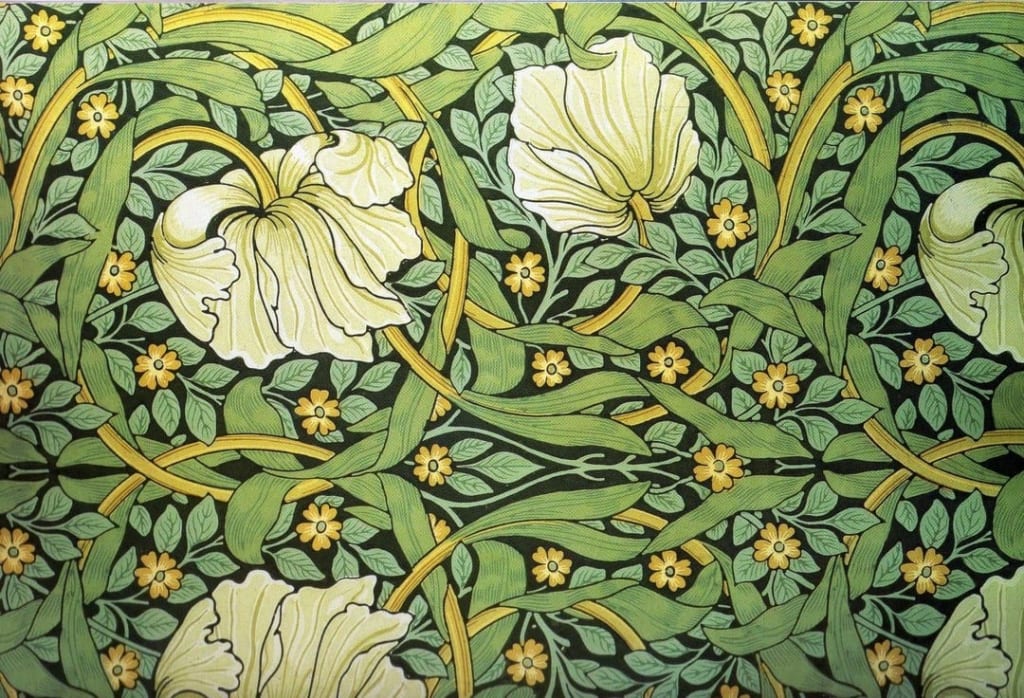
The book "Shadows from the Walls of Death." It contains 86 pages, each of which represents a sample of 150-year-old wallpaper. The compiler of the book is Robert Kedzie, who dealt with the issue of the toxicity of household wallpaper in the late 19th century. During that time, wallpaper was colored using pigments that contained arsenic compounds.
According to the American Medical Association, from 1879 to 1883, approximately 60% of all wallpapers in American homes were painted with arsenic-based paint. The arsenic-based dye gave a beautiful green hue to the wallpaper designs and was inexpensive.
The poisonous paint easily rubbed off the wallpaper and became fine dust particles that could be inhaled, ingested, and so on. In 1862, in a wealthy house in the Limehouse district of London, a child died. A few weeks later, another child died in the same house. The doctors sympathetically shrugged it off as diphtheria. But when a third child died in the same house after a few days, the doctors nervously exchanged glances. They were standing in a typical children's room: a box of toys against the wall, the now-empty beds neatly made, and the wall adorned with bright, vivid green wallpaper with intricate patterns...
Queen Victoria's subjects were obsessed with design. No other era had witnessed such an affinity for things, frills, and layers. "If you have a toothpick, it must have a case. The toothpick case must be stored in a lockable box. The box should be hidden in a locked cabinet. To prevent the cabinet from appearing too bare, it must be adorned with intricate carvings—every free centimeter—and covered with an embroidered coverlet. To avoid excessive openness, it should be filled with figurines, wax flowers, and other nonsense, preferably topped with glass domes" (Tata Oleynik, Maxim magazine).
With such a setup, even the most shameless walls couldn't remain bare, especially after kerosene lamps were introduced into affluent homes in the mid-19th century. They illuminated the rooms much better than candles, and thus the rooms had to be adorned accordingly. Wallpaper production boomed, and wallpapers of bright green color were particularly popular. They were produced, for example, by William Morris' enterprise, a former Pre-Raphaelite and now a successful decorator. Everything was going well until the mentioned children's deaths in Limehouse and the subsequent series of articles in The Times.
An author who called himself S. Tradalec claimed that the secret behind the vibrant color of fashionable emerald wallpapers, so beloved and coveted by the English, lay in arsenic. The concentration of poison in a meter of wallpaper was so high that it could kill an entire healthy family, provided the family spent enough time in a room with poisonous wallpaper. And the Victorians, with their fears of drafts, fog, and fresh air, were avid fans of spending hours in rooms with tightly closed windows. Thus, by locking themselves in rooms with green wallpaper, the Victorians were inhaling arsenic fumes with every breath.
The process of poisoning by the volatile poison was long and agonizing. The symptoms of arsenic poisoning were extensive, including abdominal pain, suffocation, nasal congestion, and general weakness. Doctors, unaware of the poisoning, diagnosed various illnesses and gave the standard advice of the era: rest more. Where? Even on this chaise longue, in this very drawing-room. You see, the wallpaper here is so beautiful, green, new, and fashionable.
But even after the exposure of the killer wallpapers, most people preferred not to believe rumors about their insidious nature. One can understand them—once you've done a renovation in your life, you know how unwilling you are to peel off new wallpaper and start all over again! The nation only came to its senses when Queen Victoria ordered the removal of green wallpapers from several recently renovated rooms in Buckingham Palace in 1879. Ultimately, wallpapers made with arsenic were banned on the eve of the new century.
Only two copies of the book "Shadows from the Walls of Death" have survived. One of them is housed in the library of the University of Michigan. The book is kept in a special collection of the library and is placed in an airtight container. In addition to that, each page is treated in a special way to prevent arsenic poisoning. Readers who want to flip through the pages of the book "Shadows" must first wear thick rubber gloves.
About the Creator
Keep reading
More stories from StoryScribe and writers in Humans and other communities.
The Strangest Laws in the World That Will Make You Smile.
Throughout history, governments have enacted laws to regulate society and maintain order. While most of these laws are necessary, some laws are peculiar, unique, and downright strange. These laws often leave people scratching their heads and wondering how they can possibly be enforced. In this article, we will look at some of the strangest laws from around the world.
By StoryScribe3 years ago in Humans
Thief In The Night
To the thief in the night that took and replicated what once was mine: Honestly, I feel kind of bad for you. It’s funny, because we hardly know each other. I only know of you through the magazines you’ve written and the broadcasts you have televised in the past — as well as through the public mentions of you from your show business connections there.
By Snarky Lisa7 days ago in Humans
How To Manage Dating Disappointment While Staying Open To Love
Dating disappointment is a frequent occurrence that comes as a result of being rejected, having an incompatibility of expectations or even failure to meet emotions. The rejection or repression of these emotions may further exacerbate stress, anxiety, and insecurity thus being less inclined to be open to new relationships.
By Robert Smitha day ago in Humans




Comments
There are no comments for this story
Be the first to respond and start the conversation.