
It is expensive to be poor
wealth disparity and its impact on the lower middle class
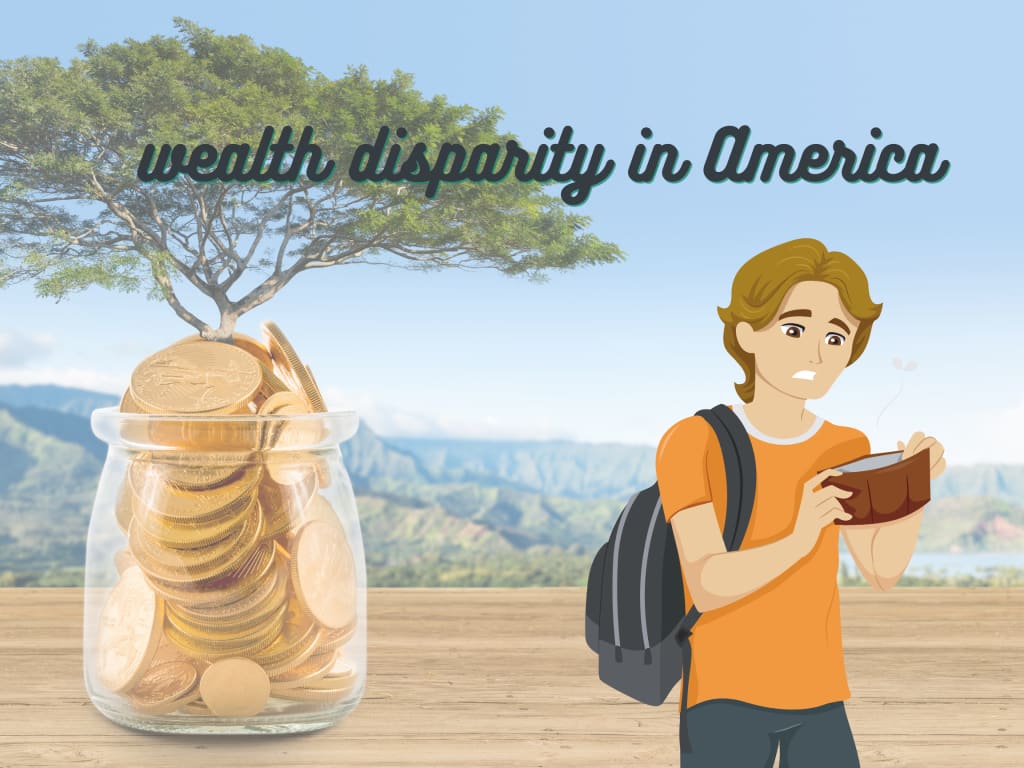
It is expensive to be poor.
Wealth disparity in America, never mind the world is a hotly debated topic, but what the people with money don't realize is that it is expensive to be poor.
Sure - on paper it is a great idea to talk through all the ways to save money. Buy the more expensive sneakers that will last 5 years instead of the $20 ones that will last you maybe 2 years. Save 30% of your paycheck and live off of 70%. Have no debt. Work your way through school.
They call it the American dream. But the reality is so much harsher than that. Sure, the $150 sneakers may last you 5 years and in the long run, may be more cost-effective than buying a new $20 pair every year. But what happens when you only have $20 in your account and no shoes to wear? You are forced to buy the shoes you can afford at the moment. Saving 30% of your paycheck means you have to decide whether you can eat or not at the end of a pay period. Putting away 30% of a paycheck assumes that you are making a liveable wage on just 70% which is a luxury many hourly employees are not able to do. There is not a single state within the US where a minimum wage employee can afford an apartment to rent on their own.
Then there are the banks. You have to have credit to get credit and there is very little to no support for people who are looking to build credit. Banks often have fees for both overdrafts and monthly maintenance. Where is the logic in someone being able to pay $35 when they weren't able to pay whatever the attempted charge was in the first place? Monthly maintenance fees show that the wealthy are given an advantage over the poor. If I don't have $25,000 (you read that right) in my savings account I am charged a fee every month of $5. So - I don't have a savings account. The same goes for my checking account - if I don't have a balance of $3000 - I get charged a fee. It is costing me money to not have money.
The Dave Ramsey method of having no debt at all assumes again that the purpose of debt is to spend outside of your means. and while technically that is the definition, what isn't considered is the full scope of WHY people go into debt.
For example, since the housing crash in '08 we have created a job market that demands college degrees but there is no real support or help to obtain one. There is work-study, but that is so competitive that it is nearly impossible to secure a job - I applied for 328 work-study jobs in college and I got a grand total of.....1 interview. and no job offers. Then the suggestion that always follows is - get a job off-campus. but how is that possible with no car when the closest non-campus employment is 3 miles away? What about students who don't have the ability or finances to afford public transit or walking to work. It is a vicious cycle of "if I just had XYZ then I would get the jump start that I need to start working" - It isn't the lack of desire or work ethic that leads to student debt. It is the lack of equal opportunity to funding for something that has become a societal mandate to achieve.
Poverty, wealth disparity, and generational hardships have led to this crisis. Where it is too expensive to be poor. and there is almost no help to be found. We need federal reform. Reparations need to be paid. College funding needs to be maintained and enforced. The system needs a reset.
So stop telling poor people that the reason they are poor is that they don't save well and start realizing and speaking out that the financial and economical systems are stacked against them. In a nearly impossible to break cycle.
About the Creator
Keep reading
More stories from writers in Humans and other communities.
Cabin Fever Because of Snow, Sleet, and Freezing Rain That Turned to Icy Roads
What Is Cabin Fever? The short answer is that cabin fever is restlessness from being in a confined area. Cabin fever is the distressing irritability or restlessness experienced when a person or group is stuck at an isolated location or in confined quarters for an extended time. Research shows that prolonged cold, gray skies, and being stuck indoors can trigger mood shifts similar to “winter blues.”
By Margaret Minnicks8 days ago in Humans
The Part of Me No One Knows
There are things you learn to bury so deep that they almost stop existing. You walk, you smile, you do what you’re supposed to do… and no one notices that inside you’re carrying a weight no one ever sees. I’ve been like that my whole life: strong on the outside, silent on the inside.
By Lydia martineza day ago in Humans
The Lesions of Devotion
Every day I set myself down on the freshly cut lawn and strip myself bare. I take my guitar and finger the frets and pick at the strings, listening for dissonance. My life is dissonance. I twist the tuning pegs until each string sounds bright. Then I kneel, calves pointing behind me, kneecaps facing forward. All exposed to the breeze. I close my eyes and play the melody.
By Paul Stewarta day ago in Fiction
~ Fired ~
— Ai Intrusion ~ Are you Next ~ Is Ai Evolution after your job? — Few workplaces haven't been affected. Ai is in supermarkets, at doctors' offices, and even monitoring farms. I just can't think of anything this machine is not getting into, can you? For instance: Education ~ Law and Tech jobs will one day have a major influence or be taken over by these inanimate machines, with accuracy and vigor. From mechanics' diagnoses to a wide variety of everyday jobs, including fast food workers, with this input having the ability to cut their unnecessary work hours. I'm certain all of us have been touched by this with our short stories and colorful headings, have you? Even comments are very questionable 'Non-Robot' insertions.
By Jay Kantor7 days ago in Journal


Comments
There are no comments for this story
Be the first to respond and start the conversation.