
Is the Crowd Too Loud?
The Effects of Population Density and Noise

The physical environment which surrounds each person will obviously vary according to their geographical location. While some prefer rural sparsely populated areas, others go for the inner-city urban lifestyle, jam-packed with people and activity. In fact, a vast number of individuals identify their primary environment to be urban or metropolitan-like, whether by preference or necessity.

Urban environments can range from small towns to large and complex cities. Urban environments are often considered attractive environments as they offer positive incentives including health and educational facilities, infrastructural aspects such as public transportation and advanced forms of communication, and many of the modern conveniences human beings have come to rely on in the 21st century.
However, because these urban environments tend to attract a large amount of people, they are subject to unattractive qualities such as increased population density and amplified noise pollution. These two environmental conditions - population density and noise pollution - often become a source of discomfort, and negatively impact urban environmental quality.
Personal Space, Privacy, and Territoriality
Environmental conditions such as population density and noise pollution are considered relative and subjective to the individual. Often times these conditions are based upon perception and psychological interpretation of what constitutes a crowded or noisy environment. Individual preferences involving personal space, privacy, and territoriality can play a major role in the specific conclusion of crowded and noise polluted environments.
Personal Space
The determination of crowding, for example, is often due the intrusion of personal space. There are a multitude of reasons as to why individuals have variations in the amount of personal space they prefer. These reasons may include cultural influence, childhood experiences, and even psychological disorders.
Furthermore, the amount of personal space preference may vary in regards to different types of people, such as being physically closer to a certain gender, or age group, or even individuals of a certain religion.
Privacy
In order to fulfill the aspects of privacy, an individual must have adequate personal space surrounding them, in which they may engage in private or discreet activities.
Privacy requirements, similar to personal space, vary from person-to-person. Also, each person may consider various activities to have different levels of privacy or discretion.
Territoriality
Territoriality often refers to a level of ownership or control over physical space and objects, as well as abstract entities such as ideas, roles, and relationships. Frequently, this degree of possession is considered a non-verbal form of communication which announces territorial claim over such items and spaces.
Humans often portray territoriality in the form of customizing and labeling spaces and possessions such as their vehicle, their residence, and even their office space; common items including a fence around their yard or a name plate on their office door can be considered forms of territoriality.
Territoriality is frequently considered an animalistic type of behavior which humans have modified; such as a dog marking his territory by urinating on it. This behavior is thought to be performed in order to signify control, possession, and ownership of spaces and items with the intention of embracing a sense of security.
Population Density Effects Personal Space, Privacy, and Territoriality
The concepts of personal space, privacy, and territoriality can all be combined into the conclusion that the majority of human beings desire individualistic areas in which they are able to express their personality and character. However, as the population enhances and becomes increasingly dense, these individualistic areas become progressively smaller and gradually infrequent. The scarcity of individualistic areas can often cause tensions to arise through the competition of attaining such rare valuables of personal space, privacy, and individual territory.

Furthermore, these tensions can frequently create a loss of social interaction within the population, as each individual may be viewed as a competitor rather than a friendly neighbor. This lack of social interaction can develop into a loss of social identity; social identity can have a direct influence upon an individual's self-image and the means in which they define themselves. Therefore, a loss in social identity could ultimately have a negative effect upon an individual's personal identity, personality traits, and behavioral patterns.
Natural Settings in Urban Environments
Scientists conclude that human beings initially existed and evolved from nature and have only recently discovered and developed urban environments. Furthermore, those which reside or work within urban environments, experience what is known as biophilia; biophilia is considered to be an innate tendency to affiliate with nature and natural elements.
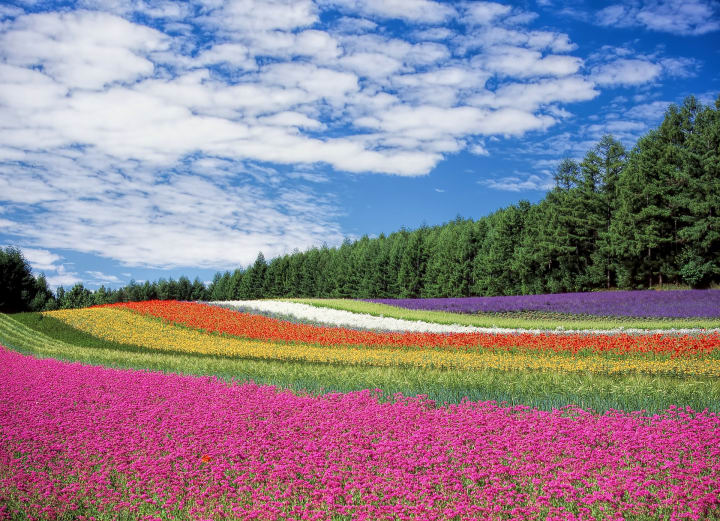
The fulfillment of biophilic tendencies can often assist in the creation of restorative environments. A restorative environment is often considered a space which promotes tranquility while decreases physical and psychological stress. Restorative environments are custom to each person and can be found in both structural, as well as natural settings. However, natural settings are often found to be more desirable and increasingly soothing than structural ones; thus, exposure to restorative natural environments may contribute to well - being and the prevention of disease and illness.
Concept and Effects of Noise within the Environment
Noise as an environmental pollutant may be found in forms such as traffic noises including honking horns, car crashes, and even 'squeaks' and 'puttering' noises from near-by vehicles.
Noise pollutants can also include dogs barking, neighbors arguing, partying, or celebrating, and even industrial or commercial sounds such as heavy equipment running and employees performing work tasks. Thus, any form of noise which is deemed irritating or undesirable could be considered a noise pollution.
Similar to any form of environmental pollutant, noise pollution can cause both physical and psychological stress. Stress can affect the physical body by developing various forms of illnesses due to the weakening and suppression of the immune system; stress often distracts individuals from providing the physiological requirements that the human body needs in order to maintain good health such as adequate sleep, proper food intake, constant hydration, and physical fitness through exercise.
Stress can also affect the brain on a psychological level similarly to the physical body, through distraction and deprivation of psychological requirements that the brain needs in order to maintain balance and stability within the cognitive and emotional areas. An imbalance in the psychological mind may develop into psychological illnesses such as anxiety and depression. When the physiological needs and psychological needs are not met the resulting behavior can often be characterized as irrational, overly or non-emotional, and/or out of character for the individual, relating both to mental and physical health.
Noise Reduction at Work and in the Home
Architectural design of a structure, including buildings and other urban environmental constructs, can either help to promote health and well-being OR encourage stress through the muffling or amplification of environmental sounds. Basic design aspects including flooring type, such as wood or tile, as well as increased ceiling height can affect amplification and intensification of sound within the structure.
Furthermore, the use of insulation and sound absorbent flooring, such as carpet or area rugs, can help to reduce general noise pollution.
Final Thoughts…
In conclusion, population density and noise pollution can evidently be labeled as sources of discomfort and negativity; although, while both are apparently on the rise in many urban settings, neither one of these environmental stressors are considered unmanageable or impossible to handle. Population density and noise pollution are considered side-effects of progress and development. Therefore, in order to avoid these by-products of urban life, perhaps the best medicine is to get back to nature and restore oneself for the journey ahead.

References
Brown, G., Lawrence, T. B., & Robinson, S. L. (2005). Territoriality in organizations. Academy Of Management Review, 30(3), 577–594. doi:10.5465/AMR.2005.17293710
Deckers, L. (2010). Motivation: Biological, psychological, and environmental (3rd ed.). Boston, MA: Pearson/Allyn & Bacon.
Ellemers, N., Spears, R., & Doosje, B. (2002). Self and social identity. Annual Review of Psychology, 53, 161–86. Retrieved from http://search.proquest.com/docview/205797155?accountid=458
Koenig, J., Walker, C., Romeo, R., & Lupien, S. (2011). Effects of stress across the lifespan. Stress (Amsterdam, Netherlands), 14(5), 475–480. doi:10.3109/10253890.2011.604879
Steg, L. (2013). Environmental psychology: An introduction. Hoboken, NJ: Wiley-Blackwell.
**Please be sure to subscribe to my Vocal page. Your support is GREATLY APPRECIATED!!**
About the Creator
Megan Bald
Medical Professional turned writer.
Keep reading
More stories from Megan Bald and writers in Humans and other communities.




Comments
There are no comments for this story
Be the first to respond and start the conversation.