


Introverted individuals, also known as introverts, are people who tend to gain energy from being alone and can become easily overwhelmed by too much social interaction. This trait is often in contrast to extroverts, who gain energy from being around others.
The concept of introversion was first introduced by Carl Jung in the early 20th century. Jung believed that introversion and extroversion were two of the four basic psychological functions that make up a person's personality. He also believed that everyone had a natural inclination towards one or the other, but that both were necessary for a well-rounded personality.
Introverts tend to be more reflective and introspective than extroverts. They often enjoy solitary activities such as reading, writing, and thinking. They also tend to be more reserved and prefer to have smaller, more intimate social gatherings rather than large parties.
Despite the stereotype that introverts are shy or socially awkward, this is not always the case. Many introverts are perfectly capable of socializing and can be quite outgoing in certain situations. However, they may need to recharge after social interactions and may prefer to have time alone to process their thoughts and emotions.
Introverts can be found in all walks of life and can excel in a variety of careers. They are often creative, independent thinkers and can be highly productive working independently. They can also make great leaders, as they tend to be good listeners, and are able to think deeply about issues.
Introverted individuals are unique individuals who possess a different set of characteristics and personality traits compared to extroverted individuals. They should be valued and respected for their strengths and contributions to society, and not judged based on stereotypes. It is important to understand and appreciate the diversity of human nature, and to recognize that both introverts and extroverts have their own unique strengths and weaknesses.
In their respective fields, despite the common misconception that introverts are less successful or less capable than extroverts. Many introverts have achieved great heights in their careers and have made significant contributions to society.Some notable examples include:
- Albert Einstein, a theoretical physicist and one of the most influential scientists of the 20th century. He was known for his introverted nature and often preferred to work alone on his theories.
- J.K. Rowling, the author of the Harry Potter series, is also known to be introverted. She wrote the first Harry Potter book in solitude, and took inspiration from her own experiences of feeling like an outsider.
- Mark Zuckerberg, the co-founder and CEO of Facebook, is an introvert. He has spoken openly about how he prefers to work in a quiet environment and how his introversion has helped him in his work.
- Bill Gates, the founder of Microsoft, is also an introvert. He has spoken about how his introverted nature helped him to focus on his work and be more productive.
- introverts like Steve Wozniak, co-founder of Apple, and the founder of Amazon, Jeff Bezos.
These individuals have demonstrated that introverts can be highly successful in their chosen fields, despite their preference for solitude and quiet environments. They have used their introverted traits such as focus, deep thinking, and independent thinking to achieve their goals. They prove that introverts can be just as successful and accomplished as extroverts, and that society should value and celebrate the diversity of human nature.
It's clear that introverts can achieve great heights in their fields and make significant contributions to society. The key to success for introverts is to understand their own strengths and limitations, and to use them to their advantage. Introverts should not be discouraged by the stereotype that extroverts are more successful or capable, as many introverted individuals have achieved great things throughout history.
About the Creator
A Historic Declaration
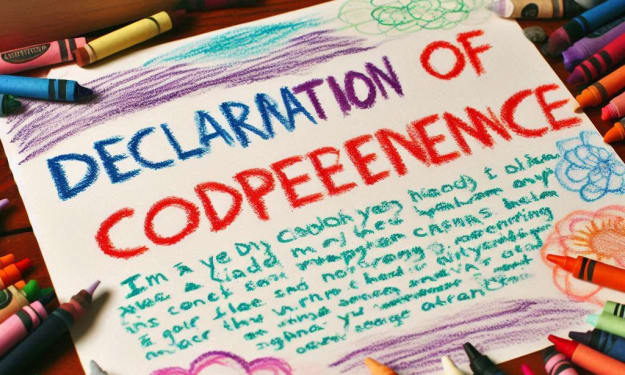
We the People of the Husbands of the United States of America, in Order to form a more perfect Union, and I mean you...with me...establish Justice, insure domestic Tranquility, provide for the common defence, promote the general Welfare, and secure the Blessings of Liberty to ourselves, after Puberty, do ordain and establish this Declaration of Co-Dependence.
By Gerard DiLeo6 days ago in Humans
iPhone 17e: A Quiet Shift in Apple’s Future
Every year, people wait for the next iPhone as if it carries a promise. A promise of better photos. A promise of smoother performance. A promise that this small object in our pocket will feel just a little closer to what we need. The conversation around iphone 17e feels different. It is not only about speed or camera numbers. It is about direction. Where is Apple heading? Who is this phone truly for? And why does the name itself suggest something slightly unexpected? The iphone 17e has sparked curiosity long before release, and that curiosity reveals something deeper about how we see technology in our daily lives.
By Muqadas khanabout 24 hours ago in Humans
Review of 'Man on the Run'
My wife and I saw Man on the Run, a nearly 2-hour documentary on Amazon Prime, about Wings, Paul McCartney's group that flew around the world from shortly after The Beatles broke up in early 1970 to shortly after John Lennon was murdered at the end of 1980, making a Beatles reunion forever impossible.
By Paul Levinson3 days ago in Beat



Comments
There are no comments for this story
Be the first to respond and start the conversation.