
Inside An Architect’s Jungle House With A Beach
Best Family Retreat | Architecture Ideas

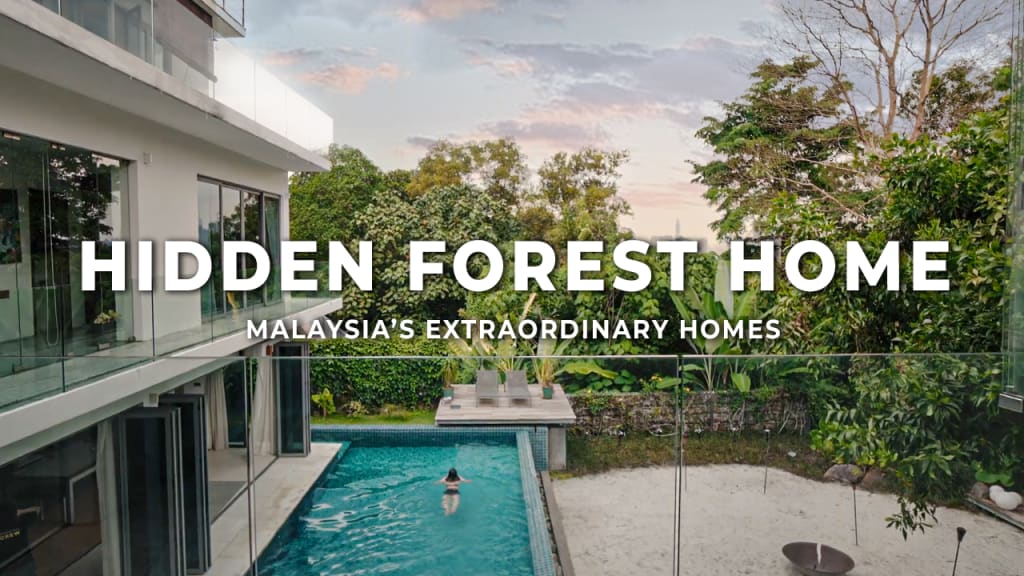

Tucked behind a veil of greenery, this home doesn’t immediately announce itself. In fact, the entrance is almost hidden. Here, architect Martin Haeger from HL Design Group has crafted a sanctuary for his family—a home that embraces the jungle not just visually, but experientially. Nature seeps in through frameless glass doors, and the home feels intimate and cradled by the forest, as if nature had quietly claimed it.

“Actually, we’ve lived in Bukit Antarabangsa for the last 30 years, and I discovered this place about 15 years ago. It was essentially all jungle—very overgrown. No one would even know that there was a site here. The first impression when I saw this place was, we’re living in the jungle, and yet we’re literally 10 minutes from town. So, the idea for me was to create a place that gives us ultimate privacy. If you look at the orientation of the two houses—even though we literally have a neighbour right next door—we’re not even aware of their presence.”

“Most people wouldn’t be aware, but there are two separate bungalows on the same site. As we were building this, our kids were 16 and 18, almost ready to leave home. So we thought, there was no point in building a single huge house. Instead, we built two—eventually for both of them. One house for each daughter.”

“We then thought about naming the houses after them. Their names are Ji Xian and Ji Yue. Ji Xian means “calm after the rain,” and Ji Yue means “happy after the rain,” which felt appropriate for the atmosphere we’ve created here.”
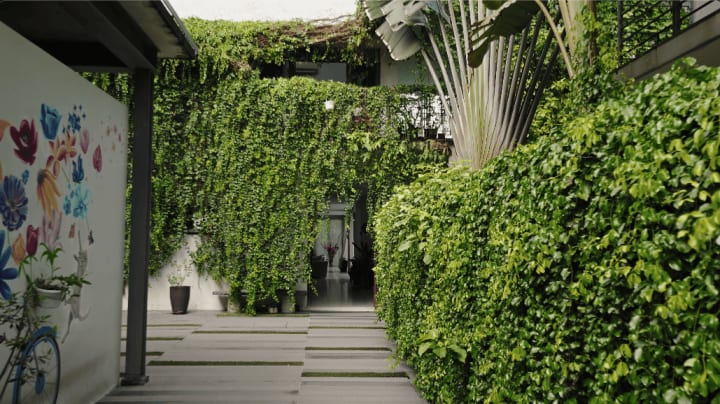

“As I started placing these pavilion elements, the idea was to draw people into the house. You enter by the pond, move through the kitchen, and are led directly to the poolside. You wouldn’t imagine creating a site shaped like this, but it actually benefits the property. All of the landscaping you see here was done by my wife. She’s an artist and has a deep love for gardening and landscaping. Over time, it’s taken on a life of its own. Some of the plants bloom in bright yellow twice a month—it’s absolutely amazing.”

Step past the greenery and you’re welcomed not by a grand foyer, but by a sense of calm restraint. A long hallway draws you in. To the right, a series of stone slabs float across a koi pond—leading you not just to the dining area, but into a different rhythm altogether. It’s a transition from the outside world to something softer, more deliberate. Where every step feels designed to slow you down.

“For those who love biophilic design, the natural pond and stepping stones make a strong first impression. We actually bought an entire block of granite and had it split-cut. The process involves creating a split line, then hammering it until it naturally breaks apart. I love visiting waterfalls, jumping across river stones in the jungle, so that inspired the idea of stepping stones across water.”
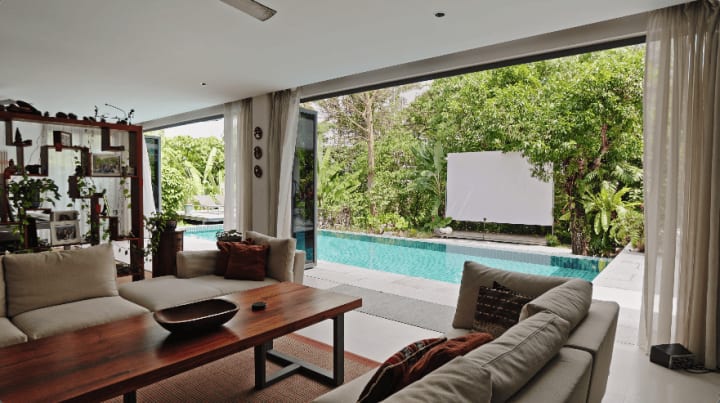
The living room feels warm and inviting, brought to life with bursts of colour from paintings by Martin’s wife, Pei. Her vibrant art adding a personal touch to every corner.
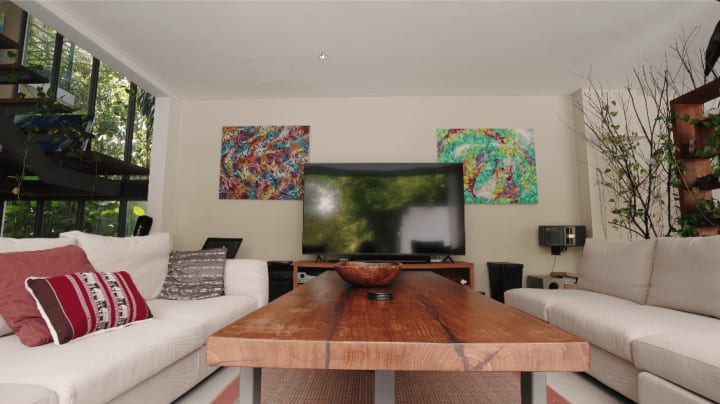
“Interior design isn’t really my strength—that’s where Pei really shines. All the artwork you see is hers, and she’s also created little installations. She’s brought the outdoors in, adding warmth that the house didn’t originally have.”
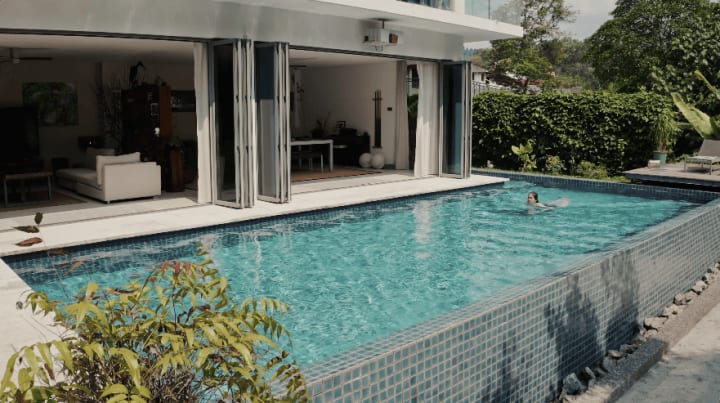
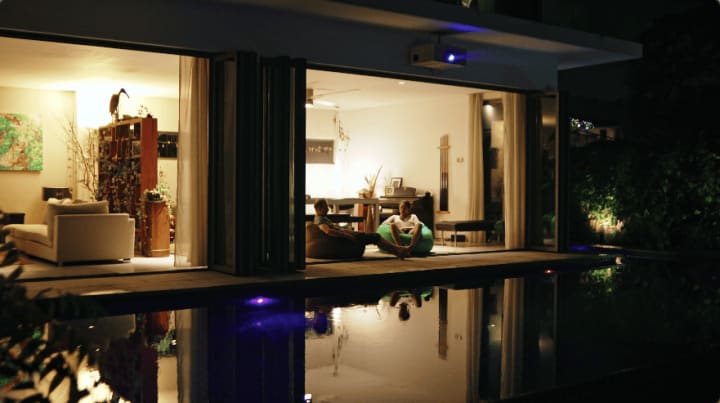
From the living area to the dining space and entertainment zones, everything orients around the pool. With the sliding glass doors and the choices in material, the pool becomes an extension of the indoors—blurring the boundaries. Just beyond the pool’s edge, the home opens up to something unexpected—a stretch of sand, a personal beach. A level below, the man-made shore becomes a gathering space for bonfires, barbecues, and barefoot evenings under the stars.

“The pool at the centre of the house brings a sense of relaxation. Its overflowing edge gives off the calming sound of water. I’ve always loved the beachside, so I wanted to build a beach in the garden. Not everyone in the family was thrilled, but we did it. I love the idea of sitting by a bonfire, playing guitar on a beach.”

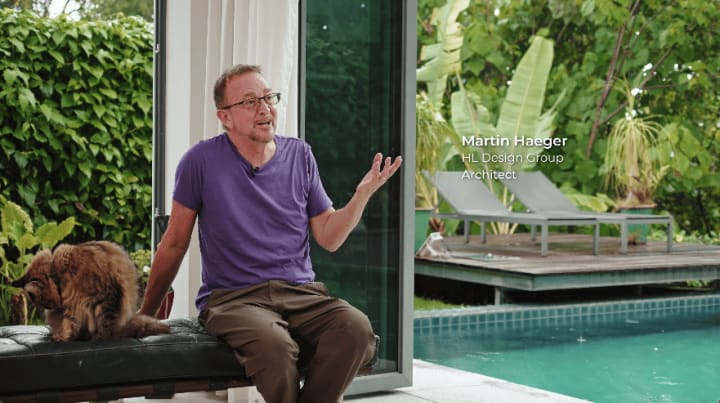
“The original land sloped down about 10–12 meters diagonally across the beach, so we had to import a significant amount of earth to level it. We also installed irrigation underneath for drainage. And that guy over there—our cat—now treats it as the largest litter box in KL.”


“As for the staircase, I would’ve loved to design it with no handrails, but of course, safety comes first. The materials—galvanized steel and natural finishes—allow it to integrate seamlessly with the surrounding nature.”

“This upper terrace was originally designed to be completely open—no glazing. It was supposed to feel like an outdoor balcony. You can see the bedrooms step up, allowing for that exposure to rain. But practically speaking, the honed granite floor got too slippery, so we added sliding folding doors.”

“It was ambitious to do frameless folding on this scale, but it worked—and it’s lasted more than 10 years. The whole idea was to blur the line between indoors and outdoors, always maintaining a connection to the forest.”

Upstairs, the master bedroom unfolds, framed entirely in glass, with sliding doors that open to the forest.

“Now, this is the master bedroom. The floating roofs create clerestory lighting, but at night, we want full blackout. So we added both horizontal and vertical blinds. This way, we can fully open the space during the day and darken it completely at night.”
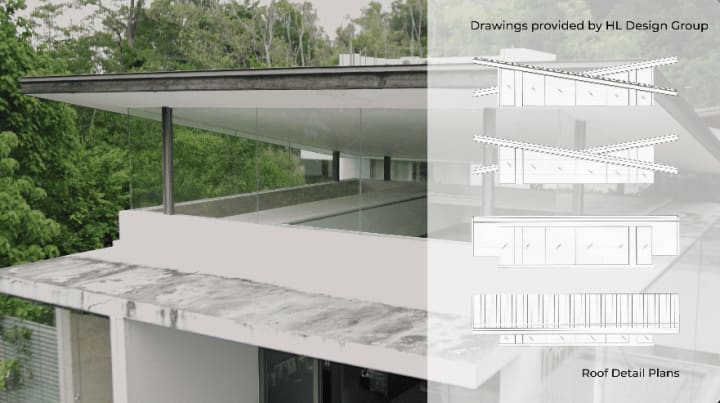
A unique aspect of the master bedroom is the pitched roof, creating a double volume impression. Here, mornings begin in the quiet. When required, sliding shutters close overhead and in front, turning the space into a cocoon of calm. It’s a room designed not just to rest—but to reconnect.

“In the tropics, rainfall is intense, so instead of gutters, the large overhanging roofs let water fall naturally like a rain curtain. It’s a design well-suited to our climate.”
The pitched roof in the master bedroom gives a double-volume impression, creating a peaceful space to reconnect. The master bathroom takes it further—a bathtub facing the forest, with folding glass doors that open to the greenery. It turns a simple bath into an immersive escape, with birdsong and rustling leaves completing the experience.
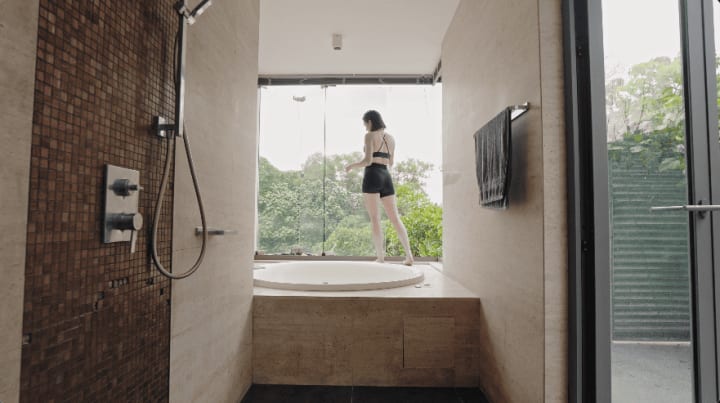

“I always wanted an outdoor jacuzzi. I designed one by the pool, but didn’t get much family support. So, I settled for having one in the master bath instead. It lets us enjoy the outdoors at night while still being indoors.”

Along the same floor, the daughters’ rooms are open, breathable, and connected to nature. To encourage cross ventilation, every room has openings on both sides—sliding doors front and back to allow breezes to pass through.
In one of the rooms, a loft bed creates a cozy nook. These are spaces designed to support independence, imagination, and a deep connection with the environment.
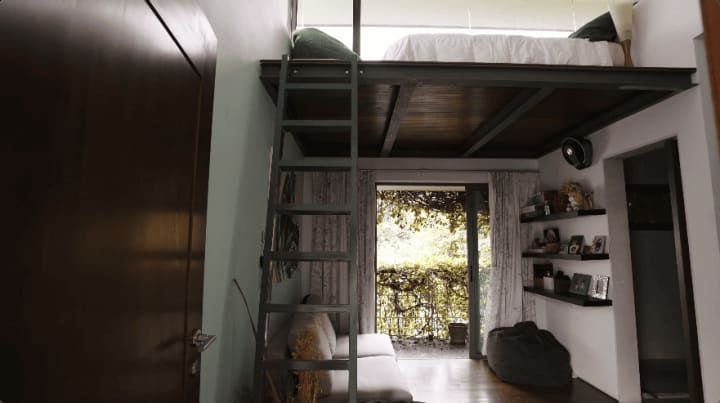

The top floor is Pei’s art studio—a world of its own, yet still connected to the home. Bathed in natural light, it’s designed for creativity.

“Originally, I imagined the top floor as my entertainment space, for gatherings with friends. But Pei quickly claimed it as her studio. That plan went out the window, but it turned out well. She spends most of her time there now—day and night. She’s even taken over the guest bedroom as a pottery room. I’m not sure which room she’s taking over next!”

“Over the years, the home has evolved. Pei is not just an artist—she’s passionate about gardening. She’s transformed both the interior and exterior of this house. Wherever there’s space, she’s growing something. She even cast the concrete and pool herself. It’s created a relaxing little ecosystem.”

“Having this property on the edge of a forest reserve is a luxury. We have the space to play, to build, to breathe. Honestly, it’s hard to imagine leaving. We’ve decided—we’re retiring here. Every time we think about taking a weekend break, we ask ourselves, where else would offer everything we already have?”


While the home feels effortless, its comfort is no accident. Every space is carefully planned for natural ventilation—from the high ceilings to the cross ventilation.

By working with the sun’s path and surrounding greenery, the house stays cool and comfortable with minimal reliance on mechanical systems. It’s a quiet kind of sustainability that simply feels right for the way we live in the tropics.

If you enjoy homes with a close connection to nature and landscape, don’t miss out on these stories: this amazing floating junglefront treehouse or a beautiful mansion surrounded by gardens and its own tea pavilion.
Check out the full video on Design Seed’s YouTube channel!
About the Creator
Design Seed
A Design & Architecture channel sharing stories, insights and tips. Featuring extraordinary & amazing homes & properties all over Malaysia and globally!
Keep reading
More stories from Design Seed and writers in Humans and other communities.
Inside A Home with Stunning Rock Climbing Wall
One year ago, we featured a house transformation episode called the Urban Garden House. And a few years before that, The Tropical Concrete House—a project that gained over a million views and went viral. That’s why we’ve invited architect Oscar Tan of OTCQ Architects back to showcase another captivating transformation. Imagine a house with its own rock climbing wall in an indoor courtyard.
By Design Seed7 months ago in Humans



Comments
There are no comments for this story
Be the first to respond and start the conversation.