
Indians Buying Up London? Well, Someone’s Got To
Indians now own more property in London than the British themselves.

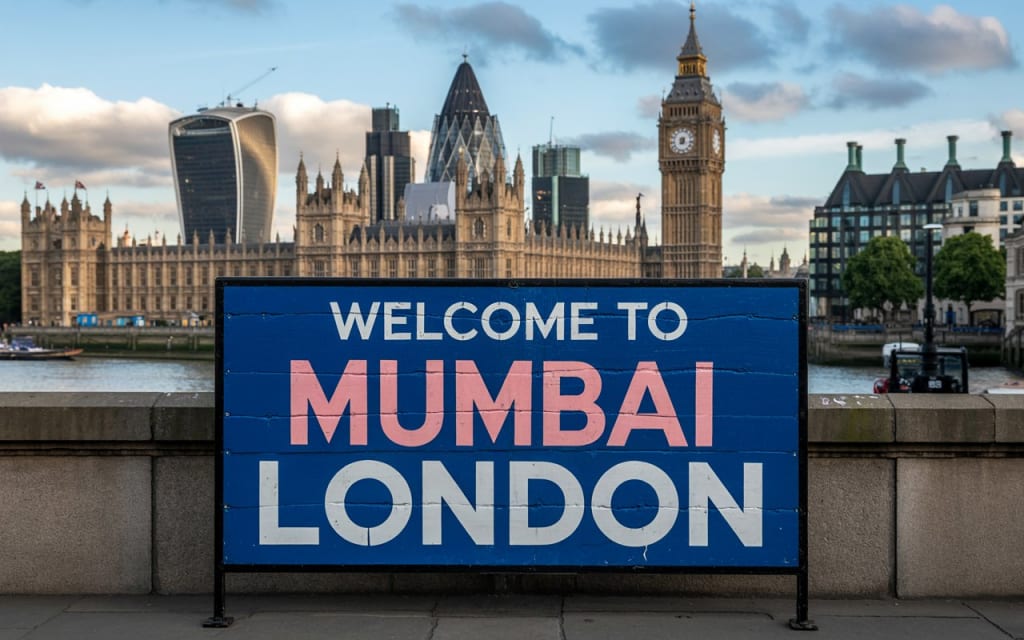
Right then. Apparently, Indians now own more property in London than the British themselves. If that sounds like satire, congratulations—you’ve officially lost touch with the UK housing market. But no, this isn’t a sketch from Have I Got News for You; it’s a real claim, pushed by property developers and tabloids alike. And before you start blaming it on “foreign investors,” perhaps ask yourself why your own government treats housing like a hedge fund.
Let’s unpack this, shall we? With a generous helping of irony and the comforting knowledge that none of us can afford to live within the M25 anyway.
The Big Claim: India Moves In (With a View of the Shard)
So here’s the headline: Indians now top the list of property owners in London, beating even the native British. This juicy nugget comes from none other than Barratt London—the same property developer with an obvious interest in telling Indian investors how well their cousins are doing in Kensington.
According to Barratt, Indians—including British Indians, NRIs (that’s Non-Resident Indians, not a new indie band), foreign investors, students, and families—now collectively own more property than White Britons in the capital.
Cue patriotic panic and a few awkward pub conversations.
But wait—The Daily Sceptic (a title so on-the-nose it hurts) says, "Hang on a tick." They pulled out 2021 census data to argue that White British residents still hold the majority. Census says: 36.8% of London is White British with a 59% homeownership rate. Indians? Just 7.5% of the population—but with a surprisingly high 66% ownership rate. The maths doesn’t add up—unless, of course, you're counting people who don’t actually live here.
Which Barratt probably is. Because let’s face it: the UK doesn’t exactly do a cracking job of tracking non-resident property owners. We’re too busy selling to them.
Why Indians Love London (And Frankly, Who Can Blame Them?)
So why is this happening? Why are Indian buyers snapping up London flats faster than Greggs sells sausage rolls?
Let’s break it down:
✔️ Stability (Sort Of)
London is seen as a “safe” market. Which is hilarious given the political circus we've been hosting for the last few years, but compared to the volatility of other global markets, we still look like a sturdy old ship. A bit leaky, but afloat.
✔️ Rental Returns
Yields of up to 6%, allegedly. That’s more than a UK savings account, and probably more reliable than betting on your mate Dave to repay you for last night’s pub tab.
✔️ Education Magnet
London’s universities are crawling with bright-eyed international students—many of whom aren’t too keen on the idea of renting mouldy basement studios for £1,800 a month. So the parents just buy the whole flat. Because why not.
✔️ Legal Familiarity
The UK’s legal system is based on the same colonial export model India inherited. We gave them bureaucracy, and now they’re using it to buy flats in Wimbledon. Poetic, really.
✔️ Currency Perks
A weak pound means property here is on sale to anyone with a strong rupee. Turns out, Brexit wasn’t a complete disaster—just depends which side of the exchange rate you’re on.
What Are They Buying? Spoiler: Not Your Nan’s Semi in Croydon
It’s not penthouses or palaces. The sweet spot is one- to three-bedroom flats, between £290,000 and £450,000—a bracket that's tragically out of reach for many British first-time buyers but somehow “entry-level” for overseas investors.
These properties serve a triple purpose: Student digs; Family homes; Income-generating rental assets
Basically, they’re the housing market equivalent of a Swiss army knife—except British buyers get left holding the butter knife.
The Real Drama? It’s Not About Indians. It’s About Data
So where’s the actual evidence for this whole “Indians own London” claim?
Barratt London cites its own sales figures (very impartial, thank you). But that only covers the homes they sold. The census, meanwhile, ignores overseas owners entirely. It’s like arguing about who won a football match when half the players weren’t counted.
Also, foreign-registered firms now own over 100,000 properties in London. But don’t ask for a nationality breakdown—no one’s tracking it. It’s the Wild West, just with estate agents instead of cowboys.
So yes, it’s entirely possible that a large portion of central London is now owned by people who don’t live here. But instead of doing something about that, we’ve chosen to just moan about it, as is tradition.
And Now for the Delicious, Colonial Karma
Let’s not ignore the satisfying role reversal here. Once upon a time, Britain stormed into India, looted half the subcontinent, and put a crown on it. Now, Indian investors are quietly buying up Notting Hill and Southbank with the same calm confidence of someone who knows they’re getting the better deal.
Some corners of the internet are calling it “karma.” And while it’s a bit rich (pun intended), it’s also… kind of true.
The Bigger Picture (Or: Why You Still Can’t Afford a Flat)
Let’s be honest: this isn’t really about Indian investors. It’s about a housing system that’s been flogged off to the highest bidder for years. London property isn’t for living in anymore—it’s for trading. Like Pokémon cards, but with more zeroes.
And if you think restricting foreign ownership will magically solve that, I’ve got a three-bed in Mayfair to sell you.
The Flat May Be British, But the Deed Is Not
Are Indians the biggest property owners in London? Possibly. Maybe not. It depends how you count and who you ask.
But the point remains: London’s property market is no longer built for the people who live here. It's an international investment theme park, and we’re all just queuing up to rent the ride.
So next time someone tells you it’s "foreign buyers driving up prices,” maybe ask why it’s so easy for them to do so. Then go have a cry in a £1,300-per-month shoebox in Zone 4.
About the Creator
The INFORMER
Source for in-depth news, investigations, whistleblower leaks, and insightful analysis you won't find anywhere else, produced by independent journalists exploring the fringes of society, technology, and culture.
Keep reading
More stories from The INFORMER and writers in Humans and other communities.
The 7 Big Lies About Exercise, Sleep, and Diet: A Fresh Look at Modern Health Myths
Modern life is a twisted game of contradiction: we’re more comfortable than ever, yet somehow feel more stressed, exhausted, and unhealthy. Enter Dr. Daniel Lieberman, Harvard professor and evolutionary biologist, ready to blow your mind and shake up everything you thought you knew about exercise, sleep, running, and, yes, even sugar. In his recent podcast, Lieberman lays bare some hard truths, debunks common health myths, and forces us to rethink our cushy, sedentary lifestyles.
By The INFORMERabout a year ago in Humans
Rachel Reviews: The Spiral Archive by Pieter Hendrik
It's difficult for me to know where to start with a review of this book as it was, for me, an entirely unique experience and one that I'll probably never have again. I don't want that to be interpreted as unenjoyable but it has left me scratching my head a little and ruminating on its content, its themes and its characters.
By Rachel Deemingabout 6 hours ago in BookClub




Comments
There are no comments for this story
Be the first to respond and start the conversation.