
If World War III Begins Quietly
A story about what we might lose before we ever hear the first siren


People imagine World War III arriving with fire.
Missiles. Sirens. Explosions loud enough to split the sky.
But I think it would begin much more quietly than that.
It would start on an ordinary morning. The kind where the sun rises without permission and coffee tastes the same as it always has. People would still be late for work. Children would still complain about school. Someone, somewhere, would still be falling in love.
The news would be playing in the background—not loud enough to command attention, just loud enough to be ignored.
At first, it would be framed as “tensions.”
Then “warnings.”
Then “strategic movements.”
Words would soften the danger before anyone truly felt it.
I imagine sitting at my kitchen table, scrolling through my phone, half-listening as an anchor explains that relations have deteriorated overnight. I’d pause, thumb hovering above the screen, wondering whether this was history being written—or just another headline designed to scare us for a day.
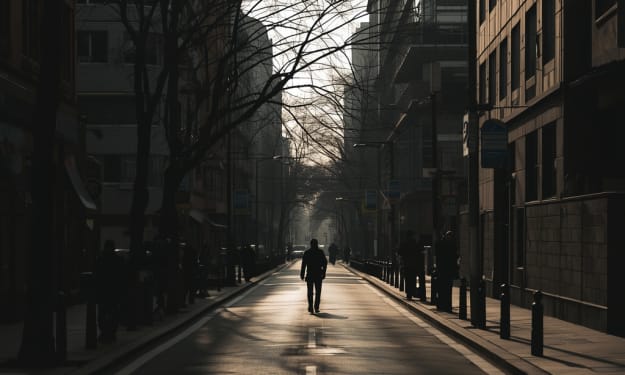
Outside, nothing would look different.
That’s the strange part about the end of familiar things. They rarely announce themselves.
Buses would still arrive. Neighbors would still wave. A dog would still pull its owner down the sidewalk like the world wasn’t holding its breath.
World War III wouldn’t start with bombs.
It would start with silence between conversations.
People would stop talking about the future so casually. Vacations would be postponed “just in case.” Weddings would be smaller. Savings would matter more. Hope would become practical instead of loud.
At dinner tables across the world, parents would lower their voices when the news came on. Not because children were asleep—but because fear is contagious, and love tries to contain it.
Someone would ask, “Do you think it will actually happen?”
And no one would answer honestly, because the truth would be unbearable:
No one would really know.
History teaches us that wars don’t begin when leaders sign papers. They begin when empathy runs out. When listening becomes optional. When winning matters more than understanding.
World War III, if it comes, won’t just be a war of nations.
It will be a war on attention.
On patience.
On the fragile belief that tomorrow can be planned.
Social media would explode with certainty. Everyone would suddenly be an expert. Fear would travel faster than facts. Old friends would argue. Families would disagree. People would pick sides long before they understood the cost.
And still—life would continue.
That’s what frightens me most.
The ability of humans to adapt to danger without stopping to ask whether we should.
Somewhere, a nurse would still work a double shift.
A teacher would still correct papers.
A writer would still sit in the dark, trying to put sense into sentences.
And somewhere else, a decision would be made that could not be undone.
World War III wouldn’t just threaten cities or borders.
It would threaten memory.
The memory of how easily we once laughed.
How freely we once trusted.
How confidently we once believed progress was permanent.
But I don’t believe this story has to end in ashes.
Because if wars begin quietly, so does peace.
Peace begins when someone refuses to dehumanize another person they’ve never met. When someone pauses before sharing fear. When someone chooses curiosity over certainty.
World War III is not inevitable.
It is a possibility shaped by choices—small ones, repeated daily.
The choice to listen.
The choice to slow down.
The choice to remember that behind every flag is a family hoping for a normal morning.
If the world does stand on the edge again, I hope we notice the quiet.
Because that’s where the future still has time to change.
About the Creator
Keep reading
More stories from TariqShinwari and writers in Humans and other communities.
How Can You Plan Your December Trip to Costa Rica Around the Weather?
December is one of those months when travel dreams feel extra alive, and if Costa Rica is on your mind, you are already on the right track. I have seen many travelers get overwhelmed by tropical weather myths, but once you understand how December really behaves, planning your trip becomes exciting instead of stressful.
By Amanda Glen7 days ago in Humans


Comments
There are no comments for this story
Be the first to respond and start the conversation.