
Human Lives in Focus
Awakening Voices: New Narratives of Hope and Struggle

In a world often defined by headlines of conflict, disaster, or politics, it's in the quiet turning of human lives that we see the deepest contours of our shared experience. Today’s stories bring us closer to those whose voices, often overlooked, point to small revolutions in dignity, belonging, and transformation.
1. From Survivor to Storyteller: A Rohingya Refugee’s Documentary Quest
In a dimly lit room in Cox’s Bazar, Bangladesh, 24-year-old Meena Begum scrolls through footage from her phone. It’s not holiday clips, but recordings of life in the refugee camp—children navigating flooded paths, makeshift schools built from tarpaulin sheets, women sharing stories under the moon.
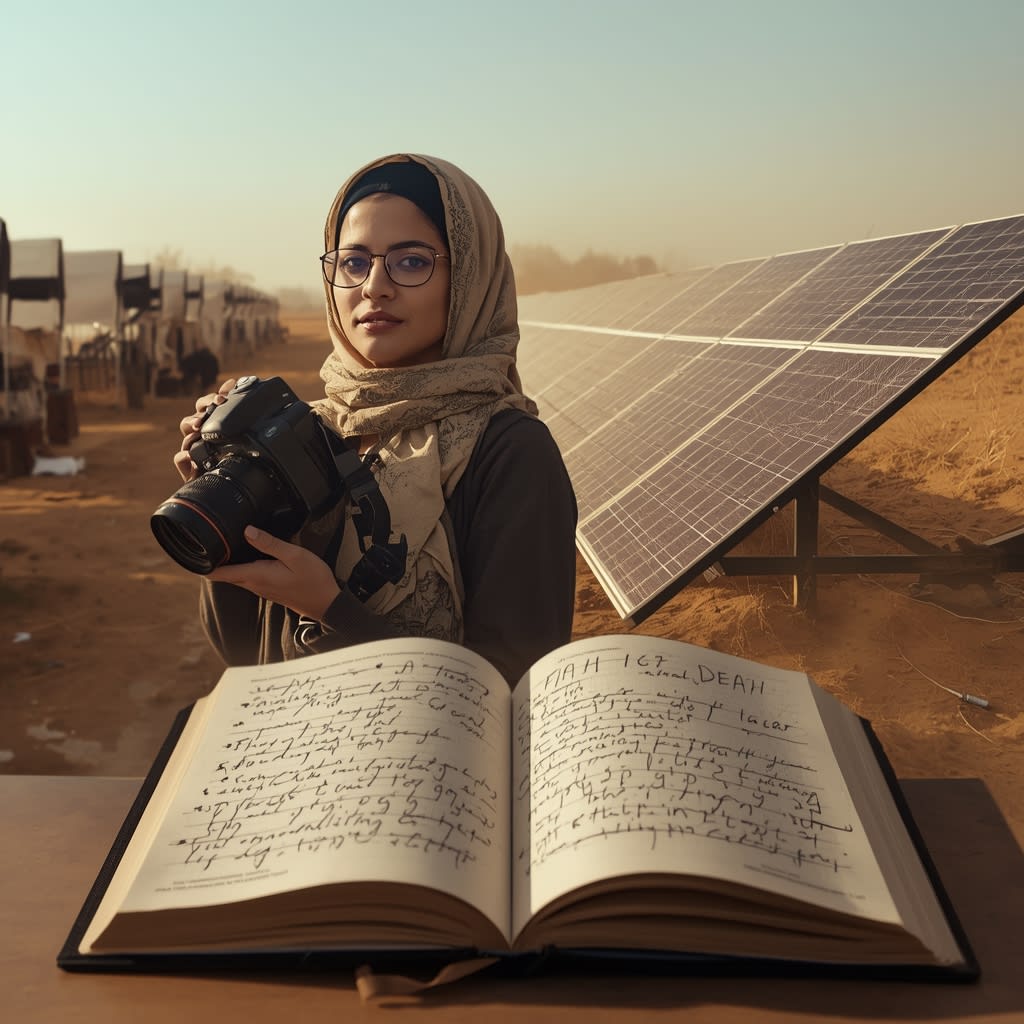
Born in Rakhine State, Myanmar, Meena fled with her family in 2017 during a wave of brutal military operations. For years, she carried trauma in silence. But over the last two years, she began filming daily life in the camp—with her phone, then with a borrowed camera lens. Her goal: to produce a short documentary that captures both suffering and perseverance.
“I don’t want my people only to be seen through tragedy,” she says. “I want people to know we are still alive, still dreaming.”
Her project, titled Shadows & Roots, recently received a small grant from a regional arts NGO. It will screen in Rohingya-diaspora events across Bangladesh and Malaysia. In the process, Meena is mentoring younger girls who want to document their own stories—turning survivors into narrators, pain into purpose.
2. The Solar Micro-Grid That Powers 20 Villages in Rural Kenya
In Kenya’s arid Mandera County, a network of dusty paths leads visitors to a small compound of solar panels, battery banks, and low-voltage lines. It’s not glamorous infrastructure—but for 20 scattered villages, it’s transformative.
For decades, these communities lived off kerosene lamps, dried food, and radio-charged batteries. When night fell, children studied by dim wick lamps; health posts sometimes closed after dark. Now, thanks to a project by a grassroots cooperative and a nonprofit, the solar micro-grid is live.
Villagers share tales:
Amina, 14, now studies under LED lights and no longer fears her textbooks.
Dr. Mwangi, the local clinic’s only nurse, can refrigerate vaccines overnight—something impossible before.
Joseph, a small craftsman, runs a lathe that doubles his furniture business after sunset.
The system is community-owned: each household pays a small token fee, and local technicians maintain panels. Because of that buy-in, vandalism is low, usage is sustained, and the network now powers homes, clinic, and a small cold-storage unit for fish (a rare crop in the region).
In a small celebration last week, children danced under string lights, singing: “From dark we rise.”
3. Letters From Home: Pakistani Migrant Writes a Memoir in Transit
He left his village in Punjab two years ago, crossed deserts and seas, and landed (illegally) in Europe, working in menial jobs in kitchens and construction. His name is Aftab Hussain (pseudonym), now aged 29.
While other migrants in detention centers pass time with games or prayer, Aftab writes. In a battered notebook, in fading ink, he records everything: the day he left, the faces of people he met in Algeria, the nights on the Mediterranean boat, and the loneliness of unfamiliar cities.
A few months ago, a volunteer with a migrant-support NGO discovered his writing and scanned 50 pages. The document—Remnants of a Dream—is now part of a planned anthology of migrant letters.
In overcrowded camps, Aftab holds writing sessions for others. Some draw maps of homelands; others sketch family portraits. The NGO is helping translate parts into multiple languages.
Aftab says: “When I write, I am home again—if only in memory. When others read, I hope someone listens.”
4. Reviving a Lost Language: Indigenous Youth in Brazil Reclaim Their Tongue
Deep within Brazil’s Amazon basin, in the territory of the Uru-Eu-Wau-Wau people, a wave of cultural reawakening is underway. For years, their native tongue was in decline, as younger generations spoke only Portuguese to survive in formal systems.
Now, with the help of elders, a group of youth have launched “Talk Our Blood” (Fala Nosso Sangue), a language revival program. Twice a week, under thatched shelters, older speakers teach vocabulary, songs, and creation myths in the original tongue.
Teachers use smartphone apps recording phonetics, digital stories, and gamified quizzes. A few students have even begun writing short poems and dialogues in the revived language.
Documentation efforts are underway: a small digital archive, complete with audio, is being submitted to UNESCO’s endangered languages registry. For these youth, language isn’t an academic concern—it is memory, identity, connection to land.
One 17-year-old student, Iara, says: “When I say words in our language, I feel my grandmother smiling, the trees listening. We are weaving who we are back into our lives.”
Connecting Threads: Why These Stories Matter
Ownership over narrative
From Meena’s camera to Aftab’s letters, these aren’t stories imposed from outside—they are stories claimed, shaped, and told by people themselves.
Innovation grounded in dignity
The solar grid in Kenya shows how infrastructure, when built with local ownership, can empower rather than dictate.
Memory as resistance
Language revival in Brazil and migrant memoirs in transit affirm that culture and memory can resist erasure, even amid displacement.
Small acts, big ripples
Each story may be local—but they model how agency, voice, and collective care can reshape lives.
About the Creator
Alexander Mind
Latest Stories
Keep reading
More stories from Alexander Mind and writers in Humans and other communities.
Voices & Lives Today
A Day in Humanity: Resilience, Memory, Change In times of great uncertainty, the small acts, personal stories, and collective memory of people can sometimes speak more powerfully than headlines about wars, politics, or markets. Today, from across continents, the human spirit persists — grieving, persevering, creating, remembering. Below are some stories that capture the textures of our shared lives.
By Alexander Mind5 months ago in Humans



Comments (1)
good