
How Our Digital Addictions Are Quietly Rewiring the American Mind
We check our phones an average of 344 times per day. It's not just a habit; it's a collective identity crisis, and the bill is coming due.

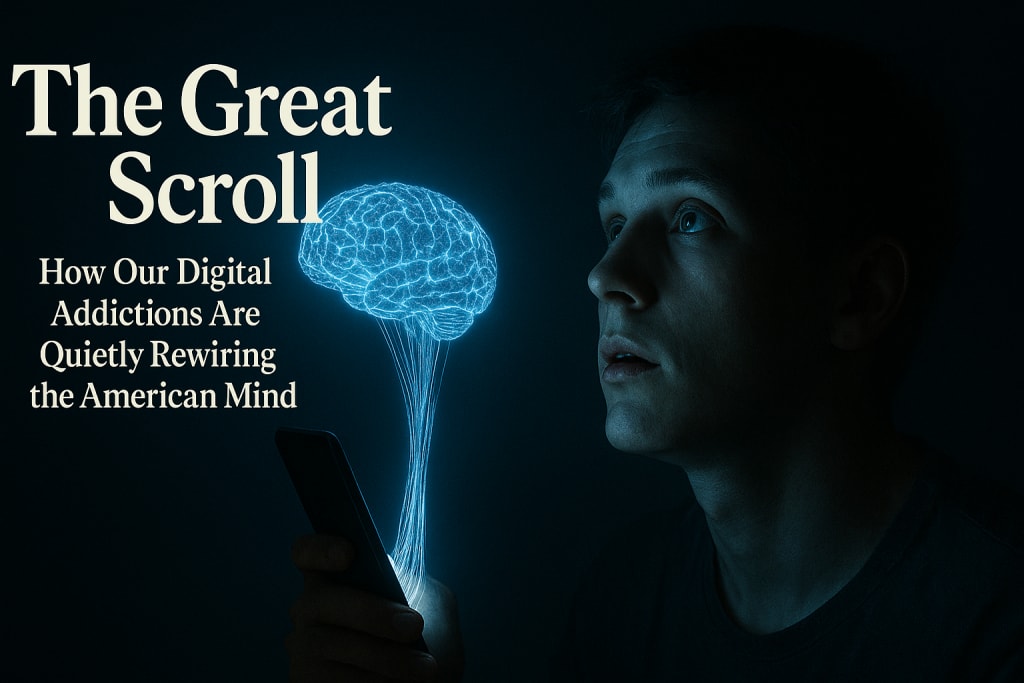
I wake up not to an alarm, but to a reflex. My hand fumbles in the dark, finding the cool, flat rectangle on my nightstand. The screen flares to life, a portal to a world of notifications, updates, and a silent, screaming demand for my attention. Before my feet have even hit the floor, I have scrolled through a global news cycle, liked a vacation photo from a college acquaintance, and felt a pang of anxiety about a political headline I can barely process.
This isn't just my story. This is the new American morning. We are living through the greatest uncontrolled psychological experiment in human history, and we are both the scientists and the lab rats. The constant connection we craved has morphed into a silent epidemic of disconnection, and we're only beginning to understand the toll.
The Dopamine Dance: Why You Can't Look Away
To understand our compulsion, we must talk about dopamine. This isn't just about "willpower." Every notification—a like, a retweet, a new email—triggers a tiny hit of this potent neurotransmitter. It’s the same chemical pathway associated with gambling and other rewards. Our smartphones are, in effect, slot machines we carry in our pockets.
The architecture of these platforms is meticulously engineered for this purpose. The infinite scroll, designed to eliminate any natural stopping point. The pull-to-refresh mechanic, mimicking the action of a slot machine lever. The variable reward schedule—you never know when that next like or interesting piece of content will appear. This unpredictability is what makes the behavior so stubbornly addictive. We’re not weak; we’re up against a billion-dollar industry whose sole purpose is to capture and keep our gaze.
The Comparison Trap and the Erosion of Self
Once hooked, we are fed a curated highlight reel of everyone else's life. This is where the psychological damage deepens. Social media platforms have become the world's most efficient engines for social comparison.
We compare our behind-the-scenes blooper reels with everyone else's Oscar-winning performance. The result? A documented rise in anxiety, depression, and loneliness, particularly among younger generations. We see the curated success, the perfect relationships, the flawless bodies, and the exotic travels, and our own lives can feel inadequate by comparison. This constant benchmarking doesn't just hurt our self-esteem; it fundamentally alters our perception of reality. We start to believe that the filtered, airbrushed, and perfectly framed digital world is the norm, and our messy, complicated, beautifully imperfect human experience is the exception.
The Illusion of Connection and the Reality of Loneliness
The great irony of our hyper-connected age is that we have never felt more alone. A study by Cigna has consistently found that loneliness in America has reached epidemic proportions. We have hundreds of "friends" online, but how many can we call at 2 a.m. when our world is falling apart?
Digital communication is a low-bandwidth substitute for the rich, nuanced experience of face-to-face interaction. It strips away tone of voice, body language, and the spontaneous magic of shared silence or a sudden, uncontrollable laugh. We’re trading deep, soul-nourishing connections for shallow, transactional engagements. We comment "Thinking of you!" instead of showing up with soup when someone is sick. We mistake engagement for empathy. This illusion is fracturing our communities and leaving us with a profound sense of social hunger, even as we are constantly "feeding" on content.
Reclaiming Your Attention: A Manifesto for Digital Sanity
This is not a call to burn our phones and retreat to a cabin in the woods. Technology is a tool, and like any powerful tool, we must learn to wield it with intention, not be controlled by it. The goal is not abstinence, but mindfulness. It's about moving from being a user to being an owner. Here’s how we start to fight back:
1. Audit Your Anxiety: For one week, pay attention. Notice which apps leave you feeling energized, informed, or connected, and which ones leave you feeling drained, anxious, or jealous. Your intuition is a powerful guide. Unfollow accounts that trigger the comparison trap. Mute topics that fuel your anger. Your feed is your digital home; be ruthless about what you let in the door.
2. Create Friction: Break the mindless reflex. Move your social media apps off your home screen and into a folder buried on the last page. Log out after every use. The goal is to make access a conscious choice, not an automatic action. This tiny moment of pause is often enough to break the trance.
3. Schedule Your Scrolling: Designate specific, limited times for social media consumption. Maybe it's 20 minutes after lunch and 20 minutes after work. Outside of those windows, the apps are off-limits. This contains the habit and prevents it from bleeding into every moment of your day.
4. Re-engage the Analog World: The most powerful antidote to digital overload is tangible, physical experience. Read a physical book and feel the pages. Go for a walk without your phone and truly see your neighborhood. Have a meal with a loved one and institute a "phone stack" where everyone places their device in the center of the table. Relearn the art of a meandering, uninterrupted conversation.
The battle for the twenty-first century is the battle for attention. Our most precious resource is not oil or data, but our finite capacity to focus and be present. The endless scroll offers a universe of connection, but it often robs us of the one thing that makes life meaningful: our genuine presence within it. It's time to log off, look up, and remember what we're really scrolling for—a sense of self, of purpose, and of connection that no algorithm can ever truly provide. The first step to getting there is to simply put the phone down.
About the Creator
kashif khan
Passionate storyteller and tech enthusiast sharing real thoughts, modern trends, and life lessons through words.
Reader insights
Nice work
Very well written. Keep up the good work!
Top insights
Easy to read and follow
Well-structured & engaging content
Eye opening
Niche topic & fresh perspectives
Keep reading
More stories from kashif khan and writers in Humans and other communities.
The 100: Season 2 — The Mountain and the War
Previously on The 100 Season 1… The Earth was reborn in fire. A hundred young prisoners sent from the Ark landed on a devastated, toxic world and discovered they were not alone. Wars erupted. Alliances were tested. Clarke Griffin emerged as a reluctant leader, fighting not just for survival, but for the very soul of humanity.
By kashif khan3 months ago in Chapters
How Do Himalayan Salt Bricks Create Healthier Hospitals?
Himalayan salt bricks are changing how hospitals promote health. Today, medical centers seek simple ways to help patients heal safely. Instead of using advanced technology, some now opt for natural materials, such as salt bricks.
By david smith2 days ago in Humans


Comments
There are no comments for this story
Be the first to respond and start the conversation.