
How Much of your Autonomy are you willing to Give up?
An Insight into why we follow Trends

We have always thrived on the new and the now. Trends seem to dictate everything from the clothes we wear to the ideas we share. But why do we follow trends so fervently? What drives us to adopt the latest fads and fashions, often without a second thought? The answer lies in an interdisciplinary examination of psychology, sociology, and evolutionary factors.
The Psychology of Belonging
The human need for belonging at the heart of our tendency to follow trends. Evolutionarily speaking, we are social animals; our survival has historically depended and still largely depends on being part of a group (Yes, you might be an exception). This need for social inclusion has stayed consistent throughout our timeline.
Psychologist Abraham Maslow identified “belongingness” as a fundamental human need, situated just above basic physiological and safety needs in his famous hierarchy. Following a trend offers a pathway to this sense of belonging. We pledge our allegiance and signal our ‘subscription’ to the group’s membership by adopting what is popular, be it as broad as a global fashion trend or as narrow as a niche online community.

The Role of Social Proof and Dopamine
The concept of ‘social proof’, introduced by psychologist Robert Cialdini, explains how we determine what is correct by looking at others. When we see many people following a particular trend, we infer that it must be the right or desirable thing to do. This herd mentality is a powerful driver of behavior, particularly in ambiguous situations where we are unsure of what to think or how to act. Social media amplifies this effect by providing constant, visible evidence of what others are doing, liking, and sharing.
I talked about Kohlberg’s stages of moral reasoning in my recent book. The central space is occupied by conventionalism where even our morality is dictated by what is socially deemed right and wrong. This is directly aligned with the idea of social proof.
On the neuroscientific side, following trends can also be explained by the brain’s reward system. Dopamine is a neurotransmitter that improves our mood by creating feelings of pleasure and reinforcement. Dopamine is released in our brains in anticipation of reward. When we engage in behaviors that align with societal expectations, we receive social rewards in the form of approval and recognition. This approval triggers the release of dopamine. Over time, the brain begins to associate trend-following with positive emotions, making it a habit that’s hard to break. This also makes part of what makes us crave social validation and external approval but that is a different conversation.
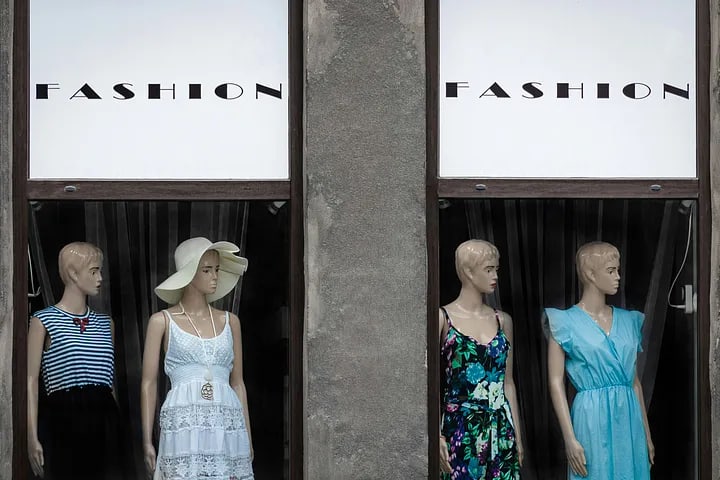
It’s an Evolutionary Advantage but with a Cost!
From an evolutionary perspective, following trends can be advantageous as not only a survival trait but also a trait for flourishing through society. In early human societies, mimicking the behaviors of others could lead to discovering new resources or safer living conditions. This mimicry ensured that beneficial behaviors spread quickly through the group. While the specifics of what is beneficial have changed, the underlying mechanism remains the same. Today, following trends can help us gain social capital, enhance our reputation, and access new opportunities.
Another factor driving trend-following is the fear of missing out (FOMO). This anxiety that others might be having rewarding experiences that we are absent from can push us to adopt trends to stay connected and relevant. As could be expected, this has two-fold concerns; firstly, we are missing out on a dopamine hit and secondly, the fear of social exclusion!
The rise of influencers has significantly impacted our tendency to follow trends. Influencers leverage their large followings to set trends, often through strategic marketing and personal branding (read: Engineering of Consent). Their endorsements can lend credibility to new trends, making them more attractive to the average person who’s just looking for some way to be a part of the group. This dynamic creates a feedback loop where trends gain momentum rapidly as more people jump on the bandwagon.
Today, FOMO is exacerbated by social media, where curated posts often highlight the most exciting aspects of others’ lives, making us acutely aware of what we might be missing. This invokes feelings of envy and jealousy, further stoking the fires of insecurity and leading to erosion of self-esteem. However, all this is also a completely different topic which deserves a separate article on its own.

Cognitive Ease
Our brains favor paths of least resistance. So, when a trend offers a ready-made framework for behavior or thought, it saves us the mental effort of decision-making. Therefore, it makes sense to do what everyone else is doing rather than forging our own paths. This cognitive ease can make trend-following particularly appealing in a world where we are constantly bombarded with choices.
Why waste precious mental energy on tailored decisions when we have ready-made solutions?
There are many reasons we follow trends; psychological needs, social dynamics, evolutionary mechanisms, neurological rewards, and cognitive cost-benefit measure. Understanding these factors helps us comprehend and traverse the modern world with greater awareness and authenticity. While trends can offer a sense of belonging and ease, it is essential to balance this with authentic self-expression and critical thinking because as I discuss in my book, “Probing Freewill,” when we don’t make conscious decision of our own making, it takes away a measure of our autonomy.
How much of your autonomy are you willing to give up?
After all, while we are influenced by trends, we also have the power to influence them in return.
About the Creator
Keep reading
More stories from Waleed Mahmud Tariq and writers in Humans and other communities.
The CEO of Everything
They say "jack of all trades, master of none," but they forgot to mention the part where the jack of all trades is also the camera woman, the makeup artist, and the person currently yelling at a tangled Wii microphone cable in a her own bathroom while recording herself singing and trying to make it look realistic and professional. (As professional as you can make it with nothing but a cell phone camera and a mic that doesn't work)
By Sara Wilson4 days ago in Humans
Migration
What does migration mean to you? As humans, as we grow, we make decisions that mark a before and after in our lives. Decisions that, when we look back on them, make us wonder if, at the moment we made them, we were truly aware of the impact they would have on our lives. Sometimes, our expectations are high: we dream of a future that does not yet exist; other times, we let life teach us, gently or forcefully, where these decisions might lead us.
By ISANDRA VALEN5 days ago in Humans


Comments (1)
Liked you writing.