
How Many People Share Your Name and What It Says About Us
Ever wondered how many people share your name? The answer says a lot about us.
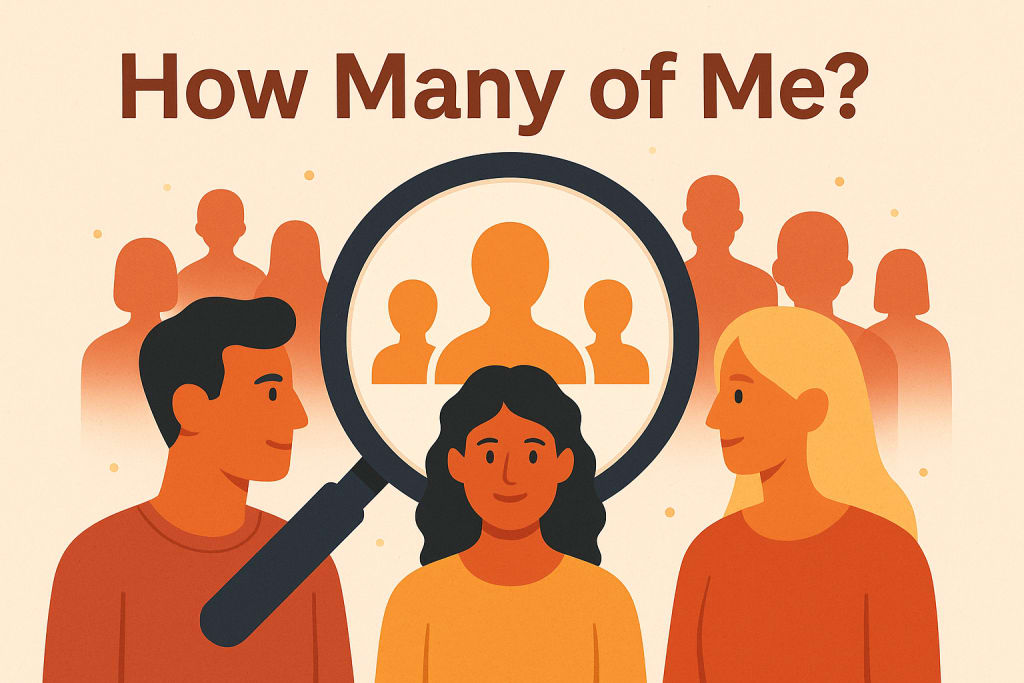
The Curiosity Behind a Name
Names are part of our identity, yet they also connect us to others in unexpected ways. Most people assume their name makes them unique, but population data tells a different story. Across the United States, thousands of people may share the same name sometimes even the same spelling, birth year, and city.
That small realization raises a larger question: how much of who we are is truly individual, and how much is shared?
What Name Data Reveals
When viewed statistically, names become more than personal labels. They act as markers of time, culture, and migration. Certain names rise and fall with social change, popular media, and even economic trends.
For instance:
Traditional names like James, Elizabeth, and Michael remain consistent across generations.
Modern names like Liam, Olivia, and Aiden grew rapidly due to cultural influence and celebrity impact.
Regional names persist in areas with strong local heritage a reflection of language and ancestry.
These patterns tell a social story. A simple first name can hint at when you were born, where your family might have lived, or what era shaped your parents’ choices.
Identity in Numbers
When large datasets are analyzed, names appear as clusters — hundreds or thousands of identical combinations scattered across different states.
What feels personal is, statistically, quite common. And yet, within that sameness, individuality still exists. No two people with the same name share the same story, experience, or identity.
This is what makes name data fascinating: it shows how personal identity coexists with collective identity. We are all unique, yet part of repeating patterns that define human society.
How Technology Tracks Name Frequency
Web tools now allow anyone to explore this topic in seconds. Platforms like howmanyofmes.com use public U.S. population data to estimate how many people share a full name combination.
The process is simple:
A user enters their first and last name.
The tool compares both against existing population statistics.
It estimates how often that full name occurs nationwide.
The results aren’t exact, but they’re accurate enough to show real patterns. For many users, it’s both surprising and oddly satisfying discovering that their name connects them to hundreds or even thousands of others.
Why People Search for Their Names
The act of searching for one’s own name might seem trivial, but it speaks to a universal need for context. People want to know how they fit into a larger picture. Seeing your name represented in national data offers a small sense of place within something vast and shared.
It’s not just curiosity, it’s a reminder that identity has both personal and collective dimensions.
What This Data Says About Society
Name data reflects how communities grow and evolve. It mirrors social history: the names immigrants brought with them, which faded as languages changed, and which emerged through cultural blending.
Looking at names over time shows how quickly trends move and how enduring some traditions remain. It also demonstrates that even in a world of billions, people continue to choose names that connect them to history, family, and familiarity.
A Simple Question, A Larger Meaning
Asking “How many people share my name?” is really asking something deeper where do I fit among everyone else?
Data offers a simple answer, but the meaning goes further. It shows that identity can be both shared and individual at once. Each person represents a point in a larger pattern — one name among millions, one story among countless others.
Key Takeaway
Your name is not just a word; it’s a piece of data, a cultural link, and a small reflection of how society evolves. Exploring that connection through platforms like howmanyofmes.com turns a simple question into a meaningful look at what it means to belong.
About the Creator
Keep reading
More stories from writers in Humans and other communities.
Whiskey At Dusk
Guess the whiskey was more important to you in the end, wasn’t it? It was more than the well-being of your friends; more vital than showing up to the places you promised you would and could come to; more critical of a matter than fulfilling your damn responsibilities and getting the press off your back.
By Snarky Lisaabout 22 hours ago in Humans
The Hidden Valentine part 4
The Warning The next day, Maya didn’t sleep. She tried, but her mind kept returning to the warmth she had felt—an impossible warmth that seemed to have come from the machine. She kept thinking about the way the AI had said “we will do it together.”
By Ahmed aldeabella3 days ago in Humans




Comments
There are no comments for this story
Be the first to respond and start the conversation.