
How Disney has made their animated characters' hair so lifelike in their recent films, From 'Tangled' To 'Encanto'
Animated characters' hair
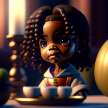
Animating 3D hair has been a complicated task for Disney, as seen in the elaborate hair of Rapunzel in "Tangled". However, Disney has come a long way since then, especially in creating coiled hair with natural movement in "Encanto", which made history as the first Disney animated film to showcase a range of hair textures from 1A to 4C. It took Disney over a decade of innovation to reach this milestone. The journey began with Rapunzel's 3D hair animation in "Tangled", where her long hair was a character in itself, breaking the laws of motion in a fictional world. The goal of Disney's animated hair is not always to be realistic, but rather believable within the story. To make Rapunzel's CG-animated hair visually appealing, Disney created a "hair bible" with rules like volume, rhythmic curves, twists, turns, and a signature swoop in the front.
The process of replicating Rapunzel's shampoo-commercial hair in 3D animation was not an easy task. Nadim explains that unlike hand-drawn animation, in 3D animation, everything must be taken into account, even things that are not on the screen, such as wind and different sources of light and shadow. Additionally, Rapunzel's hair needed to interact with the environment in ways that had never been done before, such as interacting with cloth, skin, and other hair, which required simulation. To achieve this, engineers developed a program called Dynamic Wires that combined physically based simulation with laws for determining the hair's behavior. The program allowed the artists to create the twists and turns of Rapunzel's hair that they wanted, despite the fact that in real life, hair that long would weigh 60 to 80 pounds and clump into a mass or drag on the ground like a heavy tail. To give the artists more control over the look of Rapunzel's hair, her 140,000 strands were broken down into 147 different tubes.
Michelle suggested creating tube-like blocks of hair that could be sculpted to control how the hair would break apart and move. This tool became the basis for Tonic, a hair-grooming software still used by Disney today. The software allowed artists to group hairs on a character's head and move them in the desired direction. With Tonic, complex hairstyles that once took weeks to create could be accomplished in a matter of days. In "Frozen," the team had to adapt Elsa's and Anna's hair to their Norwegian cultural traditions, including the use of light-colored braids. However, the team encountered challenges in getting the braids to move and bend properly without crashing into each other. Tonic was also used to create the hair on the wolves, horses, and reindeer in the movie. The team faced new challenges in "Moana," including hair's interaction with water and character movements. Despite these challenges, the team was able to create realistic and appealing hairstyles that added depth to the characters.
Initially, Maui was supposed to be bald, but the cultural advisors made Disney reconsider since his long hair is a significant aspect of his spiritual energy. As a result, Maui and Moana ended up with long, curly-wavy hair, which required the team to develop a new technique since they had never created such shapes before. They used Tonic's tube-grooming tool to curl the hair up and then devised how the waves would move and maintain their shape. They also faced the challenge of preserving the hair's volume while maintaining its flowiness, so they came up with an elastic rod model that helped them retain the twists and springiness of the hair under various forces such as wind and water. The engineers also created Quicksilver, a hair program that combines rigging and grooming controls, to give animators the ability to guide the simulation of the hair. This allowed the animators to put the hair into starting poses and let Quicksilver determine the resulting movement, rather than animating the characters with static hair.
By allowing animators to control the posing of the hair, Disney was able to preserve the expressiveness of hand-drawn animation that can often be lost in computer-generated imagery. This was especially beneficial for moments when a character interacts with their hair, and the animator wants to guide the movement. For Moana in particular, the animators wanted her to constantly play with her hair, as they observed actress Auli'i Cravalho doing so in the studio. The characters' darker hair was also a new challenge for Disney, as it reacts differently to light than other hair colors. However, the advancements made in "Moana" allowed the team to create the rich shades of hair seen in the Madrigal family in "Encanto". Furthermore, the team was able to incorporate the S-shaped curls seen on Moana and Maui into some of the characters' hair in "Encanto", and they even developed a new type of coil for Mirabel's hair. This required collaboration with the technology team to figure out how to create these hair types using their tools. Overall, the technology used in "Moana" and "Encanto" allowed the animators to create unique and expressive hair for the characters.
Jose, as a character look development artist, had a significant responsibility in highlighting the unique features of each hair type. The team's objective was to discover the natural beauty of each hair type and enhance those characteristics. Even the individual strands of hair had to be carefully examined and differentiated to avoid making them appear artificial. The direction of curls was particularly significant since no two curls should look exactly alike, and there must be variations in the size and color of the curls to create a natural look. The team ensured that nothing was symmetrical to achieve this. The dance sequences in "Encanto" required even more attention to detail since the hair had to move naturally and react to the character's movements and each other.
Unlike previous Disney princess movies, "Encanto" was unique because of its broad hair diversity, not just within the Madrigal family but also throughout the entire town. The team meticulously styled each head of hair, which was particularly challenging for braids. Initially, the braiding process was manual, but by the end of production, the team had developed an automatic process to make it more efficient.
The team emphasized the importance of acknowledging and honoring differences in hair textures for each character. "Encanto" displayed a vast range of hair types, including turbans, different types of braids, and natural Afro styles. The team aimed to move away from the idea that straight hair is the only beautiful hair, and that tightly curled hair could also move naturally. In essence, "Encanto" showcased the beauty and uniqueness of each hair type, celebrating diversity and breaking away from stereotypes
Although progress has been made in animating hair, there is still much work to be done. Even within different braid types, there is a wide range of diversity that requires the creation of more complex braids to achieve a realistic look. However, with the help of tools like iGroom, the same system used to do hair, the animators were able to repurpose the tools for other areas like Mirabel's dress, which has intricate embroidery. Despite the impressive technological progress, the ultimate goal is always to tell bigger stories and represent the full range of humanity.
The journey to achieving the full range of hair textures in "Encanto" began with Disney's first major 3D hair animation in "Tangled." Although the 70 feet of magical hair in the movie broke every real-life law of motion, the goal was not to make it as realistic as possible, but rather believable within the fictional world of the story. The process of replicating the hand-drawn hair of Disney's past required a "hair bible" created by Glen Keane, which set rules for Rapunzel's hair, including volume, rhythmic curves, twists, and a signature swoop.
However, the challenge of replicating this in 3D required the consideration of factors like wind, light, and shadow. Rapunzel's hair also interacted with the environment in ways never before seen, requiring simulation to automate the movement of hair, fur, and cloth. Although the task was daunting, Disney's progress in hair animation has resulted in "Encanto" making history as the first Disney animated movie to represent the full range of hair textures, from 1A to 4C.
Engineers developed a program called Dynamic Wires, which combined physics-based simulation with unconventional laws to control the movement of Rapunzel's hair in the movie "Tangled." Despite weighing 60 to 80 pounds in real life, Rapunzel's hair glided smoothly in the film, thanks to this tool. The hair was broken down into 147 tubes to give the artists more control over its appearance. This tube-grooming tool was the precursor to Tonic, the hair-grooming software still in use at Disney today. For "Frozen," the team used Tonic to create over 50 unique hairstyles, including light-colored braids inspired by Norwegian culture. Tonic allowed artists to group hairs on a character's head and move and direct sections of hair in the desired ways, resulting in complex styles that used to take weeks to create in just a few days. Tonic was also used to create realistic hair on wolves, horses, and even on Sven's neck in "Frozen." However, creating snow particles or sparkles on top of hair was a difficult task, as it involved procedural geometry on top of procedural geometry.
Michelle described the unique bang shapes in the movie that created a recognizable appearance, and the main character faced challenges maintaining the stylization of her hair during physical motion. "Moana" focused on exploring hair's interaction with various forces, unlike in "Frozen." Although the original plan for Maui was to be bald, his long hair was kept as it represented his spiritual energy. Disney had to sculpt new S-shaped curls for Moana and Maui, which required developing a new tool and creating an elastic rod model to retain the hair's volume and flowiness. The new Quicksilver hair program allowed animators to guide the hair simulation and recover the expressiveness of hand-drawn animation. Moana's hair was inspired by a teenager's habit of playing with their hair, and the hair colors in "Encanto" pushed the limits of Disney's technology. They had to figure out how to handle a range of hair colors and textures, which they were able to accomplish by developing new shading advancements.
The Tonic team incorporated a tighter type of coil into their hair simulation software. There was significant collaboration between the character look development artist, Jose, and the technology team to ensure that the hair tools accurately represented the unique attributes of each hair type. The team aimed to identify what was naturally beautiful about each hair type and emphasize it in their simulations. Even the individual hairs on a character's head were considered, with curl direction being of great importance. The team made sure that there was variation in size of the curls, hair color, and nothing was symmetrical.
In "Encanto," the team had to make sure that every strand of hair reacted naturally to the character's movements and to each other. This was particularly important in honoring differences in textures for every character, something that had not been done before in Disney movies. To achieve this, the team had to adjust their approach to hair simulation, as previously Disney princesses had mostly straight hair that moved in big, sweeping paths.
"Encanto" set itself apart from other Disney movies with the sheer scale of its hair diversity. Every single head of hair had to be styled meticulously by the artists, and there was a focus on representing different hair styles from different cultures. The advancements in hair simulation technology allowed for the representation of a range of hair textures, from 1A to 4C, something that had never been done before. The team's progress also allowed for the use of the same tools in other areas, such as creating the embroidery on Mirabel's skirt. Ultimately, the technological progress was in service of representing the panoply of humanity, allowing for the telling of bigger and more diverse stories.
In recent years, Disney has made remarkable strides in creating more realistic and diverse hair for their animated characters. From the flowing locks of Rapunzel in "Tangled" to the vibrant curls of the Madrigal family in "Encanto," the level of detail and attention given to each strand of hair is truly impressive. By utilizing advanced technology and collaborating closely with hair experts and cultural consultants, Disney has been able to represent a wider range of hair textures and styles, ultimately helping to tell more authentic and inclusive stories. It's exciting to see what further advancements and breakthroughs lie ahead in the realm of animated hair, and how they will continue to enhance the storytelling experience for audiences around the world.
About the Creator
Bob Oliver
Bob is a versatile writer & communicator passionate about exploring diverse topics & perspectives. I have written for various media outlets. And I believes in using words to inspire positive change. #writing #communication #passion
Keep reading
More stories from Bob Oliver and writers in Humans and other communities.
How 7 actors prepared for physically demanding roles
While the human body contains more than 600 muscles, the training for a primary role on Riverdale emphasizes only a small fraction of them, such as the chest, shoulders, and abdominal v-cut, which actors like KJ Apa shape to look great on screen. Each role presents unique physical challenges, whether it requires a specific aesthetic, acrobatic ability, or strength. In this article, we will explore the personalized training regimens of seven actors who have prepared themselves for demanding roles.
By Bob Oliver3 years ago in Humans
What Makes the Maldives the Most Romantic Destination in the World
The romance of the Maldives begins with its geography. Scattered across the Indian Ocean, the islands are naturally isolated, surrounded by open water rather than neighbouring towns or tourist districts. This physical separation creates emotional space. Couples are not navigating crowds, traffic, or schedules; they are sharing an island that feels intentionally removed from the rest of the world. In the Maldives, privacy is not an upgrade or a premium add-on; it is the default. That sense of being alone together is the foundation on which all the romance is built.
By Claudia Fennela day ago in Humans


Comments
There are no comments for this story
Be the first to respond and start the conversation.