
How did pink become a girly color???
Tracing the Cultural Journey of Pink from Bold to Feminine
In 1927, Time Magazine conducted a survey among major department stores across the United States to uncover which colors were most commonly associated with girls' clothing. The findings were diverse and inconsistent, with no definitive color emerging as the clear favorite for girls. Interestingly, a 1918 catalog had suggested that blue was the ideal color for girls, describing it as "delicate and dainty." This was an era when color associations for gender were still fluid, and society’s expectations hadn’t yet settled into the firm stereotypes we see today.
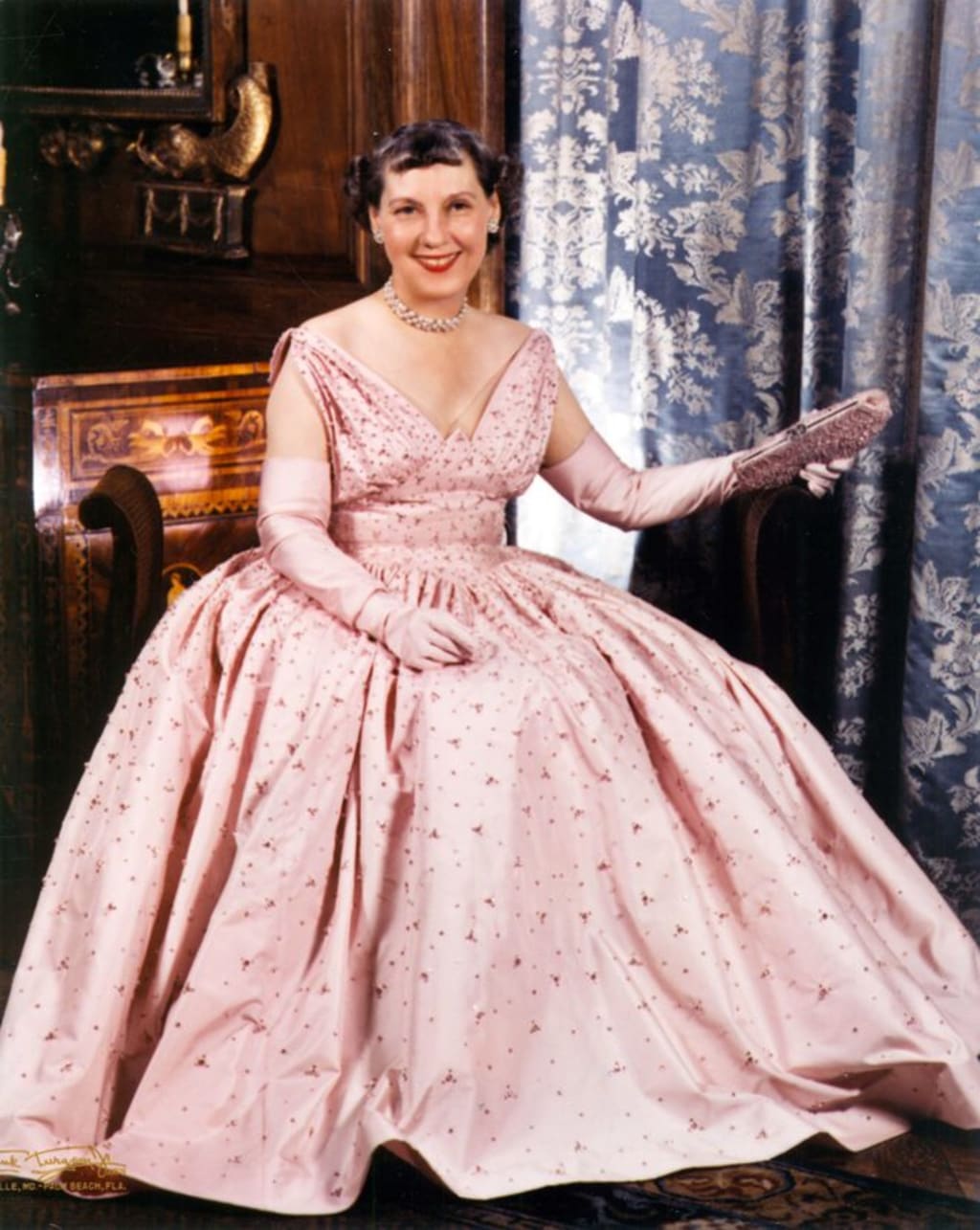
However, it wasn’t until the post-World War II era that pink began to solidify its status as the quintessential "girl's color." The shift came into sharp focus during Dwight Eisenhower’s inauguration in 1953. The spotlight was on Mamie Eisenhower, the First Lady, who wore a stunning, extravagant ballgown covered in rhinestones and dyed in a soft, yet striking, shade of pink. This was a bold departure from the more austere and practical wartime fashions, and Mamie’s fondness for the color set a cultural precedent. She believed that pink highlighted her blue eyes and fair complexion, a personal aesthetic choice that also carried a broader social message. Her distinctive preference for pink became so iconic that the color itself was dubbed "Mamie Pink" in the media, and it frequently appeared in headlines alongside her name. Her quote, "Ike runs the country, I turn the pork chops," encapsulated the period's traditional gender roles, with pink becoming a symbol of domesticity, femininity, and womanly grace.
At the same time, pink began to infiltrate other areas of American culture, extending beyond clothing into home decor. It wasn’t just a color, but a trend—a cultural touchstone that defined the era. One of the most iconic cultural representations of this shift occurred in the 1957 musical Funny Face, where the character of a fashion editor sings the upbeat, catchy tune “Think Pink.” The song encourages women to embrace the color pink, effectively bidding farewell to the darker, more utilitarian colors like black and blue that had been prevalent during the war years. The character even passionately declares, “banish the black, burn the blue,” highlighting the shift from a period of austerity and restriction to one of exuberance and femininity.
While many women were enthusiastic about the rise of pink in fashion and decor, not everyone embraced the color’s new association with traditional femininity. Iconic figures like Diana Vreeland, a trailblazing fashion editor, were hesitant to embrace the notion that pink represented only a return to the status quo. Instead, the color began to take on new meanings, often being adopted by women who defied conventional expectations and rejected traditional gender roles. One striking example was racecar driver Donna Mae Mims, who wore a pink uniform and helmet and drove a pink car, turning the color of softness into a symbol of boldness and speed in a traditionally male-dominated sport.
Pink also found its place in pop culture, but not as a symbol of submission. The Pink Ladies in Grease and the Plastics in Mean Girls were groups of strong, often ruthless women who wore pink not because it made them delicate, but because it set them apart and made a statement. The color evolved into a bold declaration of power, with these women controlling their identities, not conforming to traditional ideas of femininity.
The transformation of pink continued to unfold in the decades that followed. In a more modern context, pink became a color of empowerment, used by women to make statements of strength and defiance. In 2016, for instance, Hillary Clinton appeared on the cover of People magazine wearing a bright pink jacket with the bold, empowering message that women needed to break the “highest, hardest glass ceiling.” Here, pink was no longer associated with domesticity or fragility, as it had been with Mamie Eisenhower, but instead served as a symbol of ambition and strength.
Today, pink transcends its original association with femininity. It’s a color that carries multiple meanings, shaped by the person who chooses to wear it. For some, it’s a playful, fun hue, while for others, it is a powerful statement of individuality and resilience. Whether it represents tradition, rebellion, or empowerment, pink is no longer confined to any one definition. It has become a color that reflects a person’s personality, potential, and the statement they wish to make to the world—proving that pink can mean anything and everything to the wearer.
About the Creator
When True Love Never Questions Your Soul
“And she’s going to learn that this life will hit you, hard, in the face, wait for you to get back up, just so it can kick you in the stomach but getting the wind knocked out of you is the only way to remind your lungs how much they like the taste of air.” — Sarah Kay’s Poem — If I Should Have a Daughter
By Chantal Christie Weiss7 days ago in Humans
The Hidden Valentine part three
Some nights are never meant to be remembered. They carve themselves into the mind, replaying without mercy, resurfacing when you least expect them. They become the dividing line between who you were—and who you are forced to become.
By Ahmed aldeabella6 days ago in Humans




Comments
There are no comments for this story
Be the first to respond and start the conversation.