
How AI is Revolutionizing Everyday Life: From Smart Homes to Self-Driving Cars
How AI is Revolutionizing Everyday Life

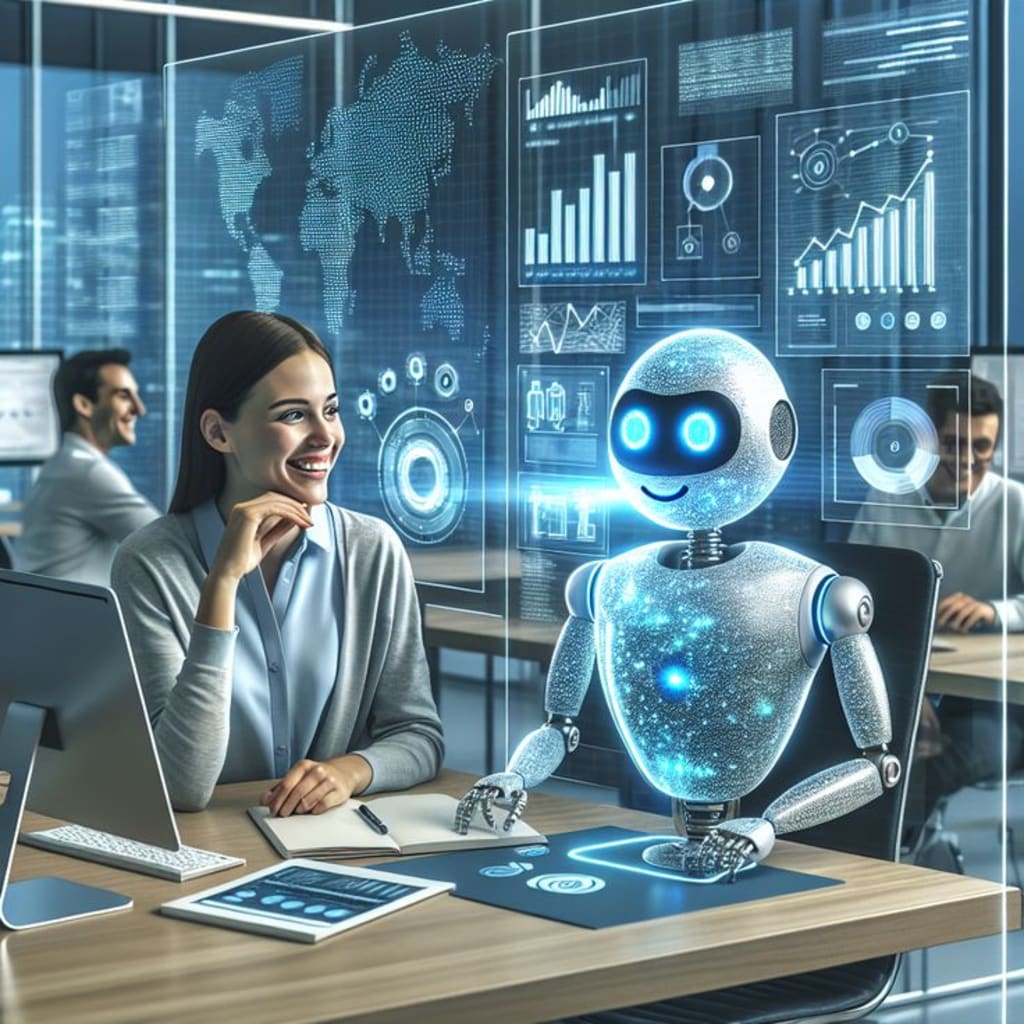
Artificial Intelligence (AI) is no longer just a futuristic concept. It’s already shaping the world around us, subtly transforming how we live, work, and interact with technology on a daily basis. From smart homes that adjust the temperature automatically to cars that drive themselves, AI is becoming an integral part of our everyday life. Let’s explore how AI is influencing our world right now and what the future might hold.
1. Smart Homes: Living in the Future
Imagine waking up in a house that already knows your routine. Your coffee is brewing, the thermostat is adjusting to the perfect temperature, and the lights turn on just as you enter the room. AI-powered smart homes make this a reality.
Devices like Amazon Echo, Google Nest, and Apple HomeKit use AI to learn from your habits and anticipate your needs. They can control everything from your lighting and temperature to your home security systems. These smart assistants are continuously improving, getting better at predicting your preferences and making your home more efficient.
Key highlight: AI in smart homes isn’t just about convenience; it’s also about energy efficiency. By learning when you’re home or away, these systems can reduce energy waste, saving you money while being more eco-friendly.
2. AI in Healthcare: Saving Lives
One of the most impactful areas where AI is making a difference is in healthcare. AI-powered technologies are transforming diagnostics, treatment plans, and even patient care. For instance, AI algorithms can analyze medical images faster and more accurately than human radiologists, helping detect diseases like cancer at earlier stages.
Virtual health assistants, like IBM Watson Health, can help doctors analyze vast amounts of medical data and recommend personalized treatment plans. AI is also aiding in drug discovery, predicting how different compounds will interact with the human body, speeding up the process of bringing new medications to market.
Key highlight: In the near future, AI-powered robots may perform complex surgeries with higher precision than human surgeons, reducing the risk of human error.
3. Self-Driving Cars: Redefining Transportation
One of the most talked-about applications of AI is in self-driving cars. Companies like Tesla, Waymo, and Uber are leading the charge, developing autonomous vehicles that promise to revolutionize transportation.
Self-driving cars use AI algorithms, cameras, sensors, and machine learning to navigate roads, avoid obstacles, and follow traffic rules without human input. While fully autonomous vehicles are still being perfected, semi-autonomous features like lane assist, automatic braking, and self-parking are already available in many modern vehicles.
Key highlight: The potential benefits of self-driving cars go beyond convenience—they could drastically reduce traffic accidents caused by human error, making roads safer for everyone.
4. AI in Entertainment: Personalized Experiences
Ever wonder how Netflix seems to know exactly what you want to watch next? Or how Spotify creates those perfect playlists just for you? That’s all thanks to AI-powered recommendation systems. By analyzing your past behavior, these algorithms can predict your preferences and offer personalized suggestions.
AI isn’t just being used to recommend content, though. In video games, AI is being used to create more realistic and dynamic virtual worlds. In film production, AI helps with everything from scriptwriting to special effects, allowing creators to push the boundaries of storytelling.
Key highlight: As AI continues to evolve, we might see fully AI-generated movies or video games, where AI is not just a tool but the actual creator.
5. AI and Personal Assistants: Your Digital Butler
Digital assistants like Siri, Alexa, and Google Assistant have become commonplace, helping us with daily tasks like setting reminders, playing music, or answering random questions. But these assistants are getting smarter every day. Thanks to natural language processing (NLP) and machine learning, they’re becoming more conversational and intuitive, making it feel like you're talking to a real person.
These AI assistants can now schedule appointments, send texts, and even make phone calls for you, freeing up time for more important tasks. In the near future, AI-powered assistants could handle even more complex tasks, like managing your finances or organizing your schedule with minimal input from you.
Key highlight: The evolution of personal assistants points to a future where AI becomes a truly integrated part of our daily decision-making, helping us manage everything from our homes to our work.
6. AI in Shopping: The Future of Retail
AI is also transforming the way we shop. Online retailers like Amazon use AI to offer personalized product recommendations, dynamic pricing, and even predictive shipping, where items are shipped before you even place an order based on your past purchases.
In physical stores, AI-powered robots can assist customers, manage inventory, and even offer real-time sales predictions. These innovations are creating a seamless, personalized shopping experience for consumers while improving efficiency for retailers.
Key highlight: With AI, we could soon see fully automated stores where you simply walk in, pick up items, and walk out—no checkout needed, as seen in Amazon Go stores.
Conclusion
AI is already woven into the fabric of our daily lives, from the smart devices in our homes to the way we work, travel, and entertain ourselves. The potential of AI is only beginning to unfold, and as it continues to evolve, it promises to bring even more convenience, efficiency, and innovation into every aspect of life.
The future of AI is bright, and those who embrace it will likely experience a world that is more intuitive, more connected, and more tailored to their personal preferences. Whether it’s helping you with daily tasks or transforming industries, AI is here to stay—and it’s only going to get better from here.
About the Creator
Ayesha Rasheed Rajpoot
Video Editor & Content Creator || Expert in Web Content & Blog Posts || SEO Specialist || Social Media & YouTube Management || Handling Social Media Profile & Pages
Keep reading
More stories from Ayesha Rasheed Rajpoot and writers in Humans and other communities.
The Power of AI in Creative Industries
In recent years, Artificial Intelligence (AI) has become more than just a buzzword. It’s transforming industries across the board, and the creative sector is no exception. From video editing to content creation, AI is reshaping how we work, offering new tools and possibilities that were once the stuff of science fiction. But what does this mean for creative professionals? Let's break it down.
By Ayesha Rasheed Rajpootabout a year ago in Humans
The CEO of Everything
They say "jack of all trades, master of none," but they forgot to mention the part where the jack of all trades is also the camera woman, the makeup artist, and the person currently yelling at a tangled Wii microphone cable in a her own bathroom while recording herself singing and trying to make it look realistic and professional. (As professional as you can make it with nothing but a cell phone camera and a mic that doesn't work)
By Sara Wilson4 days ago in Humans
Is Costco Open on MLK Day? What Shoppers Need to Know
Holidays often arrive quietly, then disrupt plans when we least expect it. Martin Luther King Jr. Day is one of those days. It is a federal holiday with deep meaning, but for many people, it also brings practical questions. Work schedules change. Schools close. Errands get delayed. Somewhere in the middle of reflection and routine, a simple question comes up every year: is Costco open on MLK Day? For families planning grocery runs, small business owners stocking supplies, or anyone trying to manage time wisely, this question matters. Understanding how Costco treats this day helps avoid frustration and last-minute confusion. The answer is not complicated, but the context around it is worth understanding.
By Muqadas khana day ago in Humans


Comments
There are no comments for this story
Be the first to respond and start the conversation.