
How a Small Town Shaped a Revolution
Sometimes, the quietest corners of the world make the loudest noise.

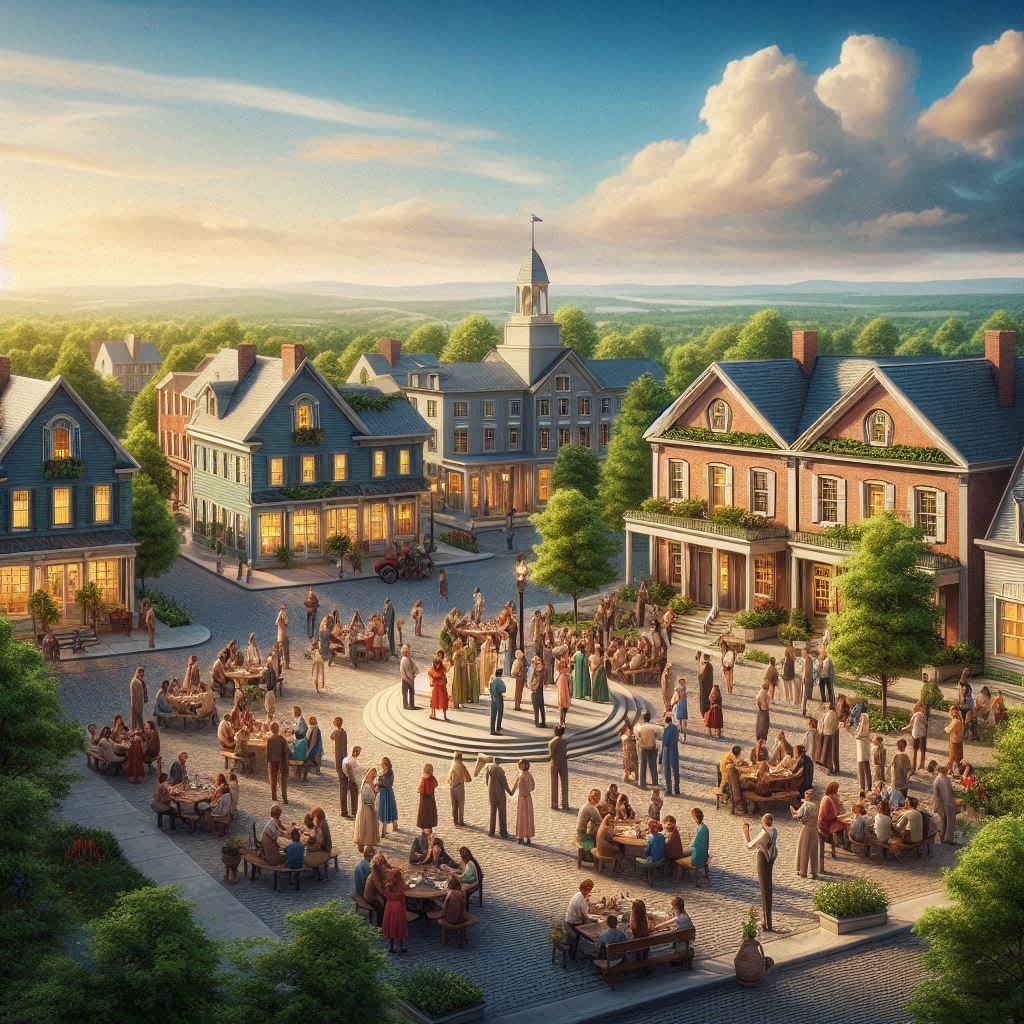
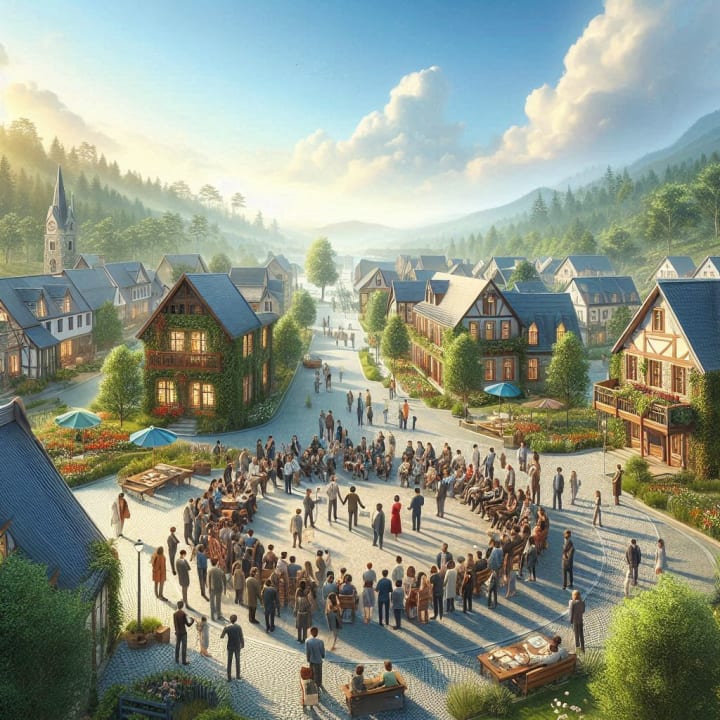
Most people wouldn’t expect a revolution to begin in a town with one stoplight, three churches, and a grocery store that closed by 6 p.m. But maybe that’s exactly why it did.
Our town, Maplewood, had a population of barely 2,000 people. Everyone knew everyone, and sometimes that felt comforting—other times, it felt like being under a microscope. News traveled faster than lightning, and secrets didn’t stay buried long.
I was born and raised in Maplewood. To outsiders, it was a sleepy little place stuck in time. But to those of us who lived there, it was home. And for me, home was everything: safety, simplicity, tradition.
But one summer, that illusion cracked.
It started with a story. A classmate of mine, Jaden, shared on social media that his younger sister had been denied a spot in the town’s community dance program. No explanation. No feedback. Just a rejection. It didn’t seem like much—until he mentioned something most of us hadn’t noticed: she was the only Black girl who had applied.
That post hit differently. It wasn’t just about dance. It wasn’t just about one child. It peeled back a layer we hadn’t wanted to see.
At first, people brushed it off. "It’s just a misunderstanding," they said. "Don’t stir things up." That’s the thing about small towns: we love peace, even if it means avoiding the truth.
But Jaden didn’t stop. He started asking questions, and others began to listen. Not loudly. Not publicly. But in quiet, cautious whispers.
Then something strange happened—kids from the high school started meeting up after classes. They brought their stories. They talked about feeling different, left out, unheard. And not just kids of color. LGBTQ+ students. Students with disabilities. Students who came from low-income homes.
I showed up to one of those gatherings out of curiosity. I didn’t know what I expected, but it wasn’t what I saw. It wasn’t angry. It wasn’t dramatic. It was honest. Real. Human.
And for the first time, I realized how many things I’d ignored just because they didn’t affect me directly.
Jaden, who had started all of this without even meaning to, said something I’ll never forget. He looked at a circle of twenty teenagers and said, “We don’t need to yell to make change. We just need to speak. Together.”
That was the spark.
We formed a youth council. Not official—not yet—but something that gave us a voice. We began writing letters to the school board. We interviewed people about their experiences. We hosted town hall meetings on Zoom during the pandemic when people had time—and the courage—to reflect.
Then the most unexpected thing happened: adults listened.
Not all of them. Some scoffed. Some stayed silent. But some showed up. Some cried. Some apologized.
That’s when it became clear: this wasn’t just a teenage movement. This was a shift.
Soon after, our tiny council helped draft new equity guidelines for the school. The dance program revised its selection process. The local library added a section for diverse literature. A parent group even started a “Unity in Community” reading circle.
All from a town that hadn’t changed its Fourth of July parade route in 40 years.
The word “revolution” usually brings to mind grand images—marches, protests, headlines. Ours was quieter. But it was real. And it mattered.
Because a revolution doesn’t always start with a crowd. Sometimes, it starts with a question. With listening. With courage that whispers before it shouts.
I think back often to that night I sat with Jaden and the others. We were just kids trying to understand the world we lived in. But what we did—what we started—proved something powerful:
You don’t need a big city to create big change.
You don’t need money, fame, or approval.
You just need enough people to believe that tomorrow can be better than today—and to do something about it.
And that, to me, is what a revolution really is.
Moral / Life Lesson:
No matter how small your voice may feel, it matters. Change doesn’t always begin with a roar—it often begins in quiet rooms, honest conversations, and the courage to care. If you believe in something better, speak. Act. You may be the spark your community needs.
---------------------------------
Thank you for reading...
Regards: Fazal Hadi
About the Creator
Fazal Hadi
Hello, I’m Fazal Hadi, a motivational storyteller who writes honest, human stories that inspire growth, hope, and inner strength.
Keep reading
More stories from Fazal Hadi and writers in Humans and other communities.
He Sold a Website That Changed Lives
The Story I first heard about Daniel during a community hackathon I attended five years ago. Quiet, always sipping coffee from a chipped mug, and typing faster than most of us could talk, he didn’t strike me as someone who would change lives. But that’s exactly what he did—with a website he started in his small apartment and later sold to someone who had no idea what it truly meant.
By Fazal Hadi6 months ago in Humans



Comments
There are no comments for this story
Be the first to respond and start the conversation.