
Hot Topics, High Stakes: The Global Issues Sparking Fierce Debates
From courtroom showdowns to Olympic boycotts, a closer look at the world’s most contentious disputes

Why Are We Drawn to Controversy?
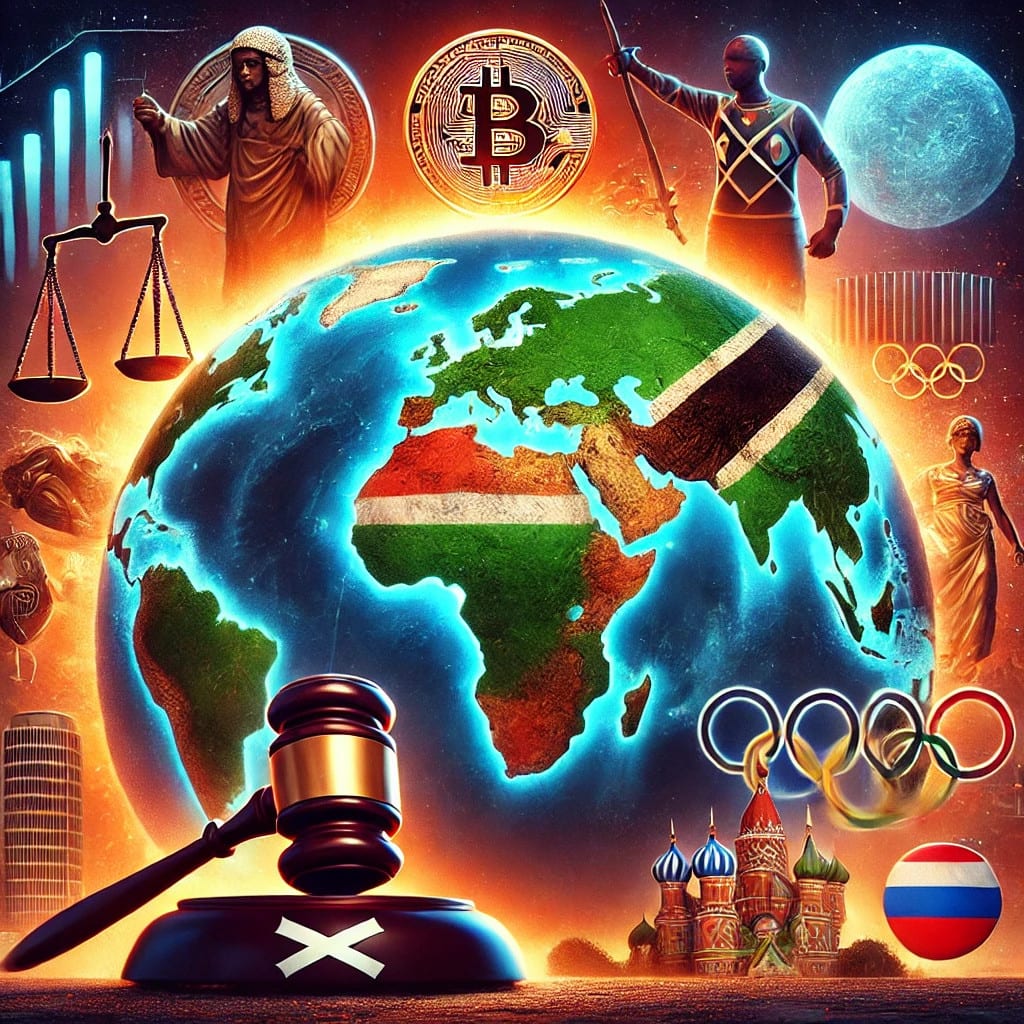
What makes controversy so compelling? Is it the emotional intensity, the ethical dilemmas, or the far-reaching consequences? Throughout history, societies have been defined by heated debates over justice, governance, and human rights. Today, a series of high-profile cases are capturing global attention: the ongoing trial for the 2009 Guinea massacre, the legal scrutiny of Binance in Nigeria, the heated discussion around lifting the ban on female genital mutilation (FGM) in Gambia, and the exclusion of Russian and Belarusian athletes from the Paris 2024 Olympics.
Each of these issues goes beyond the headlines; they reflect deeper conflicts between power, accountability, and morality. As we explore these cases, we’ll examine their significance and the wider implications they hold for our interconnected world.
Justice on the Stand: The Guinea Massacre Trial
In 2009, what started as a peaceful demonstration in Conakry, Guinea, turned into a tragedy when security forces violently suppressed protesters, leaving over 150 dead and hundreds injured. More than a decade later, key figures are finally facing trial, bringing to light crucial questions about accountability and the rule of law in Africa.
Major Issues at Play:
- The capability of national courts to handle cases of mass human rights violations.
- The role of global organizations like the ICC and UN in ensuring justice is served.
- The long-term psychological and social effects on survivors and victims’ families.
The outcome of this trial could set a new standard for justice in politically fragile states. A conviction could embolden other nations to pursue similar cases, while a failure to deliver justice may reinforce the perception that political power shields perpetrators from accountability.
Cryptocurrency Under Scrutiny: Binance’s Nigerian Dilemma
Cryptocurrency has been hailed as a game-changer in finance, offering a decentralized alternative to traditional banking. Yet, Nigerian authorities have taken a hard stance against Binance, alleging that the platform facilitates unauthorized financial activities and disrupts economic stability.
Why This Matters:
- Nigeria is one of the world’s leading adopters of cryptocurrency, driven by economic instability and inflation.
- Governments fear that the lack of regulation in digital currencies enables financial crimes like fraud and money laundering.
- The case against Binance could set a precedent for global crypto regulations and governmental crackdowns on decentralized finance.
Whether this legal battle results in stricter regulations or a shift towards more resilient financial systems, its impact will be felt worldwide. Could this mark the beginning of a new era of government oversight in the crypto space?
The Gambia’s FGM Debate: Culture vs. Human Rights
One of the most controversial legislative proposals in recent memory has emerged in Gambia—a bill aiming to lift the ban on female genital mutilation (FGM) under the justification of cultural and religious traditions. This has ignited a fierce debate between traditionalists and human rights activists.
The Core Arguments:
- Supporters claim the ban on FGM infringes on cultural autonomy and religious practices.
- Opponents argue that FGM is a violation of fundamental human rights and poses serious health risks.
- The role of international advocacy versus local governance in shaping policies affecting bodily autonomy and gender equality.
This issue highlights a broader struggle faced by many post-colonial nations—how to reconcile deep-rooted traditions with evolving human rights norms. The decision Gambia makes could influence similar debates across the African continent and beyond.
Politics and Sports Collide: The Olympic Ban on Russian and Belarusian Athletes
The decision to exclude Russian and Belarusian athletes from the 2024 Paris Olympics, in response to their governments’ roles in the Ukraine conflict, has ignited heated debate about the intersection of politics and sports.
Key Questions:
- Should individual athletes be penalized for the actions of their governments?
- Does this decision set a dangerous precedent for geopolitical conflicts affecting global sporting events?
- Is banning these athletes an effective form of protest, or does it compromise the principle of fair competition in sports?
While some advocate for allowing neutral participation as a middle ground, others argue that any form of inclusion undermines international sanctions. This controversy will have long-term consequences for international sporting policies and diplomacy.
Conclusion: Engaging in the Global Debate
These disputes—spanning legal, financial, cultural, and sporting arenas—highlight the deep divisions shaping today’s world. They force us to grapple with difficult questions about justice, governance, and human rights in an era of rapid change.
More importantly, they remind us that debate matters. By discussing, questioning, and analyzing these issues, we contribute to shaping global perspectives and policies. Where do you stand? Should stability take precedence over justice? Can cryptocurrency truly exist outside governmental control? Should cultural traditions be reformed in light of modern human rights? Should politics be kept out of sports?
Share your thoughts in the comments—I’d love to hear your perspective!
About the Creator
Alain SUPPINI
I’m Alain — a French critical care anesthesiologist who writes to keep memory alive. Between past and present, medicine and words, I search for what endures.
Keep reading
More stories from Alain SUPPINI and writers in Humans and other communities.
Mastering French Without Losing Your Sanity: A Realistic Guide for Beginners
Learning French can feel like solving a Rubik’s Cube blindfolded. The tricky pronunciation, the never-ending grammar rules, and the surprising exceptions make it seem impossible. But don’t worry—equipping yourself with key expressions and effective strategies can turn frustration into fluency. Let’s simplify French and make learning enjoyable.
By Alain SUPPINIExclusive • 11 months ago


Comments
There are no comments for this story
Be the first to respond and start the conversation.