
Harris should have won the Debate!
Do not mind the picture


Comparing Kamala Harris and Donald Trump involves assessing their leadership styles, policy positions, and personal qualities in the context of what different people may prioritize in a leader. Some find Harris's approach to be more unifying and policy-driven, while others might favor Trump’s populist appeal and direct communication. Here’s a look at how Harris's approach to governance, experience, and personal values might appeal to voters who prefer stability, inclusivity, and progress over disruption and divisiveness.
1. Experience in Governance and Public Service
Kamala Harris has built her career in public service over the course of nearly two decades. As a district attorney in San Francisco, attorney general of California, and then U.S. senator, Harris has substantial experience in navigating complex policy issues, particularly on criminal justice reform, consumer rights, and public health. Her time as a U.S. senator gave her legislative experience, including work on key committees like Homeland Security, Intelligence, and Judiciary. These roles required collaboration across party lines and deep policy understanding.
Trump’s background is primarily in business, and he had no prior political or public service experience before his presidency. This made him an unconventional leader, which some admired as a “fresh approach,” but it also led to criticisms about his lack of understanding in diplomatic relations and the functions of government. Harris's extensive experience means she’s more accustomed to the intricacies of policy and collaboration, which may lend itself to more stability and fewer divisive policy swings.
2. Approach to Leadership
Harris emphasizes collaboration and often seeks to build coalitions across the political spectrum, as well as with other countries. For example, she has led diplomatic missions and engaged in international talks to address global issues such as immigration and climate change. Her approach to leadership is more measured, prioritizing careful consideration and long-term planning. Harris has also emphasized her commitment to democratic norms and institutions, aiming to uphold the values of transparency and accountability.
Trump’s leadership style has been widely described as populist and assertive, often driven by his personal beliefs rather than established norms. He appealed to his base by positioning himself as an outsider, frequently challenging the political establishment and mainstream media. However, his approach has been criticized for fostering division. His dismissal of international alliances and preference for a more insular approach sometimes strained relations with traditional allies. Harris’s style of leadership, in contrast, may appeal to those who prefer stability, diplomacy, and inclusivity in addressing both domestic and global challenges.
3. Policy on Social and Economic Issues
Harris's policy positions tend to align with progressive and moderate Democrats, emphasizing economic fairness, healthcare access, and social equity. She advocates for raising the minimum wage, expanding access to affordable healthcare, and addressing systemic racism. As vice president, she has supported initiatives that promote middle-class growth.
Donald J. Trump is the projected winner of the 2024 U.S. presidential election according to multiple news sources. For the most up-to-date information about the U.S. Election, please visit news sources like The Associated Press and Reuters, or check with your state or local election authority.
We can say that Trump has his thing going on right now, we do not care about. All a have to say next is that my perspective as an European is far from the same as someone that is more into American political stuff.
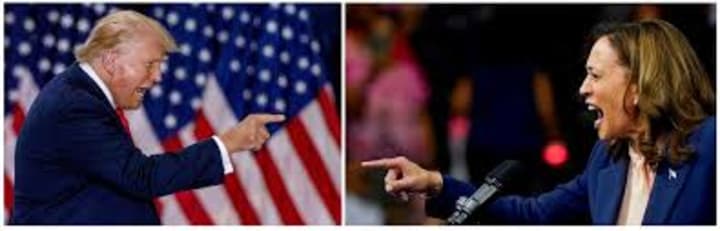
Here are more images of Kamala Harris and Mr. Trump:
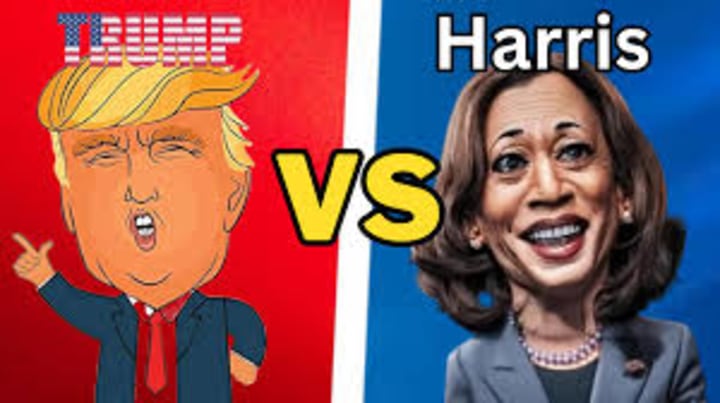
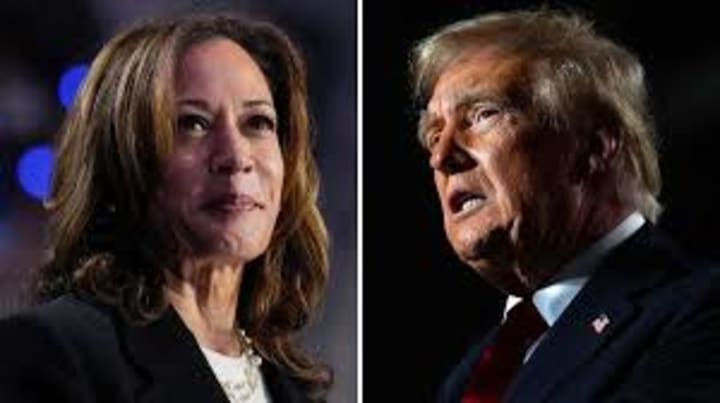
During Trump’s presidency, the U.S. experienced significant economic growth before the COVID-19 pandemic. Proponents cite job creation, tax cuts, and regulatory rollbacks as reasons for a strong economy.
The Tax Cuts and Jobs Act of 2017 reduced corporate tax rates, which supporters argue spurred business investments and economic expansion.
His focus on renegotiating trade deals, such as the USMCA (United States-Mexico-Canada Agreement), is viewed as a victory for American workers.
About the Creator
Emil Mihov
I travel a lot and see amazing things that I will tell in these stories, I will show you the best of my travels.
Gambling is bad also!!!
Keep reading
More stories from Emil Mihov and writers in Humans and other communities.
You are using Chat GPT WRONG!!!
Chat GPT (Generative Pre-trained Transformer) is a powerful AI language model developed by Open AI. With its advanced natural language processing capabilities, Chat GPT can perform a wide range of tasks and offer various functionalities. In this essay, we will explore the vast capabilities of Chat GPT and how it can be utilized to benefit individuals and society.
By Emil Mihov2 years ago in Humans
A Dart at Dusk
Seconds ago, the sullen sun set on the two of us… my exuberant furry companion and me. A fresh breeze embraces us, delivering welcome relief from the day’s oppressive heat. His typical stumbling and staggering along — apace with a sloth — has turned into trip-trapping, high-stepping, almost skipping along.
By Angie the Archivist 📚🪶6 days ago in Petlife



Comments
There are no comments for this story
Be the first to respond and start the conversation.