
Grown Folks Faith: When Belonging Gives Way to Becoming
Christianity, Judaism and the End of Spiritual One-Upmanship

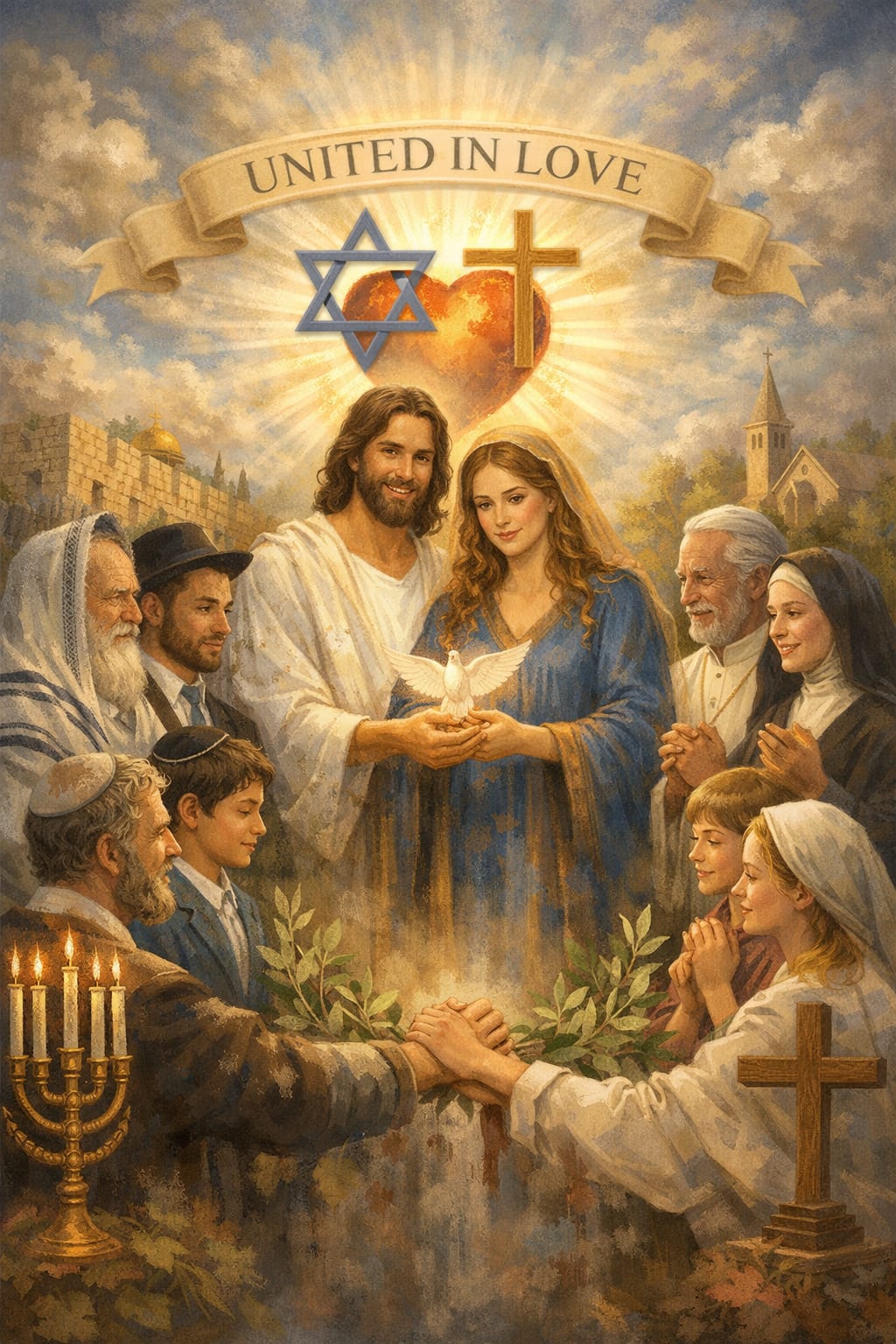
Author's Note: Grown Folks Faith explores a quiet misalignment inside a long-standing social and religious system: Christianity as it is often practiced versus what it claims to embody. Rather than critiquing belief itself, this essay examines how systems meant to cultivate humility, love and transformation can drift into elitism through habit, identity and unexamined contrast.
The misalignment rarely announces itself as failure; it appears as friction—spiritual one-upmanship, exclusion masked as certainty and belonging that replaces becoming. By tracing the developmental arc of Israel in the Hebrew Scriptures and reflecting on lived Christian experience, this piece looks at how systems shape people over time, how power and identity subtly reorganize meaning, and how maturity is often resisted by the very structures designed to nurture it.
This is not a proposal for reform. It is an act of attention—toward a system many inherit, few question and almost all are shaped by.
Religious systems are designed to create meaning, order, and belonging. They promise coherence in a chaotic world. But over time, even systems built on love can drift—quietly reshaping identity more than character, and certainty more than compassion. When this happens, the failure is rarely dramatic. It shows up as friction: who belongs, who is trusted, and who is quietly left outside the circle.
Christianity is one such system. At its best, it invites transformation, humility, and love. At its worst, it becomes a marker of status, certainty, and separation. This essay is not an attack on belief, but an examination of how a faith tradition meant to cultivate becoming can slowly harden into belonging—and how that shift distorts the very heart of the message it claims to carry.
Judaism and Christianity are often treated like rival schools of thought, but a truer image might be this: they are half-siblings raised in different households. They share the same Mother. They carry the same ancestral memory. But they were shaped by different views of the Father, different pressures, different seasons, and different callings.
An immature faith says,
“My dad can beat up your dad”
But, neither side has fully grasped who the Father is. This posture emerges from insecurity.
God Shapes Nations with Slow Precision
As we come to know Israel, through the pages of the Bible we find the Israelites in a precarious situation with the Egyptians. Enslaved. Starved. Broken. Then Moses performs the most miraculous stunt with the parting of the Red Sea, saving Israel and drowning Egypt’s army. After Moses bails them out, they repay God with murmurs, complaints and idol worship. Finally, after almost a century of unfaithful souls dying off, Joshua and Caleb take Jericho with the vibration of an army’s cadence and the correctly timed, sounding of trumpets. Walls fall. First city conquered.
As they move their way into the land of Canaan, Joshua casts lots to determine the division of tribal lands. Over a period of time, the Israelites lived, worked and created communities in the Promised Land. In the era of the Judges, they end up as a bunch of scattered, fledgling tribes held together by kinship. Territories were fought over and won with blood and dominance. Sometimes they fought giants and foreign invaders. Sometimes they fought each other. Does this story sound familiar?
Judges from strong tribes were elected to serve as governors. King Saul saw the last of the Judges. His bloodline, the tribe of Benjamin ushered in Israel’s line of Kings.
The point is, Israel does not present as finished, polished or perfected when the story opens, nor when it closes. But, Israel does evolve. We see Kings govern with wisdom and compassion. Priests, support the King, minister to the people and mentor Prophets. And we see Prophets call Kings and Kingdoms back into alignment with the Good.
The kingdom of Israel is eventually taken over and occupied by the Romans and our spiritual story culminates by revealing the Messiah. The Christ archetype; a wisdom-infused, transformative and participatory faith healer to serve as the blueprint for perfect love. God meets humanity where it is, then patiently draws it toward coherence. The way that Israel grows, changes and reconfigures is a representation of how human consciousness grows in the way it relates to God.
A mature faith says:
"We are members of one body, each part vital, each function necessary, creating a masterpiece together."
The Kingdom of Heaven
Jesus is explicit:
“The kingdom of God is within you… among you… at hand.”
The kingdom is more than a geopolitical structure. The Kingdom is a state of alignment
When tribal justice matures into shared responsibility, truth can resonate through leadership. The kingdom is the place where subjects and Kings learn to restrain power in favor of compassion. The kingdom is where faith emerges as a byproduct of tempered impulses, a mind set on things above and where love outpaces fear.
Perhaps this is why faith is called
the substance of things hoped for and the evidence of things unseen.
One Tradition, Two Faculties
Christianity claims that in Jesus, God was revealed in a new, embodied way. Judaism did not accept that claim. Judaism’s faithfulness is rooted in Torah. Judaism honors God and encounters him through accuracy. Members of the Jewish religion have preserved the art of storytelling through faithful practice and generational responsibility. They believe in a communal way of life and maintain familial bonds, naturally.
Christians say that we find God through Jesus. They believe that the death, burial and resurrection of Jesus Christ is what separates Christian Gospel from other forms of Religion. And this is the one area where Christians are united.
Beyond this fundamental principle of Christianity, there is almost no continuity of culture or doctrine throughout the realm of Christianity.
The majority of Christians believe that Jesus ‘paid it all.’ Most align with the belief that transformation happens from within, that God is love and grace is available for all who believe. But, there are some Christians who believe you must be chosen in order to obtain salvation. I could go on, but this is not a doctrinal debate. At least not today.
In reality, Judaism and Christianity need not compete. Two things can be true at the same time. They are different faculties of faith, different offices in the same school or half-siblings raised in different homes.
The tragedy occurs when Christianity defines itself by contrast—instead of community.
When Belonging Replaces Becoming
If I admit that Jesus is Lord. And believe in my heart that he died for my sins and was raised from the dead on the third day, and confess that I am not perfect and need a Savior—I can invite Jesus Christ into my heart as my Lord and Savior.
This is something we Christians use to evangelize the lost. We literally call it the ABC’s of salvation. It is a prayer I have used many times to convert people to fishers of men.
When I was growing up, there was almost this militant approach to the Christian faith. One of the first songs we are taught, as children, is I’m in the Lord’s Army. There is also much imagery in the King James Version of the Bible that talks about putting on the Armor of God. This imagery prompting people to casually refer to their Bibles as swords.
When I was eight years old, I trained in Bible Drills for organized competitions that ranged from local to National Levels. Our team made it to the State Level. We responded to Drill Calls that went like this; Attention, Present Bibles, Philippians 1:3, Begin. Then they gave us one minute (I think), maybe two, to find the called verse. Once located, we placed our right index finger on the verse and stepped forward. If six of you stepped forward, you had a one in six chance of being called on to read aloud. While other denominations might use similar, independent scripture-memorization methods, the formalized "Bible Drill" program is an initiative of the Southern Baptist Convention.
Spiritual tribalism has lived inside the Christian community for as long as many of us can remember. The Presbyterians are the frozen chosen, The Pentecostals are the holy rollers and the Baptists are, well I don’t know because we do not talk bad about ourselves!
This division among Christians is called denominations. Sometimes within these denominations, or tribes, an inflated sense of identity emerges. There tends to be an assumption that Our way is better.
Or—My dad can beat up your dad!
I feel an urgency to speak on this, because I think that Christianity is especially vulnerable to elitism. Mostly because we offer a Universal Invitation, but make Absolute Claims. Christians preach grace, freedom and relationship with God. But, the underlying attitude is that non-Christians live outside of grace and are less than worthy, with their prayers going un-heard. Religion becomes tied to status, or social class when treated as 'separatist.'
But this is not what Jesus taught, at all!
Jesus was always eating with unclean or disgraced archetypes. Jesus hung out with foreigners, prostitutes and boys who fished on the Sabbath. Jesus did not care if his followers got it right 'all the time.' Jesus cared more about their heart's response to 'missing the mark.'
Jesus and Sophia
The moment any sect of Christianity, uses Jesus to feel superior it has already stepped out of alignment with him. Jesus defeated church sanctioned violence by revealing the heart of the One God more clearly than anyone, ever before. He doesn’t gather people to prove they’re better, or chosen or elite. He gathers people to prove no one needs to be better than anyone else to be loved, accepted or included. Jesus revealed the character of the Most High God through embodied wisdom and love. It is in this way that Jesus embodies Sophia. Both serve the same divine coherence.
Sophia's wisdom asks us to grow, mature in our understanding of who the Christ is.
Sophia doesn’t care who you belong to. She does not weaponize faith or demand allegiance. The wisdom, of Sophia invites alignment. Wisdom invites you to participate. She says, "Taste and see that the Lord is Good." She asks you to have a seat at the table and commune. She cares whether you are becoming coherent, compassionate, and true. A mature faith does not abandon conviction; it deepens compassion.
That’s not weak faith. That’s grown FOLKS faith.
About the Creator
A.K. Treadwell
Grateful. Recovering. Alcoholic. Preacher's Daughter. I am a juxtaposition. I am the Tale of Two Cities. I sojourn in this foreign land, passing through, declaring the way of the Lord. Follow me, as I follow Christ.
Keep reading
More stories from A.K. Treadwell and writers in Humans and other communities.
Salt of the Earth, Heat of the Hearth
Ralph was out back cutting firewood when the sky turned that certain winter gray, the kind that tasted like metal and felt like waiting. He had found his rhythm with the axe, wood splitting under his swing in clean, sharp sounds that echoed off the Appalachian hills. Sweat beaded along his brow despite the freezing cold. One drop gathered at the tip of his nose, hung there a second, then fell onto the blade. A tiny offering. He noticed it, snorted once, and kept chopping. The work felt good. Solid. He was a man who, above all, provided heat and shelter for his household when the world turned hard and cold.
By A.K. Treadwell 2 months ago in Humans
The Letter That Arrived Late
The letter arrived on a quiet Tuesday morning. It was slipped under Adam’s door, mixed with newspapers and advertisements. At first, he didn’t notice it. The envelope was plain, slightly yellowed, with his name written in careful handwriting. No return address.
By Sudais Zakwan7 days ago in Humans
If You Write A Book, Don’t Tell Anyone
There are days when I’m grateful Amazon doesn’t tell me specifically who has bought my book and who hasn’t. If they did, I would be heartbroken when I read the list and noticed all the important names in my life were not on my list of customers.
By Ellen Frances6 days ago in Writers




Comments
There are no comments for this story
Be the first to respond and start the conversation.