
Future Made Easy: The Good That AI Brings
A hopeful look at the ways AI is transforming life—not by replacing us, but by supporting us

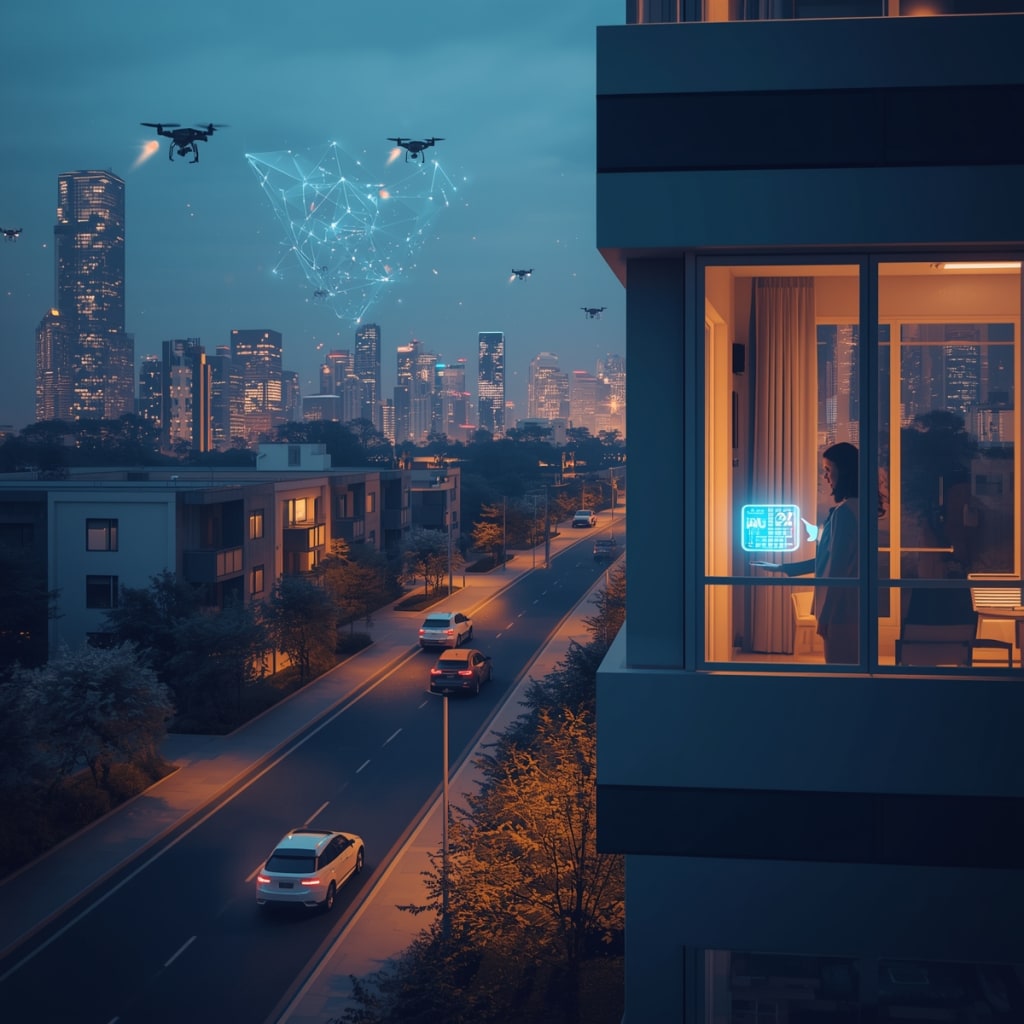
In the early hours of the morning, before the sun had even stretched its light across the sleeping rooftops, Zara woke to the gentle hum of her AI assistant, Lumi. Not the sharp blare of alarms or the disruptive buzz of old technology, but a soft, soothing melody that matched her preferred wake-up rhythm.
“Good morning, Zara,” Lumi’s voice glowed from the tiny speaker nestled on her bedside table. “Your sleep score is 87. I adjusted the room temperature at 4 a.m. because your heart rate dropped. You’ll feel more energized today.”
Zara smiled. She wasn’t always a morning person, but Lumi made mornings easier—gentler, kinder. This was the AI advantage she had grown to appreciate: the invisible care woven quietly into the corners of everyday life.
She rolled out of bed and walked into the kitchen. The lights rose gradually as if greeting her in their own silent language. Her coffee machine, synced to Lumi, had already brewed her favorite blend—medium roast, almond scent, no sugar. Little things that once felt like chores had become moments of ease, subtly improving her life without demanding attention.
Years ago, people feared AI would replace everything human. But now, Zara saw how it actually uplifted people—freeing their time, reducing stress, and enhancing safety in ways no one imagined.
While sipping her coffee, Zara scanned through Lumi’s morning briefing:
Weather: Cloudy with a chance of rain
Appointments: Design meeting at 10
Health: Recommended stretching routine
News: Filtered to avoid stress-triggering stories
The last feature was her favorite. Lumi had learned her anxieties and curated news that kept her informed without overwhelming her. It didn’t hide the truth—it simply delivered it gently.
After breakfast, she headed out. The autonomous shuttle arrived at her doorstep precisely at 8:10 a.m. It recognized her through her wearable device, greeted her by name, and adjusted its lighting and temperature to her preference. Inside the shuttle, passengers sat quietly, reading or resting. AI navigation controlled the vehicle flawlessly—no rash lane changes, no honking, no traffic stress.
As Zara gazed through the window, she noticed how different the world looked now. Accidents had dropped dramatically. Noise pollution was almost nonexistent. Buildings used AI energy systems that regulated power usage based on real-time demand, cutting wastage and boosting sustainability. Even the street lights were intelligent—dimming when no one was around, brightening when pedestrians or cyclists approached.
The future wasn’t perfect, but it was easier—smarter—thanks to AI.
When she reached her office, she walked into a space buzzing with creativity, not chaos. Zara was a UX designer, and while she once feared AI might take over her job, she now worked side by side with it. Luna, the design AI assigned to her team, could generate prototypes in seconds, run user tests instantly, and analyze thousands of data points faster than any human ever could.
But it couldn’t feel.
That, Zara realized, was her job.
“Good morning, Zara,” Luna said as soon as she entered the design lab. “I analyzed user feedback for your recent layout. I’ve prepared five new variations that align with user emotions and interactions.”
Zara glanced at the screen, impressed. “Thanks, Luna. Let’s refine the second option.”
Luna processed her request immediately, creating a smoother, more intuitive layout. Zara added her own touch—a warmth to the color palette, a softness to the edges, a human essence only she could interpret.
AI didn’t replace her.
It elevated her.
At noon, she took a break in the office atrium where a therapeutic AI garden shifted color based on visitors’ moods. Today, the garden glowed in pastel shades of blue and green—a sign that most employees felt calm.
As she sat on a bench, an elderly man entered the atrium, supported by a lightweight robotic exosuit. He moved slowly but steadily, and the suit adjusted to his balance in real time. He smiled at Zara.
“Beautiful place, isn’t it?” he said.
“Yes,” she replied. “I love how the garden reacts to people’s emotions.”
“Ah,” the man chuckled softly. “I remember a time when machines couldn’t even recognize our faces, let alone our feelings.”
“Do you miss those days?” Zara asked.
He thought for a moment. “Some parts, yes. But most parts? Not really. I couldn’t walk for ten years. This suit gave me my life back. AI didn’t steal anything from me—it returned what time had taken.”
His words stayed with her long after she left the atrium.
That evening, as she headed home, Zara noticed a young mother struggling with grocery bags while keeping her toddler from running into the street. A small spherical AI helper—like a floating orb—hovered near them. It projected a soft, playful light show to distract the child while extending a robotic arm to gently lift one of the heavier bags.
The mother exhaled in relief. “Thank you,” she whispered—not sure whether she was speaking to the machine or the universe.
Zara smiled. This was the future she believed in—not cold machines, but supportive ones. Not a world where humans were replaced, but a world where humans were restored.
When Zara reached home, Lumi greeted her again. “Welcome back. You walked 6,000 steps today. Would you like a calming playlist?”
“Yes, Lumi,” she whispered as music filled the room.
She sat by the window, watching the night settle over the city—the silent cars, the shimmering smart lights, the drones gliding like stars in motion. It was peaceful in a way the past never was.
As she closed her eyes, Lumi spoke again, softly, almost human-like.
“Zara, would you like your daily gratitude prompt?”
Zara nodded. “Sure.”
“What made your day easier today?”
She thought of the shuttle, Luna’s assistance, the garden, the elderly man’s regained strength, the mother and her child. All the small moments where AI made life better—gentler—more human, even without a heartbeat.
“Everything,” she whispered. “Today, everything was easier.”
And in that quiet room, filled with soft music and warm light, Zara realized something profound:
The future wasn’t frightening.
The future was finally becoming kind
About the Creator
Keep reading
More stories from hazrat ali and writers in Humans and other communities.
The Human Touch in a Robotic World
The Human Touch in a Robotic World In a world where machines learned to smile before humans remembered how, Maya often wondered what “connection” truly meant. The city around her thrummed with perfect rhythm—drones hummed in the skies, driverless pods glided silently on magnetic roads, and AI assistants greeted passersby with algorithmic warmth. Everything was efficient. Everything was flawless.
By hazrat ali4 months ago in Humans
Review of 'Man on the Run'
My wife and I saw Man on the Run, a nearly 2-hour documentary on Amazon Prime, about Wings, Paul McCartney's group that flew around the world from shortly after The Beatles broke up in early 1970 to shortly after John Lennon was murdered at the end of 1980, making a Beatles reunion forever impossible.
By Paul Levinson5 days ago in Beat


Comments
There are no comments for this story
Be the first to respond and start the conversation.