
Friend? Friend? Who What Where Friend?
This story explores the complexity of friendships where manipulation hides behind the mask of companionship, reflecting on the emotional toll it takes on the person who’s being used.

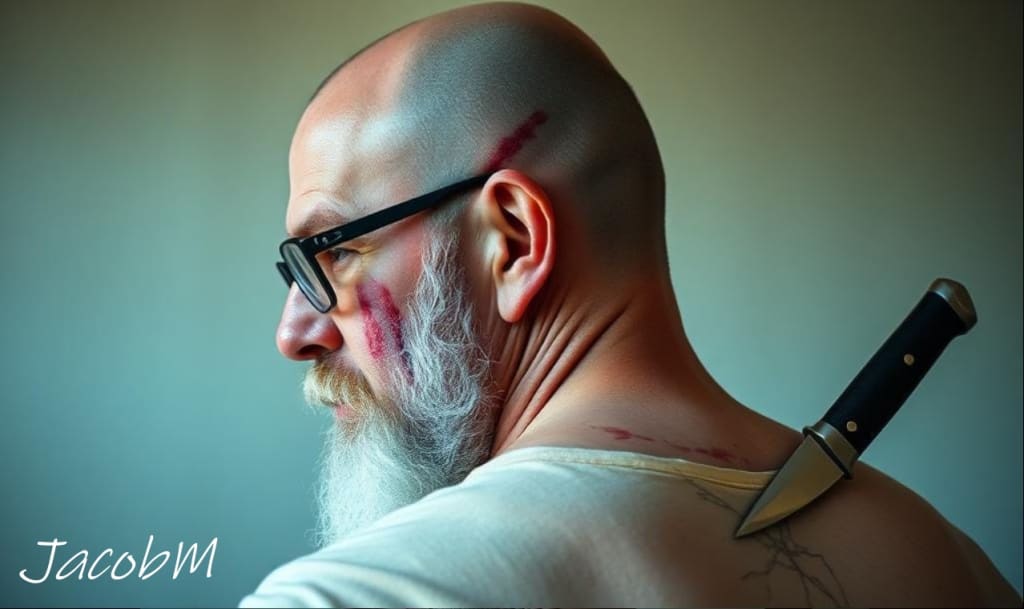
Dear Readers,
What is a friend? That question has echoed in my mind for years, turning over like a rock in the dirt, never finding its rightful place. You see, I thought I knew what a friend was someone who listens, who shares, who stands by your side no matter what. But now, I’m not so sure. Now, I wonder if the word "friend" has become a currency, a tool used to gain something from others, and I wonder if I’ve been the one who’s always given, always trusted, and always believed that a friend is someone who should never use you.
What is a friend, really? Is it someone who knows your darkest secrets and still stands by you? Or is it someone who claims to be by your side, but in the quiet, unspoken moments, they’re busy collecting your weaknesses like trophies? Maybe a friend is just a mask, worn to hide their true intentions.
I remember the first time I met Sam. He seemed like everything I’d been searching for someone who could understand me, who would have my back when the world felt too heavy. We clicked, just like that. Or at least, I thought we did. I shared my stories, my pain, and my hopes, and Sam he listened. He even told me his own struggles, and we bonded over our mutual scars. It felt like a friendship that was meant to last, the kind you see in movies, the kind that doesn’t fade with time. But somewhere along the way, something shifted.
What is a friend? In Sam's case, I began to realize, a friend is someone who understands the delicate art of manipulation, of making you believe they’re your greatest ally while subtly turning the screws in ways you never notice at first. Sam was a friend when it suited him, and when I needed him most, he was never there. It was like a slow burn, the way he used my trust against me. At first, I couldn’t see it. It was small things he would ask for favors, and I’d happily oblige. I’d lend him money, my time, my attention. But when I needed the same, Sam was suddenly too busy, too tired, too wrapped up in his own world. He would tell me, “I’ve got your back,” but when it came down to it, his words were empty.
Where is a friend when you need them? Where are they when you’ve bent over backward to be there for them, and now, when you’re struggling, you find yourself standing alone in the darkness? Sam was there when everything was easy when the world was a place of comfort, but when the walls started crumbling down around me, he disappeared. Not physically, of course, he was still there, in the background, checking in every now and then, offering vague advice that left me more confused than when I started. But emotionally? Mentally? Sam was gone. He wasn’t the friend I thought he was. He was the kind of friend who only showed up when there was something to gain when my vulnerability made me useful to him. I started to realize that, for Sam, friendship wasn’t about reciprocity. It was about what he could take.
The question that lingered in my mind, then, was: When is a friend? When do they step up and show you who they truly are? When do they shed the mask of convenience and show the person they truly are beneath the layers of words and promises? I used to think that a friend would show up in times of need, that they would stand by you no matter how tough it got. But when Sam was needed most, he didn’t step in. Instead, he pulled away, turning everything back onto me, making me feel like I was the one who was asking too much, who was being too demanding.
In those moments, I realized something bitter: there are friends who only exist in the moments that are comfortable for them. Friends who are there when it’s easy when you have something to offer, but the minute you become a burden, they vanish. They don’t want to carry any of your weight and don’t want to share in the struggle. They only want to be part of your joy, part of your success. And when you fall, they leave you to pick up the pieces alone.
And yet, I still kept going back to him, didn’t I? I still kept holding on, convinced that maybe if I just gave more, he’d give back. Maybe if I just showed him more of my heart, he’d see the value in it. But the truth is, when you give so much to someone who never gives back, you start to lose pieces of yourself. You start to forget what it feels like to be whole, to be loved for just who you are, not for what you can offer.
I used to believe that friendship was unconditional. But now, I see that friendship is a balance. It’s a give-and-take, a constant exchange of trust, respect, and support. It isn’t about using someone for your own gain, and it certainly isn’t about making someone feel small just so you can feel bigger. A friend should be a mirror, reflecting back the best parts of you, supporting you in your darkest hours, and lifting you up when you fall.
But for Sam, I was never the mirror. I was the stage. I was the one who always gave, always performed, and always stood there to entertain his needs. And when I fell off the stage, he wasn’t there to help me back on.
So, what is a friend, really? A friend is someone who doesn’t use you as a means to an end. They don’t bend your trust and pull at your heartstrings just to get what they want. A friend is someone who meets you halfway, who sees the value in your friendship not because of what you can offer, but because they value you for who you are.
Where is a friend? A friend is where honesty lives, where loyalty thrives, and where both parties are willing to be vulnerable and open with each other. It’s in the shared laughter, the shared silence, the times when you’re both broken and yet still standing side by side.
When is a friend? A friend is there when you need them, not because it’s convenient, but because they truly care. They show up not just when it’s easy, but when the weight of the world is too much to bear. A friend knows when to step back and give you space, but they also know when to step forward and help you carry the load.
And I’ve learned, the hard way, that friendship isn’t something you should have to fight for. It’s something that should come naturally, like breathing. If it’s too much of a struggle, maybe it’s time to step away, to stop giving your heart to someone who doesn’t value it.
I still don’t have all the answers. I still don’t know what a friend truly is, or where they are, or when they’ll show up. But I know now that I deserve the kind of friendship that’s not transactional, the kind that doesn’t take more than it gives. And maybe that’s the first step in finding the kind of friends who won’t use me but love me, just as I am.
This story explores the complexity of friendships where manipulation hides behind the mask of companionship, reflecting on the emotional toll it takes on the person who’s being used. It’s an exploration of what it truly means to be a friend and when we need to recognize when it’s no longer serving us.
Reflection
Friendship, when it’s pure and true, feels like a sanctuary a place where trust is built, hearts are open, and love is given freely. But when a friendship turns toxic, it can feel like a prison, where every moment is used against you, where your value is measured by what you can offer, not who you are. The hardest part is recognizing this change, understanding that the person who once called themselves your friend is now someone who manipulates your emotions and uses your trust for their gain.
We’ve all been there at some point, wondering where our friends went when we needed them, questioning why we were always the ones giving, always the ones bending over backward to please, but never receiving in return. It’s easy to blame ourselves, to think we’ve somehow failed at being a friend. But the truth is, the responsibility doesn’t lie on us. We are not the ones who have turned the friendship into a transaction. We are not the ones who have betrayed the trust.
A true friend is not someone who takes from you until there’s nothing left. A true friend is someone who recognizes your worth without needing to use it, someone who understands that friendship isn’t about getting something in return, but about being there for each other, no matter the circumstances.
In the end, it’s not about trying harder to please those who can’t see our value. It’s about knowing our own worth, and accepting that we deserve a friendship built on respect, honesty, and mutual care. When we start to see our own worth, we stop letting people use us. We stop letting ourselves be manipulated by the empty promises of those who only show up when it’s convenient for them.
The reflection is clear: the kind of friend you deserve is the kind who doesn’t make you question your value, who doesn’t leave you wondering if you’re the one doing something wrong. True friends bring peace, not chaos. They show up when it matters, not just when it’s easy. And sometimes, the hardest thing we can do is walk away from the ones who are only there for what they can take.
Remember, friendship is about balance. It’s about showing up for each other, not because you expect something in return, but because you value the connection. And when a friendship no longer serves that balance, it’s okay to let it go. Peace comes from knowing that you deserve better, and that better is out there, waiting for you along with the kind of friends who will appreciate you for who you are, not what you can give.
I hope this reflection resonates with you, shedding light on the deeper meaning of friendship and the importance of self-worth in any relationship.
Jacob M
About the Creator
Jacob Mascarenhas
Welcome to my sanctuary of words, where stories find depth, poems weave emotions, and reflections unveil untold truths. I share thoughts and experiences, offering understanding, empathy, and hope in a world that often feels broken.
Keep reading
More stories from Jacob Mascarenhas and writers in Humans and other communities.
A Walk into the Waves...
Dear Readers, Life often brings us to our knees, doesn’t it? There are moments when the weight of it all feels too much, when the light at the end of the tunnel seems impossibly far. I want to share with you a story one deeply personal and profoundly moving that began on a quiet day in a café and led me to the shore of a new beginning.
By Jacob Mascarenhasabout a year ago in Humans
From Fire Escapes in El Paso to the Heartbeat of New York
My first job started just after I turned fifteen: volunteering at KXCR 89.5 FM, “The Heart of El Paso.” It's a small, local jazz station in El Paso, Texas. On air, I used the name Steve Young, starting the first of many radio personas, with record spinning, letting the sounds of jazz wash over me. The station was also home to the Latin America News Service, which helped me discover journalism. I started to see storytelling, and photography as a way to capture life and revealed the first glimmer of a larger ambition.
By Steven Zimmerman6 days ago in Humans




Comments
There are no comments for this story
Be the first to respond and start the conversation.