
Florida's Citrus Industry Grapples with Citrus Greening: A Battle for Survival
Exploring the Devastating Impact of Citrus Greening on Florida's Orange Groves


Introduction
In 2021, Florida experienced its worst orange crop season since World War II, a grim reminder of the relentless battle the state's citrus industry has been waging against a formidable adversary: Citrus Greening. This article delves into the devastating impact of Citrus Greening on Florida's valuable citrus trees and the efforts to combat this deadly disease that threatens the state's iconic orange groves.
The Silent Invader: Citrus Greening
Citrus Greening, scientifically known as Huanglongbing (HLB), is a devastating citrus disease caused by a bacterium carried by the Asian citrus psyllid, an insect. This insidious disease leads to small, misshapen fruit and poses a severe threat to citrus trees. It has inflicted extensive damage on Florida's citrus industry, decimating orchards and impacting the state's economy.
The Economic Toll
The consequences of Citrus Greening are dire. Florida's citrus production has plummeted by a staggering 78%, resulting in losses approaching $8 billion. Moreover, this relentless adversary has driven numerous growers out of the industry, significantly reshaping the landscape of Florida's citrus groves.
A Struggle for Survival
Larry, a fifth-generation farmer in Fort Meade, Florida, reflects on the industry's challenges. His family has been cultivating citrus since the 1850s, and in the past, the state's orange groves thrived, producing over a million orange cartons annually. However, the arrival of Citrus Greening changed everything.
The Ongoing Battle: Citrus Greening's Impact
Citrus Greening spreads when the Asian citrus psyllid feeds on citrus trees, leaving behind the bacterium that causes the disease. Inside the tree, the bacterium multiplies, obstructing vital nutrient pathways. This leads to a decline in the tree's health, manifesting as yellowing leaves and undersized, inedible fruit.
Despite the disease's devastating effects, some growers like Larry have managed to keep their trees alive using innovative horticultural techniques developed by scientists at the University of Florida. These techniques help infected trees continue to produce usable fruit, albeit in smaller quantities.
Temporary Solutions: The Fight Against Citrus Greening
Efforts to combat Citrus Greening have led to various short-term solutions. These include spraying insecticides, releasing predator wasps to control the psyllid population, and employing protective covers for young trees. These strategies have provided some relief, but they come at an added cost for growers, further straining their finances.
Searching for a Long-Term Solution
To secure the future of Florida's citrus industry, scientists are exploring long-term solutions. One promising avenue is breeding citrus trees for resistance to Citrus Greening. Researchers at the University of Florida are working on creating HLB-resistant orange varieties, a challenging endeavor that may take over a decade.
While the quest for a resistant tree continues, it remains a critical step in safeguarding Florida's citrus industry from future disease outbreaks. The battle against Citrus Greening exemplifies the resilience and determination of Florida's citrus growers, who are committed to preserving the legacy of the state's iconic orange groves.
In an interconnected world where diseases know no borders, science and innovation offer hope for a brighter future for Florida's citrus industry. Despite the challenges posed by Citrus Greening, growers remain optimistic, believing that science will continue to deliver solutions to make citrus cultivation easier and more sustainable in the years to come.
About the Creator
Keep reading
More stories from Anu Preethi Danila D and writers in Humans and other communities.
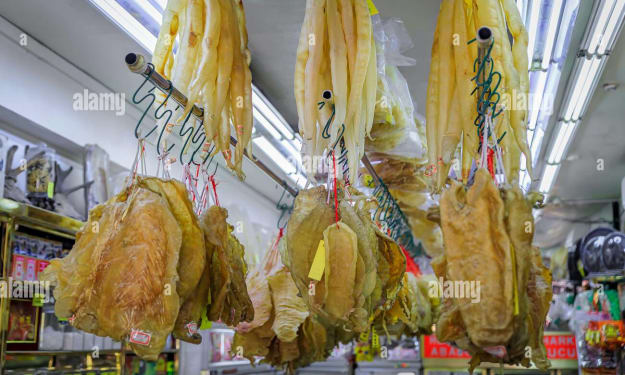
The Lucrative Trade of Fish Maw: From Uganda's Nile Perch to Chinese Markets
Introduction The global trade in fish maw, also known as swim bladder, has become a thriving industry with significant economic implications, particularly in regions like Uganda. This article delves into the lucrative business of fish maw, its journey from the Nile perch in Uganda to Chinese markets, and the challenges and opportunities it presents for local communities.
By Anu Preethi Danila D2 years ago in Humans
Whiskey At Dusk
Guess the whiskey was more important to you in the end, wasn’t it? It was more than the well-being of your friends; more vital than showing up to the places you promised you would and could come to; more critical of a matter than fulfilling your damn responsibilities and getting the press off your back.
By Snarky Lisa5 days ago in Humans


Comments
There are no comments for this story
Be the first to respond and start the conversation.