
Eyes of the King: Lessons from the Savannah
Ancient wisdom on strength, leadership, and survival from nature’s silent sovereign.

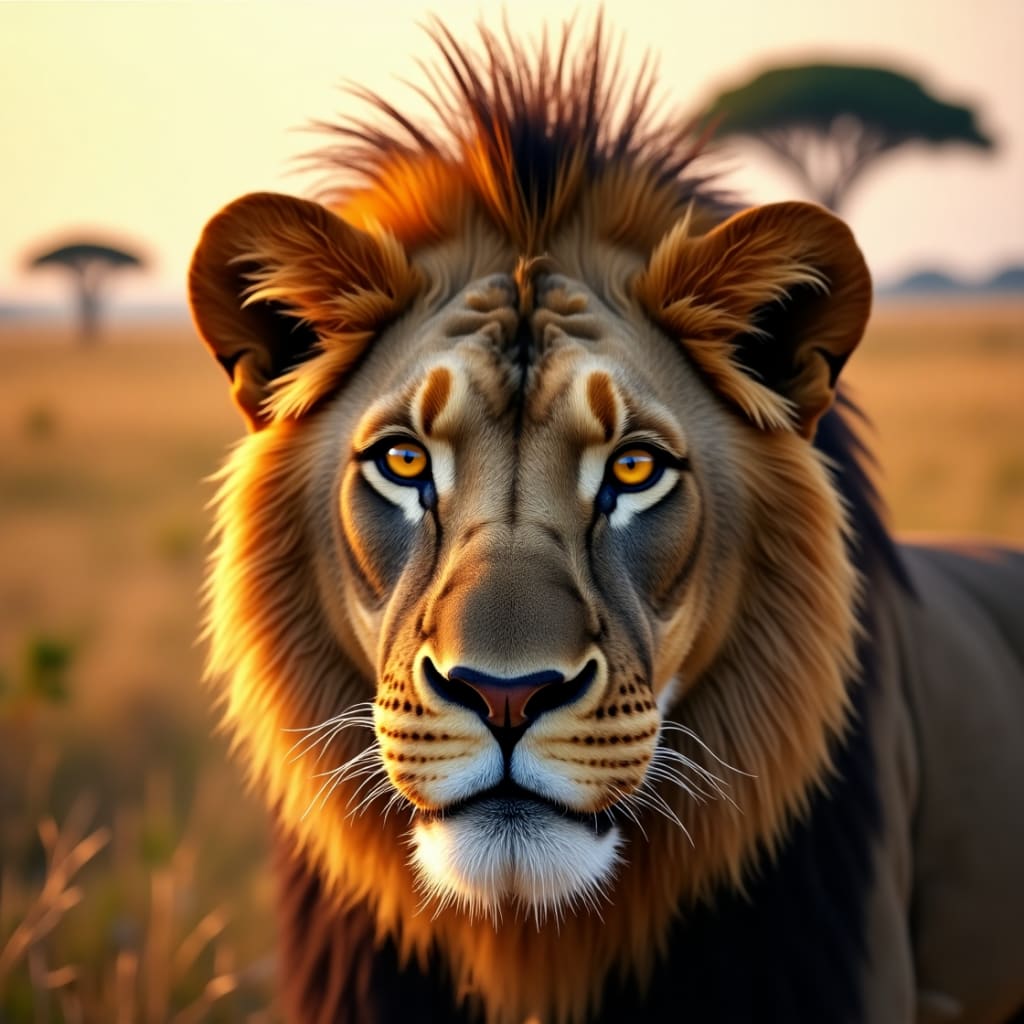
Eyes of the King: Lessons from the Savannah
The vast savannah stretched endlessly beneath the golden sun, a canvas painted with whispers of ancient tales and primal truths. Here, where the grass swayed in waves and the wind carried stories, lived the king—majestic, fierce, and watchful. The lion, with eyes sharp as the edge of dawn, ruled not just with strength but with a wisdom written deep into the land itself.
I first saw him at dawn, a silhouette against the awakening sky. His mane caught the first light like a crown forged from fire, his gaze steady and calm as if he held secrets no other creature could fathom. I was a visitor, a stranger to this wild realm, yet drawn irresistibly to the quiet power that shimmered in those eyes.
The lion’s world was one of survival, of brutal contests and fleeting peace. Yet beneath the roar and the hunt, I learned, there was something more profound—lessons that transcended species, a code etched in nature’s heart.
Lesson One: Strength is Silent
In the city, loudness often equates to power. But in the savannah, the lion taught me that true strength speaks softly. His roar was thunderous, yes, but it was used sparingly—only when necessary to remind, not to dominate. Most of the time, his power was in his stillness, in the way he surveyed his kingdom with unflinching calm.
Watching him lie beneath an acacia tree, eyes half-closed yet alert, I understood that strength need not shout to be recognized. It commands respect simply by existing, by being unshakable in the face of chaos.
Lesson Two: Leadership is Service
The lion’s role was not merely to command but to protect. His pride depended on him—not just for food but for safety and guidance. I saw how he moved among his family, gentle with the cubs, patient with the females, fierce only when danger loomed.
Leadership, I realized, was less about asserting dominance and more about nurturing those you lead. The king’s eyes, so piercing and proud, held compassion. His strength was a shield, his roar a promise to defend.
Lesson Three: Adaptability is Survival
The savannah was an unforgiving teacher. Seasons changed, prey shifted, and threats emerged without warning. The lion’s survival hinged on his ability to adapt—whether stalking silently in tall grass or retreating wisely when odds were against him.
This flexibility was a lesson I needed desperately. In life’s unpredictable storms, rigidity breaks, but adaptability bends and endures. The king’s eyes reflected not stubbornness but a fluid intelligence—knowing when to fight, when to wait, and when to change course.
Lesson Four: Pride is Complex
Pride is often misunderstood as arrogance. But in the lion’s world, pride was a bond—of family, identity, and belonging. Watching the lion with his pride, I saw the depth of connection: shared hunts, playful tussles, communal care. They were fierce together, but also tender.
From this, I learned pride is not vanity. It is the courage to belong fully, to embrace your roots while moving forward. It is honoring where you come from and who you are.
Lesson Five: Legacy is Eternal
As the sun dipped below the horizon, painting the sky in shades of amber and purple, the lion’s eyes held a quiet eternity. He was both ancient and alive—an heir to countless generations, a guardian of stories etched into the earth.
His legacy was not just in the roar that echoed across the plains, but in the lives he touched, the pride he led, and the lessons he embodied.
As I left the savannah, the lion’s gaze lingered with me—a reminder etched deep in my heart. The eyes of the king taught me that power is quiet but fierce, leadership is love in action, and survival is a dance of strength and grace.
In a world too often loud and chaotic, the lion’s lessons whispered of something ancient and true: that to be a king—whether of savannah or soul—is to see beyond the roar and into the quiet heart of life itself.
About the Creator
Keep reading
More stories from hazrat ali and writers in Humans and other communities.
My First Time Skiing and I Got Lost, Alone, in the French Alps
Looking back, I can trace some of my life’s biggest adventures to a simple action from my sister. She’d introduced me to Tommy (a very long time ago), a colleague of hers, who had overshared his penchant for Italian-looking women, and I ticked that box.
By Chantal Christie Weiss2 days ago in Humans




Comments
There are no comments for this story
Be the first to respond and start the conversation.