
Exploring the Illusion of Reality
Exploring the Illusion of Reality


We all exist within a framework of perceived reality. We see, hear, touch, taste, and smell – these sensations paint a picture of the world around us. But what if this picture is an illusion? What if the reality we experience is merely a subjective interpretation, a construct of our minds? This question has puzzled philosophers for centuries, from Plato's Allegory of the Cave, where prisoners mistake shadows for reality, to modern-day debates about the nature of consciousness.
The Limitations of Our Senses:
Our senses, while invaluable, are inherently limited. They provide us with a filtered and subjective view of the world. Consider optical illusions: our brains can be easily tricked into perceiving images that don't actually exist. The classic example of the Müller-Lyer illusion demonstrates how our perception of line length can be distorted by the presence of arrowheads. Similarly, our perception of sound, taste, and touch can be influenced by a multitude of factors. Have you ever noticed how a delicious meal tastes less appealing when you're not hungry? This is because our perception of taste is intertwined with our emotional and physiological state.
The Brain as a Master Illusionist:
The brain plays a crucial role in shaping our perception of reality. It's not merely a passive receiver of sensory information; it actively interprets and constructs a subjective representation of the world. This process is incredibly complex and involves a multitude of factors, including:
Memory: Our past experiences and memories heavily influence how we perceive and interpret present sensations.
Emotions: Fear, anxiety, and excitement can significantly alter our perception of reality. For example, when we're afraid, we might perceive ordinary sounds as threats.
Cultural background: Our cultural upbringing shapes our understanding of the world and influences our interpretations of sensory information.
The Matrix Question:
The concept of a simulated reality, popularized by films like "The Matrix," further challenges our understanding of reality. Could we be living in a computer-generated simulation, unaware of our true existence? While this may seem like science fiction, it raises profound questions about the nature of consciousness and the possibility of a reality beyond our current perception.
Beyond the Philosophical:
The idea of an illusory reality has implications beyond philosophical thought experiments. In fields like neuroscience and psychology, researchers are exploring how the brain constructs our subjective experience of the world. These studies are shedding light on conditions like hallucinations, delusions, and altered states of consciousness, offering valuable insights into the complexities of human perception.
A Call to Question:
Exploring the illusion of reality is not about denying the existence of the world around us. It's about encouraging critical thinking and questioning our assumptions. By examining how our minds construct reality, we can gain a deeper understanding of ourselves and our place in the universe. We can become more aware of our biases and limitations, and ultimately, strive to perceive the world with greater clarity and objectivity.
Conclusion:
The question of whether we truly perceive reality as it is remains a subject of ongoing debate and philosophical inquiry. While definitive answers may remain elusive, exploring these questions can lead to profound insights into the nature of consciousness, perception, and the very essence of existence. By embracing the possibility that our perception of reality might not always be accurate, we can embark on a journey of self-discovery and cultivate a deeper appreciation for the complexities of human experience.
About the Creator
Fred Bradford
Philosophy, for me, is not just an intellectual pursuit but a way to continuously grow, question, and connect with others on a deeper level. By reflecting on ideas we challenge how we see the world and our place in it.
Keep reading
More stories from Fred Bradford and writers in Humans and other communities.
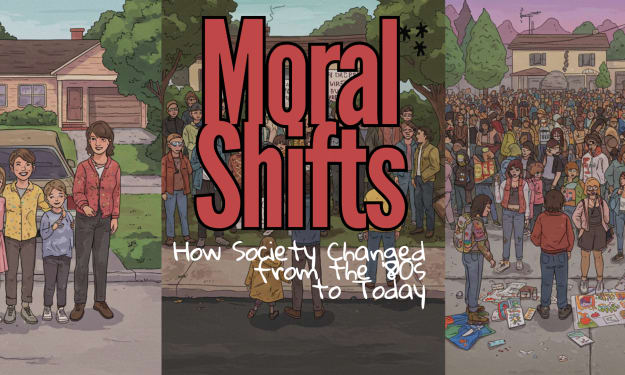
Moral Shifts
Society and its moral frameworks have transformed significantly from the 1980s to the 2000s onward, driven by cultural shifts, technological advancements, and evolving values. Comparing the 1980s, 1990s, and post-2000 eras reveals distinct differences in family structures, gender roles, attitudes toward diversity, environmental consciousness, and views on authority. Below, we explore five areas where societal morals and norms diverged, reflecting how each decade reshaped collective values.
By Fred Bradford6 months ago in Humans
A Winter Devotional. Winner in The Ritual of Winter Challenge.
Large, fluffy white flakes swirl slowly to the ground in a gentle, choreographed waltz. Safe and warm inside my house, wrapped in a cozy blanket on the velvet couch, I watch in silence through the huge front window as everything becomes white. The world, time itself, lessens its pace to match the cadence of the first true snowfall.
By A. J. Schoenfeld28 days ago in Humans
Day 4 of Quitting
If this is how sobriety feels, maybe it’s better to go through life a little buzzed… this, along with other hits like, I want to kill myself, I wish I was dead, and I’m going to throw myself off a bridge have been the only thoughts on rotation these past few days. I promise myself that if, in a month, I still feel like this (‘this’ meaning despondent, full of rage, and simultaneously numb) I can go back to smoking. Until mid-February though? Nicotine is off the table.
By sleepy drafts6 days ago in Longevity


Comments
There are no comments for this story
Be the first to respond and start the conversation.