
Essential Electric Wire Rope Hoist Maintenance and Inspection for Superior Performance
electric wire rope hoist maintenance and inspection
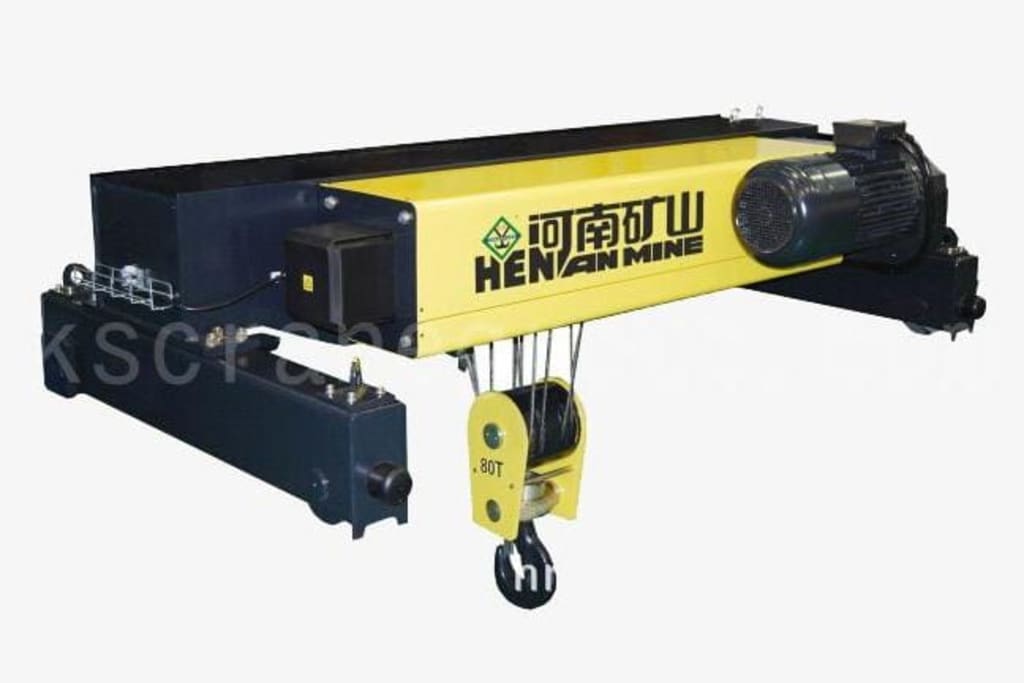
Like all mechanical equipment, wire rope hoists are subject to wear, and tear, and occasional breakdowns. Recognizing the early signs of trouble and knowing how to address them can mean the difference between making minor adjustments facing costly and time-consuming repairs, or worse, a complete operational shutdown.
The importance of electric wire rope hoist maintenance and inspection cannot be overstated. It not only ensures the longevity and optimal performance of the hoist but also guarantees the safety of operators and the workplace. This article aims to equip wire rope hoist users with the knowledge needed for wire rope hoist maintenance and inspection.
Electric Wire Rope Hoist Basic Components
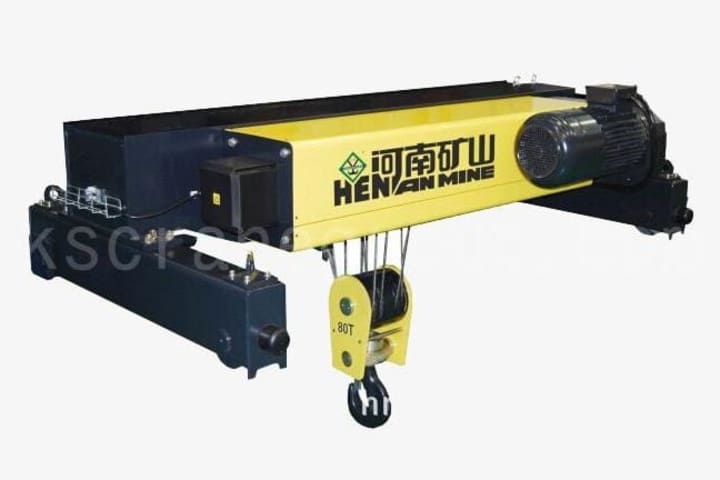
- Wire Rope: The wire rope is the lifeline of the crane, made from multiple strands of metal wires twisted together, providing strength and flexibility. The structure of the wire rope affects its strength, flexibility, and resistance to bending fatigue and wear.
- Drum: The wire rope is wound around this cylindrical component. The drum rotates to wind or unwind the rope, facilitating the lifting or lowering of loads.
- Motor: Powers the hoist by driving the drum to wind the wire rope. The motor’s specifications determine the maximum load capacity and lifting speed.
- Gearbox: Connected to the motor, the gearbox reduces the motor’s speed to provide the torque needed for lifting loads. This component is crucial for maintaining control over the lifting and lowering speeds.
- Rope Guide: Ensures the wire rope is evenly wound on the drum, preventing tangling and wear. Proper adjustment and maintenance of the rope guide are essential for the smooth operation of the hoist.
- Hook Block: Attached to the end of the wire rope, it includes a hook for securing loads, often equipped with a safety latch to prevent the load from slipping off.
- Control System: Allows the operator to control the movement of the crane. This could be a pendant controller, a wireless remote, or a cab controller in more complex systems.
- Limit Switches: Safety features that prevent the hook block from over-traveling, protecting the crane and load from damage.
- Brake System: Ensures that the crane can hold the load stationary when lifting power is not applied, which is crucial for operational safety.
Electric Wire Rope Hoist Maintenance
Preventive wire rope hoist maintenance is the cornerstone of ensuring the longevity and reliability of wire rope hoists. This proactive approach involves regular inspections, lubrication, timely repairs, and adherence to a wire rope hoist maintenance plan tailored to the hoist’s operational requirements and environmental conditions. It aims to prevent common issues like wire rope wear, misalignment, and mechanical failures. Proper upkeep can identify signs of wear or damage in advance, allowing for timely repairs and significantly reducing the likelihood of unexpected breakdowns and costly downtime. Here are key strategies for implementing a robust preventive wire rope hoist maintenance program.
Regular Wire Rope Hoist Inspections
Daily Inspections
Operators should perform a visual wire rope hoist inspection daily to check for any signs of wear or damage on the wire rope, hook, and other visible components. Ensure that all controls are functioning properly and that the hoist operates smoothly without any unusual noises.
Regular Detailed Inspections
Schedule comprehensive wire rope hoist inspections at intervals recommended by the manufacturer, typically every six months or annually. These wire rope hoist inspections should be conducted by trained personnel who can identify signs of wear, corrosion, or damage to mechanical and electrical components.
Monthly Inspections
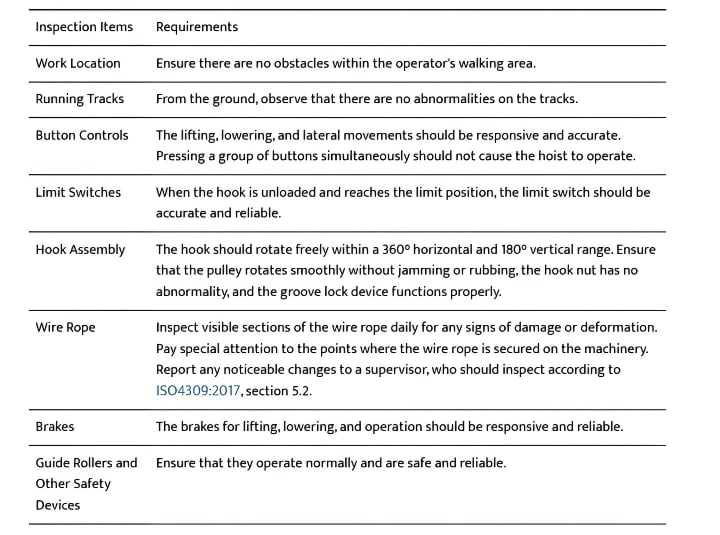
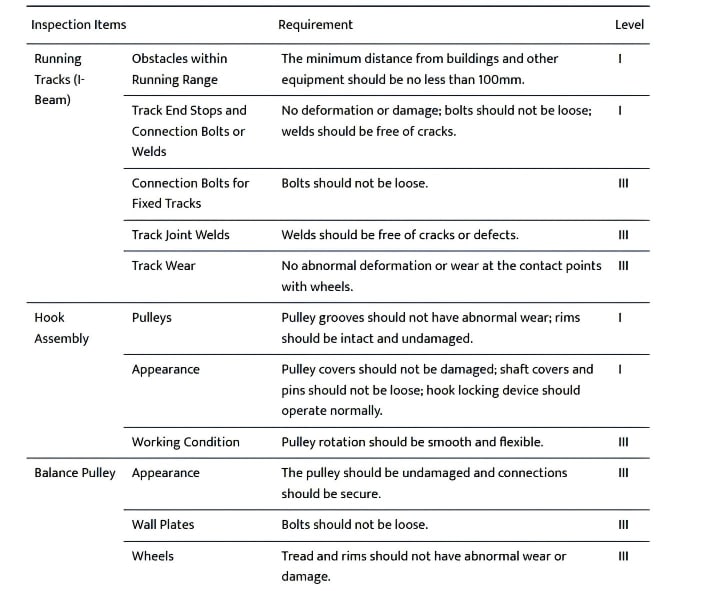
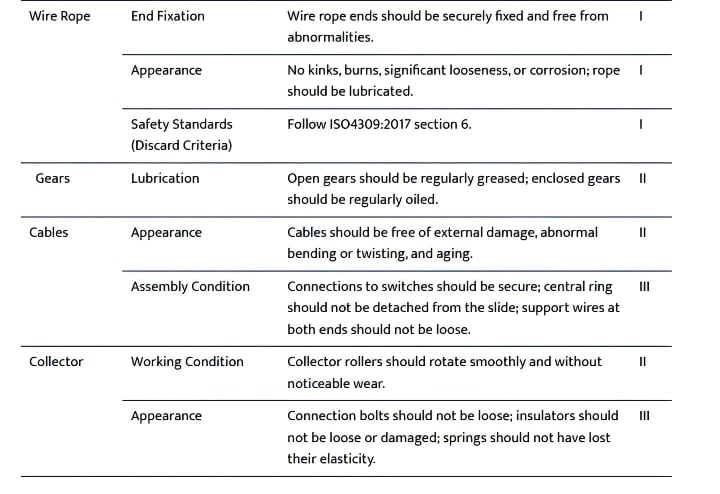
The frequency of monthly wire rope hoist inspections is determined based on the importance of each component for safe operation, the frequency of use, and whether the part is considered to be prone to wear. Generally, inspections are categorized into three levels:
- Level I: Must be inspected monthly.
- Level II: Must be inspected every three months.
- Level III: Must be inspected every six months.
The wire rope hoist inspection items, requirements, and levels are outlined in the table below:
Annual Inspection
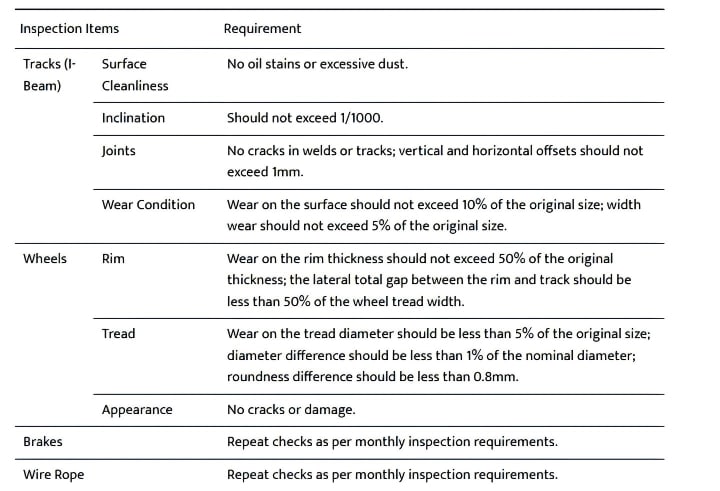
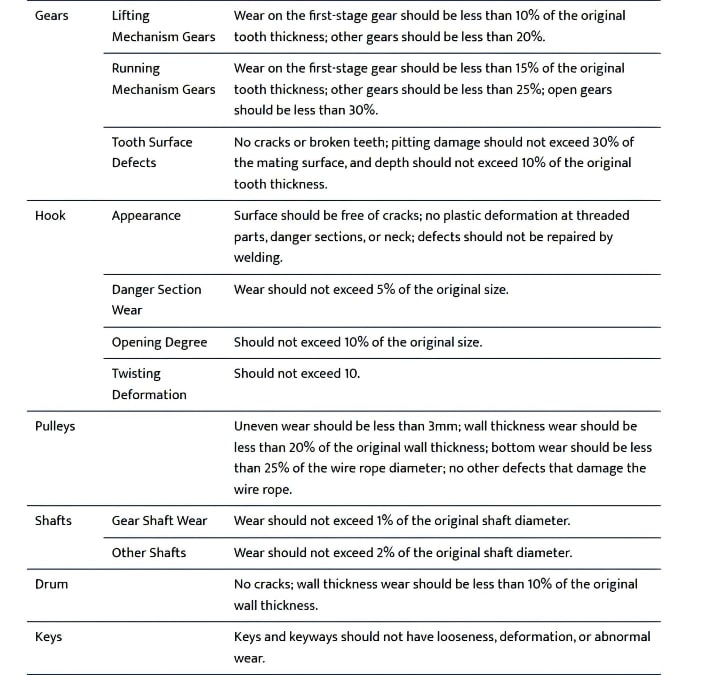
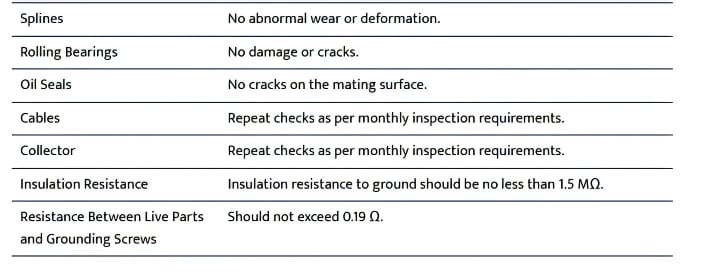
Electric hoists that are in normal operation should undergo a comprehensive safety inspection once a year. The items and requirements for the annual wire rope hoist inspection are outlined in the table below:
Lubrication
Regular lubrication of the wire rope and other moving parts is crucial for minimizing friction, wear, and corrosion. Use lubricants specified by the manufacturer and apply them according to the recommended schedule.
Wire Rope:
The wire rope must be kept clean and well-lubricated to maintain optimal performance.
Lubricate the wire rope every 3 months (more frequently if usage is heavy or conditions are harsh).
To lubricate the wire rope, first remove any dust, dirt, moisture, or other accumulations. Then apply lubricating oil or a similar product to the wire rope.
Ensure the lubricant covers the entire surface and length of the wire rope.
In dusty environments, it is advisable to use a dry lubricant.
For environments where lubricant loss from the wire rope is not acceptable, consider using a non-drip motorcycle chain lubricant.
Wire Rope Drums, Hook Blocks, Pulleys, Trolley Wheels, and Gears:
Lubricate these components every 3 months (more frequently if usage is heavy or conditions are harsh).
In dusty environments, use a dry lubricant.
For situations where lubricant loss from drums, hook blocks, pulleys, trolley wheels, and gears is not acceptable, consider using a non-drip motorcycle chain lubricant.
Load Testing
Conduct a load test annually or according to local regulations and manufacturer requirements. This ensures that the crane can safely handle its maximum rated load and helps identify potential issues under operational stress.
Record Keeping
Maintenance Log: Keep detailed records of all wire rope hoist inspections, maintenance activities, and repairs. This document helps track the crane’s long-term performance, making it easier to anticipate and prevent future issues.
Compliance Documents: Ensure that all maintenance and repair activities comply with local safety regulations and industry standards. Accurate record-keeping will also support warranty claims and regulatory inspections.
Training
Operator Training: Ensure that all operators receive training on the proper use of the crane, including daily inspection procedures and correct operating practices to minimize wear.
Maintenance Training: Maintenance personnel should receive specific training for the crane models they are responsible for, enabling them to perform inspections and routine maintenance effectively.
Environmental Considerations
Prevent Adverse Conditions: If the crane is used in harsh environments, such as those with high humidity, dust, or corrosive substances, increase the frequency of wire rope hoist inspections and maintenance to counteract these conditions.
About the Creator
Keep reading
More stories from kscranegroup and writers in Humans and other communities.
Ultra-Low Temperature Gantry Cranes Tailored For Harsh Winters At Krasnodar Port: Advanced Design Solutions
Our client purchased an ultra-low temperature gantry cranes for Krasnodar Port in southern Russia, which experiences harsh winters due to its high latitude in Siberian. To ensure the crane operates at temperatures as low as 40°C, special considerations were made when designing and selecting steel structures, mechanical components, and electrical systems. A dedicated team of experienced designers and engineers was formed, working closely with Russian counterparts on process design and equipment selection to meet specific environmental challenges.
By kscranegroupabout a year ago in Serve
Why Didn't Anyone Tell Us
Men, move along. This is not for you. This is for the women. I was forty-five when I began menopause. It is pretty young for that to be going on in a woman’s life, but I had undiagnosed PCOS, my entire life. Thank you to all the gynecologists I had seen my entire life. That in itself should encourage women to keep seeking second opinions, especially when you are not getting correct answers or any at all.
By Alexandra Grant5 days ago in Humans
Mykhailo Yurov on KyivPride, Demiromantic Identity, and LGBTQI+ Advocacy in Wartime Ukraine
Mykhailo Yurov is a Ukrainian LGBTQI+ advocate and project manager at KyivPride, the organization behind one of Ukraine’s most prominent Pride initiatives. KyivPride’s official team page lists him as Project Manager, and the group describes its work as year-round advocacy, education, community support, and human rights protection. Based on this interview, Yurov has worked with KyivPride since January 2024, helping manage budgets, documents, donor communication, and major public events, including the KyivPride Festival and March. His public-facing work sits at the intersection of queer visibility, civic organizing, and wartime resilience in a society still negotiating equality, safety, and democratic inclusion.
By Scott Douglas Jacobsen3 days ago in Humans



Comments
There are no comments for this story
Be the first to respond and start the conversation.