
Empowering Farmers for a Sustainable Future
Strategies to Nourish the Planet

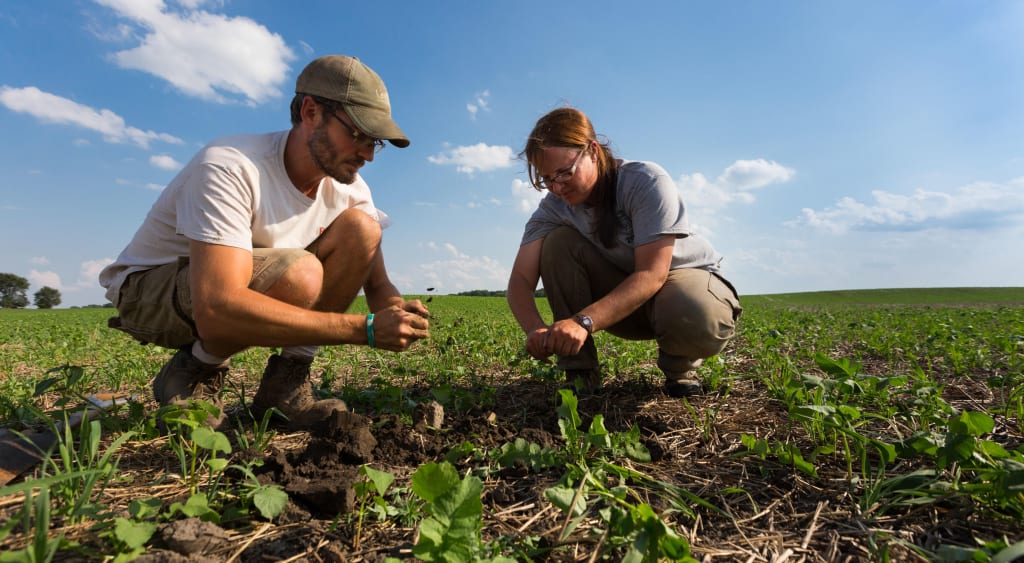
I want to share a story. It’s about smallholder farmers, five hundred million of them, who work hard every day. I grew up on a small farm in Uganda. My parents were refugees from Rwanda. They grew maize and potatoes. My mom worked tirelessly. She fed us all. My dad never touched a hoe. My mom didn't complain; it was her responsibility.
When I was about fourteen, I left that life. My dad had been a teacher in Rwanda, so I was lucky. But most kids like me didn't get that chance. I realized then how empowering smallholder farmers could transform lives. It could nourish communities and boost economies.
After finishing school, I conducted research in Uganda. A friend gave me some improved seeds to take home. My mom planted those seeds, and the results were remarkable. She harvested ten bags instead of three. She sold some and bought herself a beautiful dress. For the first time, she didn’t have to ask my dad for money. The joy on her face was unforgettable. That experience sparked a belief in me. If I could empower my mom with one sack of seed, I could help entire villages.
Years later, I became the Minister of Agriculture in Rwanda. It wasn't an easy position. Farmers had the smallest land holdings in Africa. The country was facing challenges, recovering from a genocide. Still, I was determined to make a difference. I thought about how to consolidate land and help farmers work together. My government created policies for accessing seeds and fertilizers. It took time, but soon, farmers were excited and demanding these resources.
After several seasons, we achieved a bumper harvest. But then a new problem arose: we weren't prepared for markets. I had overlooked storage solutions. We worked with the government and the World Food Program to buy farmers’ harvests. The private sector helped us improve processing capabilities. Suddenly, the farmers had a market for their goods. I saw the change in the communities. The energy was palpable. Rwanda was experiencing significant poverty reduction, attributed largely to agriculture.
However, another challenge emerged: climate change. By twenty thirteen, crops were failing. Farmers couldn’t predict weather patterns or planting seasons. I experienced this firsthand while on a field visit with my president. Clouds were gathering, but worries filled my mind. What if the fertilizer and seeds didn't arrive on time? Farmers felt lost about when to plant.
In Southern Africa, droughts were severe. Zimbabwe lost a large portion of its maize crop, while Kenya suffered floods. We couldn't stand by. We had to act. We needed to support farmers. The top emitting countries must take responsibility for climate change. Farmers in Eastern Africa had lost everything after multiple seasons of drought. With the loss and damage fund launched, they should be compensated.
Reversing climate change will take time. Meanwhile, we must provide farmers with improved seed varieties, fertilizers, soil health information, and crop insurance. These tools can help farmers make informed decisions. We must also invest in solutions to reduce post-harvest losses so farmers can save their harvests.
Finally, we need to rethink markets. African farmers need better access to trade. We’ve seen European farmers advocate for their market share. But African farmers lost theirs long ago. The African Continental Free Trade Area offers a chance to improve trade among ourselves.
Farmers are often poor because society wants cheap food. But we must remember that smallholder farmers run businesses too. They grow seventy percent of the food we eat. We need to recognize their vital role. When we empower them, they can feed themselves and nourish the world.
Farmers understand the land. They are the best custodians of our planet. Empowering them ensures a future for their children. Just like my dad did for me. This mission fuels my passion and keeps me awake at night. Thank you for hearing my story.
About the Creator
Keep reading
More stories from Gibson Peters and writers in Humans and other communities.
From Darkness to Dawn: My Journey Through Depression
My name is Grace. I want to share my journey through depression. It all started in college. I received a diagnosis of major depressive disorder and generalized anxiety disorder. At first, it felt small and almost unnoticeable.
By Gibson Petersabout a year ago in Humans
The Moment I Understood
Back in the late 1980s, after my youngest daughter Hilary was born, life required a kind of rearranging that only new parents truly understand. We didn’t want to put her in day care — not because there was anything wrong with it, but because we wanted her to have a parent at home, someone steady and familiar. So I switched to nights at the hospital, trading daylight for fluorescent lights and the unpredictable rhythm of the Emergency Room.
By Julie O'Hara - Author, Poet and Spiritual Warrior6 days ago in Humans


Comments
There are no comments for this story
Be the first to respond and start the conversation.