
EHR systems' effects on patient outcomes and healthcare quality
EHR System

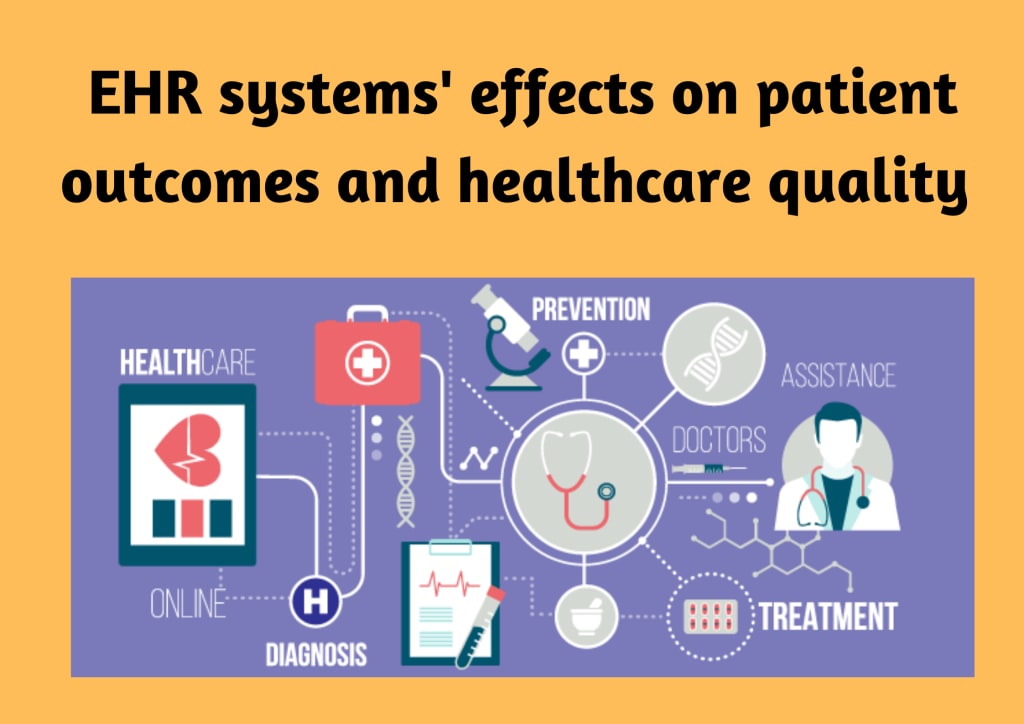
What is EHR System?
EHR stands for Electronic Health Record. An EHR system is an electronic record of a patient's medical history, including health information from various sources, that is maintained by a healthcare provider over time. The system includes patient data such as demographics, medical history, medications, immunizations, laboratory results, and radiology reports. It can also include other data such as medical images, vital signs, and provider notes. The system can be used to track a patient's health over time, provide better quality of care, and enable easier communication between healthcare providers.
Why EHR Integration is essential for your Practice Management System?
EHR integration is essential for your practice management system because it enables practices to streamline their workflow, improve data accuracy and create a single source of truth for patient information. It also allows practices to capture and store all patient data in one place, eliminating the need to manually transfer data between multiple systems. Additionally, EHR integration can improve the quality of care by providing up-to-date, relevant information to the medical team. It can also reduce costs, improve communication between providers, and help practices meet compliance regulations.
EHR Adoption: BUILD VS BUY T
he decision of whether to build or buy an EHR system depends on a variety of factors, including the size and budget of the organization, the desired features, and the timeline for implementation. Building an EHR system requires more up-front effort, but it can be customized to the specific needs of the organization. Buying an EHR system requires less effort, but it may not have all the features the organization needs.
For organizations with large budgets and a long timeline, building an EHR system may be the best option. For those with limited budgets and shorter timelines, buying an off-the-shelf solution may be the right choice. In either case, it is important to evaluate various vendors and make sure the solution selected meets all the organization’s requirements.
When you buy an EHR solution, you are purchasing the software that will be used to store your patient data and manage your clinical workflows. Depending on the EHR solution you purchase, the software may include features such as:
-Electronic medical records (EMR) with scheduling, charting, medical coding, and billing
-Secure messaging and communication
-Appointment reminders and patient engagement
-Drug and lab ordering -Data analytics and reporting
-E-Prescribing -Clinical decision support
-Document imaging and management
-Patient portal and patient education
-Integrations with other health IT systems and devices 5 Key Factors for Successful EHR Migration
5 Key Factors for Successful EHR Migration
1. Dedicated Team: Establishing a dedicated team to manage the EHR migration process is essential to ensuring a successful transition. The team should include IT, clinical and administrative staff to ensure that all areas are addressed and that the migration is properly coordinated.
2. System Readiness: Making sure that the EHR system, as well as any other related systems, are ready and configured correctly prior to the migration is essential. This includes testing all software, hardware and network components to ensure they are functioning properly and that the system is secure.
3. Training: Providing proper training to staff on the new EHR system is important to ensure that the transition is smooth. This includes training on how to use the system, understanding changes in workflow, and understanding any new policies and procedures related to the system.
4. Data Migration: Developing a comprehensive data migration plan is essential to ensure that all data is moved from the old system to the new system accurately. This includes migrating patient demographic data, clinical data, financial data and any other data needed.
5. Communication: Communication is key to a successful EHR migration. The team should create a communication plan to keep all stakeholders informed of progress, changes, and any issues that may arise.
Conclusion
EHR systems structure is to make the process of charting and managing patient records more efficient. Many providers find that using an EHR can help them save time on administrative tasks, freeing up more time to spend with patients. EHR software often includes features like customizable schedulers and easy navigation, which can help providers stay organized and efficient. In addition, many EHR systems allow providers to share patient charts with other members of the care team. This can help reduce errors and improve communication between providers. Ultimately, using an EHR system can help you to better manage your time and conduct your practice or hospital more smoothly.
At first look, it might not seem like much, but when you work with partners like Emorphis Technologies in healthcare software development, EHR installation, and integration, you see the impact it can make in your daily routine. Get additional information from our healthcare sector specialists before deciding which EHR or EMR system to integrate or install.
About the Creator
Larisa Albanians
Hey, a healthcare technology solutions provider at emorphis, that is helping organizations to deliver better healthcare solutions.
Keep reading
More stories from Larisa Albanians and writers in Humans and other communities.
Improving Patient Satisfaction with Healthcare Apps
What exactly is Patient Satisfaction when it comes to using a healthcare app? Patient satisfaction with healthcare apps is generally very high. Studies have found that patients are satisfied with the convenience, ease of use, and access to medical information that apps provide. Patients report feeling more empowered and in control of their health when they use healthcare apps, as they can view their medical records, track their health, and access healthcare services easily on their own.
By Larisa Albanians3 years ago in Humans
What Makes the Maldives the Most Romantic Destination in the World
The romance of the Maldives begins with its geography. Scattered across the Indian Ocean, the islands are naturally isolated, surrounded by open water rather than neighbouring towns or tourist districts. This physical separation creates emotional space. Couples are not navigating crowds, traffic, or schedules; they are sharing an island that feels intentionally removed from the rest of the world. In the Maldives, privacy is not an upgrade or a premium add-on; it is the default. That sense of being alone together is the foundation on which all the romance is built.
By Claudia Fennelabout 22 hours ago in Humans




Comments
There are no comments for this story
Be the first to respond and start the conversation.