
Title: A Journey Through the Complexity of the Human Digestive System
Introduction (100 words):
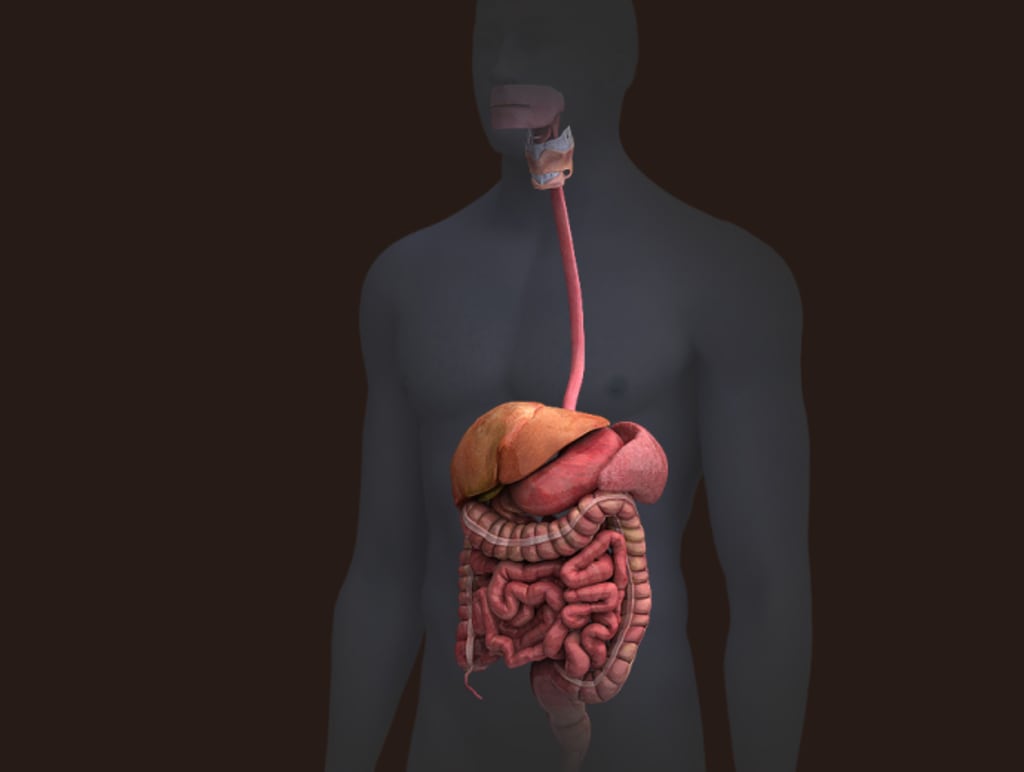
The human digestive system is a marvel of evolution, having developed over millions of years to efficiently process and absorb nutrients from the food we consume. Comprising a complex network of organs and processes, including the rectum, large intestine, small intestine, pancreas, stomach (also known as the gaster or ventriculus), liver, gallbladder, and the esophagus, this intricate system ensures that our bodies receive the essential substances needed for growth, energy, and overall health. In this article, we will embark on a comprehensive exploration of each digestive organ, unraveling the remarkable mechanisms behind their functions and highlighting their contributions to our well-being.
The Mouth and Esophagus: Breaking Down Food (150 words):
The journey of digestion begins in the mouth, where the mechanical breakdown of food commences. The teeth play a vital role in breaking down food into smaller particles, facilitating easier digestion and absorption. As we chew, saliva from the salivary glands mixes with the food, initiating the chemical breakdown of carbohydrates through the enzyme amylase. This saliva-coated mass, known as bolus, is then propelled by the tongue into the throat and subsequently through the esophagus. The esophagus, a muscular tube connecting the mouth to the stomach, employs peristalsis—a rhythmic wave-like motion—to transport the bolus from the mouth to the stomach, irrespective of body position.
The Stomach: A Chamber of Digestive Processes (150 words):
The stomach, a muscular organ located in the upper abdomen, serves as a crucial site for further digestion and nutrient processing. Composed of longitudinal and circular muscle layers, an additional oblique muscle layer, and rugae (folds in the stomach lining), it possesses remarkable flexibility and accommodates the changes that occur during food consumption. Gastric glands embedded in the stomach wall play a pivotal role in digestion. These glands secrete gastric juice, which consists of various components that aid in the breakdown of food. The mucus produced by the gastric glands acts as a protective barrier, shielding the stomach lining from the corrosive effects of gastric acid. Gastric acid, stimulated by the presence of food, helps to kill harmful bacteria and prepare proteins for further digestion.
Another important component of gastric juice is pepsin, an enzyme responsible for the breakdown of proteins into smaller peptides. Intrinsic factor, also secreted by the gastric glands, is necessary for the absorption of vitamin B12 in the small intestine. Additionally, gastric lipase, an acid-resistant enzyme, participates in the digestion of fats in the stomach. The stomach's complex functions involve the secretion of gastric juice, the regulation of acid production, and the physical mixing of food, resulting in the formation of chyme—a semi-fluid mixture of partially digested food.
The Small Intestine: Absorption and Nutrient Processing (200 words):
The small intestine, a long and convoluted tube extending from the stomach to the large intestine, is where the majority of nutrient absorption takes place. Divided into three sections—the duodenum, jejunum, and ileum—it boasts an intricately folded inner lining that increases its surface area, facilitating optimal nutrient absorption. The duodenum, the first part of the small intestine, receives digestive secretions from both the liver and the pancreas.
Bile, produced by the liver and stored in the gallbladder, is released into the duodenum to aid in the digestion and absorption of fats. Bile emulsifies fat, breaking it down into smaller droplets that are more accessible to enzymes. Pancreatic secretions, including pancreatic juice, containing a variety of enzymes, are also delivered to the duodenum
. These enzymes, such as trypsinogen, amylase, and lipase, contribute to the breakdown of proteins, carbohydrates, and fats, respectively.
The small intestine's inner surface is lined with finger-like projections called villi, which further increase the absorptive area. Each villus contains blood capillaries and a lymphatic capillary known as a lacteal. Nutrients, such as glucose, are directly absorbed into the bloodstream, while fats are packaged into chylomicrons for transportation through the lacteals. This intricate process ensures that essential nutrients reach the circulatory system for distribution throughout the body.
The Large Intestine: Water Absorption and Waste Elimination (150 words):
Upon completing its journey through the small intestine, the remaining undigested food, water, and waste enter the large intestine. Although the large intestine does not possess villi like the small intestine, it plays a crucial role in the reabsorption of water and electrolytes. As the chyme travels through the large intestine, water is gradually absorbed, resulting in the formation of more solid feces. Mucus is added to facilitate smooth passage and proper elimination.
The large intestine is home to trillions of beneficial bacteria, known as the gut microbiota, which aid in various physiological processes. These bacteria assist in the breakdown of indigestible fiber, producing short-chain fatty acids that serve as an energy source for the colon cells and play a role in maintaining gut health. Furthermore, the gut microbiota support the immune system and produce certain vitamins, emphasizing their significant impact on overall well-being.
Conclusion (50 words):
The human digestive system is an intricate network of organs and processes working harmoniously to break down food, extract nutrients, and eliminate waste. From the mouth to the esophagus, stomach, small intestine, and large intestine, each component plays a vital role in ensuring proper digestion and nutrient assimilation, supporting overall health and well-being. Understanding the complexity of this remarkable system enhances our appreciation for the incredible mechanisms that sustain our bodies.
About the Creator
Keep reading
More stories from RAMYA VENUGOPAL and writers in Humans and other communities.
The CEO of Everything
They say "jack of all trades, master of none," but they forgot to mention the part where the jack of all trades is also the camera woman, the makeup artist, and the person currently yelling at a tangled Wii microphone cable in a her own bathroom while recording herself singing and trying to make it look realistic and professional. (As professional as you can make it with nothing but a cell phone camera and a mic that doesn't work)
By Sara Wilson7 days ago in Humans
Why Posting Daily Isn’t Helping You Grow (The Brutal Truth)
Let’s be real: Posting daily is a trap. Have you ever done everything the "experts" told you to do? You know the drill—post every day, be consistent, wait for your turn, stay patient. And then… absolutely nothing happens. You’re looking at your phone, checking the stats every five minutes, and it’s just crickets. Zero likes, zero growth. It feels like you’re shouting into a deep, dark hole. It’s draining, right? So let me ask you something: Are you tired of playing a game where the rules feel totally rigged against you?
By Demiana Louis Boshra3 days ago in Humans


Comments
There are no comments for this story
Be the first to respond and start the conversation.