
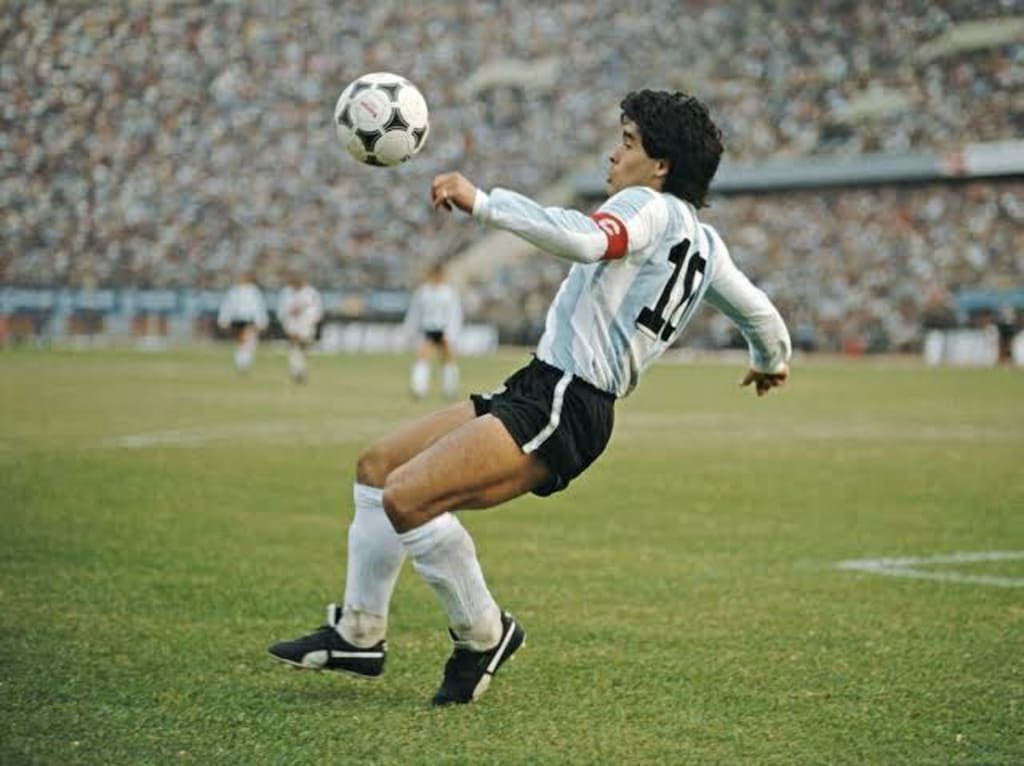
Diego Armando Maradona, commonly referred to as Maradona, is one of the most iconic football players in history. Born on October 30, 1960, in Buenos Aires, Argentina, Maradona grew up in a working-class family and began playing football at a young age. Despite facing numerous obstacles throughout his life, Maradona became one of the most skilled and beloved football players of all time.
Maradona began his professional career at the age of 15, playing for Argentinos Juniors in Buenos Aires. He quickly became a star player, known for his incredible technical skills and his ability to score goals in even the most difficult situations. In 1982, he joined FC Barcelona, one of the most prestigious football clubs in the world, where he quickly became a fan favorite.
However, it was during the 1986 World Cup in Mexico that Maradona truly cemented his place in football history. In a quarter-final match against England, Maradona scored what would become known as the "Hand of God" goal, using his hand to punch the ball into the net. Despite protests from the English team and fans, the goal was allowed to stand, and Argentina went on to win the match. In the same game, Maradona also scored what is widely considered one of the greatest goals in football history, dribbling past five English players to score a stunning solo effort.
Maradona's performance in the 1986 World Cup cemented his status as one of the greatest football players of all time. He went on to lead Argentina to victory in the final against West Germany, scoring the winning goal and cementing his place in football history.
Throughout his career, Maradona faced numerous challenges both on and off the pitch. He struggled with addiction and was often in the media spotlight for his controversial behavior. However, despite these challenges, Maradona remained a beloved figure in the world of football, known for his incredible skill, passion for the game, and his commitment to his country and his fans.
After retiring from professional football, Maradona continued to be a prominent figure in the sport, serving as a coach for several teams, including the Argentina national team. He also remained a vocal advocate for social justice and equality, using his platform to speak out against discrimination and inequality.
Sadly, Maradona passed away on November 25, 2020, at the age of 60. His death was met with an outpouring of grief from fans around the world, and tributes poured in from fellow football players and prominent figures in the sport.
Maradona's legacy as one of the greatest football players of all time is undisputed, and his impact on the sport and the world at large will be felt for generations to come. His incredible skill and passion for the game, combined with his commitment to social justice and equality, make him a true icon of the sport and a source of inspiration for football players and fans around the world.
Despite his passing, Maradona's legacy continues to live on in the football world. In Argentina, he is still revered as a national hero, and his influence can be seen in the countless young players who continue to strive to follow in his footsteps.
Beyond his skill and success on the field, Maradona is also remembered for his larger-than-life personality and his impact on popular culture. His signature moves, including the "Maradona turn" and the "Hand of God" goal, have become part of football folklore, and his image has been immortalized in countless murals, sculptures, and other works of art.
Despite his flaws and controversies, Maradona remains a beloved figure in the football world, a symbol of what can be achieved through hard work, determination, and a love for the game. His legacy will continue to inspire and motivate football players and fans around the world for generations to come.
About the Creator
The CEO of Everything
They say "jack of all trades, master of none," but they forgot to mention the part where the jack of all trades is also the camera woman, the makeup artist, and the person currently yelling at a tangled Wii microphone cable in a her own bathroom while recording herself singing and trying to make it look realistic and professional. (As professional as you can make it with nothing but a cell phone camera and a mic that doesn't work)
By Sara Wilson4 days ago in Humans
Kyrsten Sinema
Kyrsten Sinema is an important American political leader. She worked for many years in the U.S. government and became known for being different from many others in politics. This article uses easy English and clear subtitles to help you understand who she is, where she came from, what she did, and what is happening now with her.
By Farhan Sayed5 days ago in Humans


Comments
There are no comments for this story
Be the first to respond and start the conversation.