
Did you feel guilty because others did not survive like you?
A brief talk about a disorder that may affect some refugees or survivors of accidents or natural disasters

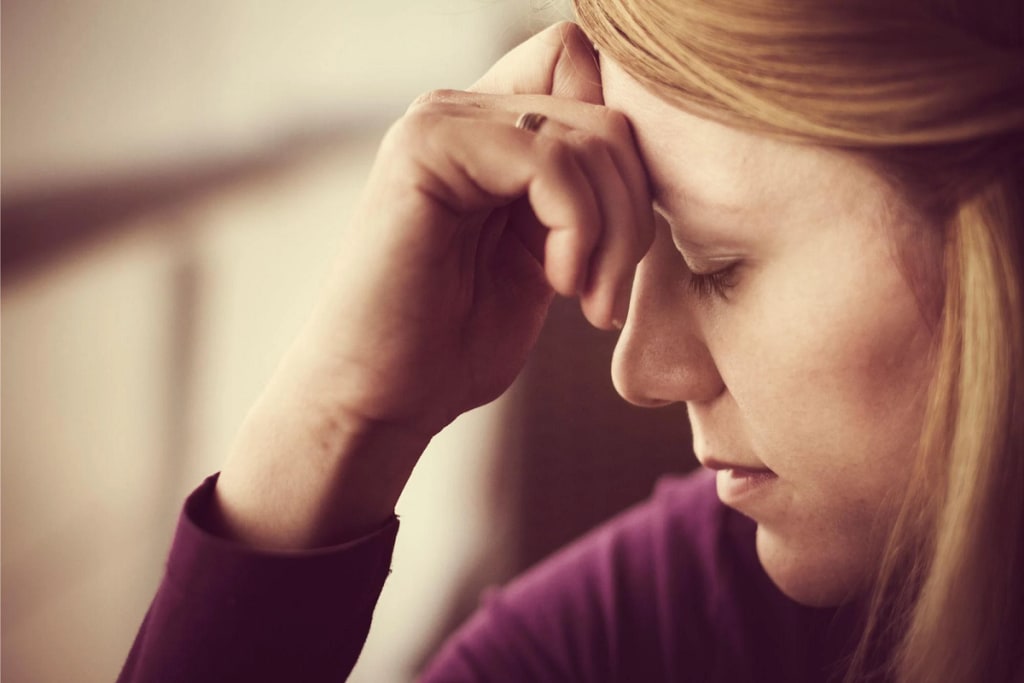
Since Anis arrived in the Canadian city of Calgary, he has been diligent in contacting his mother every day to ensure her well-being. Sometimes, their conversations are punctuated by the sounds of explosions and gunfire from Aleppo. Anis, having successfully sought refuge in Canada, struggles with the inability to bring his mother out of Aleppo, echoing the plight of hundreds of Syrians in the refugee reception center. Beyond concerns for their families, an official in the center noticed that many refugees carry an invisible burden, an unbreakable knot of guilt. Despite being free, well-fed, and having a safe place to sleep, they grapple with guilt in contrast to their families and friends who couldn't escape. This emotional phenomenon is scientifically termed "Survivor's Guilt."
Where did this term come from? And how can we deal with this feeling?
The term "Survivor's Guilt" was coined in a New York clinic in the early 1960s by a psychoanalyst named William Niederland. Conducting a study with a refugee from Nazi Germany who connected with over two thousand survivors of Nazi camps, natural disasters, and crises, Niederland found a commonality among them – an intense sense of guilt. His research led to a crucial conclusion: the act of surviving invariably triggers profound feelings of guilt. This insight laid the foundation for what is now known as "Survivor's Guilt" or "Survivor's Syndrome," describing the suffering of survivors due to the guilt of being spared when others perished, often coupled with the belief that they didn't do enough to save others.
Survivor's Guilt can manifest in various forms, affecting individuals regardless of age, gender, or background. It is considered one of the symptoms of post-traumatic stress disorder (PTSD), emerging after wars, natural disasters, or even surviving life-threatening illnesses. Not every survivor experiences it, as its occurrence is influenced by diverse psychological and social factors.
it possible to overcome this feeling and continue life?
Overcoming Survivor's Guilt is a genuine challenge, often requiring professional assistance. This challenge becomes especially pronounced when the tragedy is ongoing, making it difficult for survivors to move forward in their new lives while still grappling with the harsh experiences of the past. The guilt associated with Survivor's Guilt is often intertwined with feelings of loyalty to the victims and a sense of belonging to the group affected by the traumatic event.
Navigating through Survivor's Guilt requires a multifaceted approach. Acknowledging the coexistence of gratitude for survival with feelings of sadness and guilt is essential. The guilt can also serve as a motivating force for positive actions, no matter how small, contributing to the well-being of oneself and others.
In conclusion, overcoming Survivor's Guilt is a real and complex challenge that sometimes requires professional help. If you find yourself grappling with guilt after overcoming a challenging situation, remember that there is no one-size-fits-all way to deal with these emotions. The key is to take care of yourself and others during this period, recognizing that every feeling is valid, and seeking support when needed. We would love to hear from you – do you sometimes feel guilty just for living in a good situation compared to others?
70 years later, an eyewitness described the moment the atomic bomb hit Nagasaki as a child
"My mother called me and she took my hand the moment we enter the house came tremendous flash it's like a thousand lightning at same time it was so strong so my mother pulled me down floor and cover my body with her body then came tremendous explosion and we held many things flying over our body then all of sudden starters Island so we stood up we sold the window and the doors and roofs were disappeared as tremendous destruction my sister was feeling some oily liquid running down from her head and but we couldn't see anything because the shelter was so dark we stayed about ten or fifteen minutes my mother decided take us to the community center so we can came out into the light we saw her head covered small piece of glass she was bleeding and so my mother carefree take all of the the glass and clean up the blood"
About the Creator
Muhammad Ahmed Abu Al-Qasim
I absolutely love what I do here on this site♥
Keep reading
More stories from Muhammad Ahmed Abu Al-Qasim and writers in Humans and other communities.
Circassians
The Circassians or Adygas bear witness to a cultural legacy that transcends mere dance or parade movements; it is an integral part of their ancient heritage. Their narrative unfolds as a tragic tale, recounting one of the largest genocide operations in the modern era. This historical journey immerses us in the story of a people forcibly displaced from their ancestral land, who found refuge among various communities, seamlessly integrating while steadfastly preserving their cherished customs and traditions.
By Muhammad Ahmed Abu Al-Qasim2 years ago in Humans
David Common: Wife, CBC Salary, Age, Height, Parents & More
David Common is a respected Canadian journalist and television host known for his long career with CBC News. Over the years, he has worked as a foreign correspondent, national reporter, radio host, and television presenter.
By Enoch Sagini2 days ago in Humans



Comments
There are no comments for this story
Be the first to respond and start the conversation.