
Dahlia
The girl runs her fingers down the side of the thin mattress, her tiny nails catching on the worn fabric of the sheet. Her hand travels a scant foot below her pallet and then across the floor in search of the found treasure she placed there the night before, just before her mother turned off the light, just before her older sister, told her to lie still now!
She slips her fingers around the thin, folded spine of a notebook and pulls it carefully from underneath the bed. She brings it up, up, up, and sits it like a bridge on both her upper lip and nose and breathes in deeply. The book smells a bit like the oil her father uses on his saws, and a bit like the black earth of the mountain, and a bit like her mother’s good gloves.
Dahlia found her new prize the previous day while playing with Dolly, her doll.
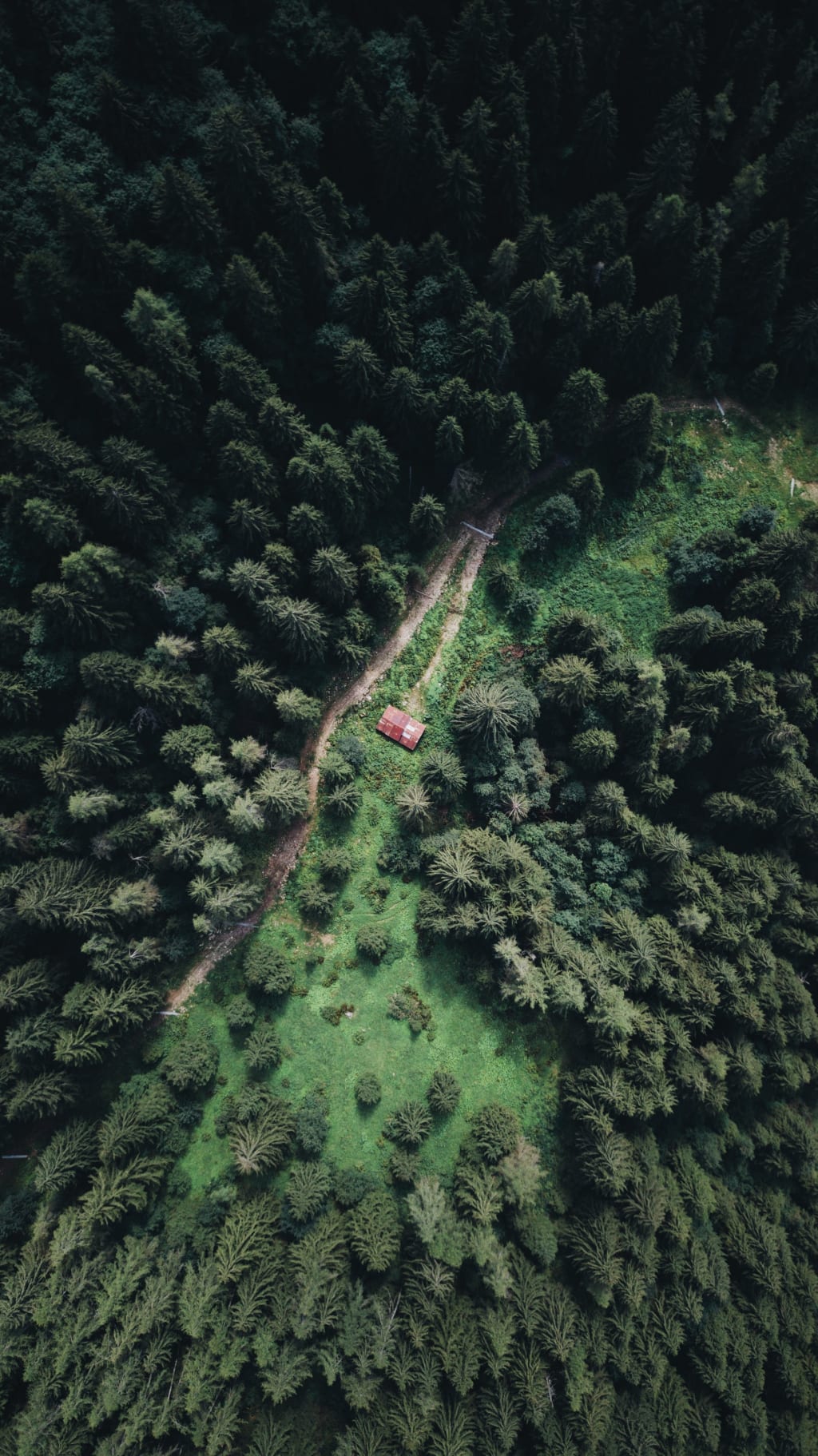
Dahlia is not allowed to go far from her house, which sits hidden in a womb of trees her mother said were planted by her father’s father’s father. She must always keep the tiny home with its milk-paint wash and blue wooden door, and low wrapping porch, and wavy slumped windows within sight. But she can still wander all the way to the tree line, and sit on the needles that mat the ground, and play with Dolly, and pet her dog, and call to the birds, and chatter with the squirrels that climb and leap and caper above her.
This day, Dahlia positioned Dolly in the opening of a hole in one of the trees. It was the perfect size for Dolly’s bottom if Dahlia folded her stiff legs forward and bent her neck a little too far front so that Dolly could only see the tops of the black strap shoes painted on her canvas feet. Dahlia was busy sharing the pinecone presents she had collected, when she pushed a little too hard on Dolly’s folded middle, sending her down into the hole.
Dahlia screeched a high, tiny, chirp of alarm and then just as quickly steadied her panic to concentrated on the rescue ahead. She moved a short pace back and bent her body forward so as not to make a shadow, and was relieved to discover that Dolly hadn’t fallen far into the tree. It was an easy, half-an-arms-length, recovery. But Dahlia did not relish the thought of the bugs with many legs that she knew lived in wood, whose half-circle trunks writhed and twisted on themselves, the feet at their tops wiggling against the feet at their bottoms as their segmented bodies circled and straightened, circled and straightened, circled and straightened.
Nevertheless, she assembled her courage on a big breath in and dove toward the hole, her tiny knuckles brushing the inside of the hollow, the sleeve of her sweater collecting cobwebs and their long-consumed casualties, as her fingers blindly reached for Dolly. She grasped her pincher-like, pressing her against something that felt foreign, and hauled both out of the orifice, her tiny feet undermining each other until she found a quick, shocking seat on the glade’s carpeted floor.
She held Dolly up before her and examined her closely. Save for a new, tiny bruise on her forehead, and some unwanted twigs and bits of brittle brown leaves entangled in her yarn hair, Dolly looked little worse for the ordeal. She would have to ask her mother, or worse, her sister, Agnes, to re-braid Dolly’s hair, but she was able to pick most of the detritus away from the strands, and she used her spit and her thumb to rub much of the bruise away.
She then turned her attention to the object that hitched a ride on Dolly’s rescue. It was something hard, but a little bit bendy, wrapped inside a piece of dark, oiled cloth that was weathered but still intact. Dahlia wasted no time unwinding the fabric, turning the enclosed item over and over until it lay before her on its now spent cocoon of waterproof linen.
It was a small, black notebook, its cover well used and worn, its thick ivory pages held together by stitching along the spine. A band of elastic married the pages securely together, and something inside created a slight bump on the front and back covers. Dahlia slipped off the elastic, and the book opened and lay flat, revealing a small graphite pencil and a thin, golden, silk ribbon that marked a place, and which Dahlia found quite beautiful. The notebook was almost entirely filled with words and yes, even drawings!
Dahlia’s world did not extend past the old mountain. Her mind existed sheltered within their primeval forest with its rutted, winding, narrow path, the only means of entry or egress, save for the tributary streams that hurry their payload of felled lumber to the river and then the sawmills below. She did not know any other children. She did not know her letters and she could not yet mark her name. But she could see that someone who once possessed her newly found prize could make all of their letters and they formed them into the words that completed the sentences, that husbanded the thoughts, that expressed the ideas, that they wished, and wanted, and needed, to preserve.
Dahlia did not want to interfere with the previous owner’s work, so she turned to a fresh page near the end of the notebook, held the pencil a bit clumsily, and she wrote as best she could. She marked, and marked, and marked. One small, straight, line followed another, followed another, followed another. Dahlia wrote of her family, and her dog, and Dolly, and the mountain, page, after page, after page. Just as the sun came to its peak, and her mother rang the bell to call her father and the fellers to sup, Dahlia made a final chit on the last lined page and returned the pencil to its nest, closed the book, secured the band, and carried it and Dolly home.
Dahlia removes the book from atop her face and opens it. The room contains just enough morning grey light for her to see the work contained within. First, she looks at the letters and words and sentences written before hers, and then she looks at the pictures. They are of trees, and birds, and of a river running between two mountains, which, Dahlia does not recognize as the river that welcomes the logs that the fellers first raft and then float to the town below. Dahlia also does not recognize the drawing of the man with the wide mouth and large eyes, who is her great-grandfather, or the little boy with the same large eyes, who is his son.
She picks up the pencil and turns to the very back sheet, the one she saved for her extra special work. She draws Mommy and Daddy and herself and her dog, and she even draws Agnes, but she does not make Agnes smile, because Agnes almost never smiles unless she is talking to the nervous feller with the too-big ears. Dahlia draws trees, and the sun, and a sky filled with birds, and everyone and everything is a splendid collection of lines and circles and graphite and space, and Dahlia is very pleased with her work.
Before she can decide to share her prize with her mother, Agnes stirs beside her. Agnes is not one to allow others their treasures, so Dahlia quickly closes the notebook, never noticing the small pocket that sits opposite her family portrait. She returns the pencil, secures the band, and quickly crosses to a large steamer trunk that serves as both a dresser and closet that she shares with Agnes. Dahlia is afforded three hangers and the lowest drawer for her things.
One day early last winter while retrieving a pair of mittens that had jockeyed themselves to the very bottom of the drawer, Dahlia discovered a small indentation in the floor of the compartment. When she placed her finger in the hole and pulled upward, the entire floor came away to reveal a tiny chamber. It was much too small for clothing, and much too small for Dolly, and Dahlia could not imagine what it could possibly be used for, so until this moment, she had all but forgotten the secret space.
Today, she moves her folded clothes carefully aside, slides her finger into the hole, and lifts just enough to slip her extraordinary possession into the little warren. She then straightens her clothes and shuts the drawer. She returns to her bed to rescue Dolly from the entangled bedclothes and then goes in search of her mother and to start her very busy day, all thoughts of her treasure left under the false bottom of the drawer.
Under the false bottom, the notebook will lie sequestered and forgotten beneath tiny clothes that will steadily give way to larger clothes as Dahlia grows, and eventually assumes full possession of the trunk, Agnes having married the big-eared feller and moved to a small cabin within a clearing just below their hill. The trunk will serve Dahlia well until it is replaced with a proper chest of drawers, just as Dahlia herself finds someone to love and moves off of the mountain to begin a different life all her own.
The trunk will relocate to the attic of the small house, where it will bathe in the dusty beams that slant through a tiny window below the eves, as the days and nights, months and years come and go, come and go, come and go. It will stand stalwart and forgotten, hidden behind boxes and crates, and discarded furniture for more than 60 years, long after Dahlia’s father doesn’t return from the Pacific. Long after her mother moves to town. Long after Agnes sells the small house and what they still own of the mountain. Long after the new owners visit their getaway no more than one weekend each summer for the next thirty years. Long after Dahlia, herself sits alone by a window, in a home that is not familiar, connected only to her yesterdays and never her todays. The trunk and all it contains will stand patiently waiting for the boy who comes one day in an early summer, and coaxes its long-unused latch, and cajoles its unpracticed hinges into service. The boy will open the trunk and explore every nook and cranny, every surface and space as is his custom, until he inserts his small finger into the indentation at the back of the bottommost drawer and pulls upward.
The notebook and pencil were purchased for a total of four cents at the mercantile by a young father who printed his name on the inside front cover and below that: August 15, 1907. This is the same day he sold part of his mountain to the logging company for $21,250. He records this sale and his intentions for the bounty on which he will partly live, but mostly he will save, to one day buy back his land. He has a well-earned fear of a run on the bank, so he hides his twenty new $1000 bills inside the folder at the back of the notebook.
In gentle, grey, morning light, he will visit the notebook every day and feed it all that runs through his head, before rewrapping it tightly in its oilcloth bulwark and hiding it securely within the vault of the tree. Until the afternoon almost two years later, in a very early spring, when he does not return from the river, the shifting ice having betrayed him, as it sucked his log raft under, and he struggled against his lumber coffin until his lungs filled with water, and his mind was gifted the blessed euphoria that ushers in a death by drowning.
About the Creator
Graci and Mr. Lee
We tell stories on paper. We tell stories on stage. We tell stories in film. We are married. We are responsible for five other humans, two dogs, and one betta fish that lives by himself in a wonderland we purchased at a box store in town.
Keep reading
More stories from writers in Humans and other communities.
Whiskey At Dusk
Guess the whiskey was more important to you in the end, wasn’t it? It was more than the well-being of your friends; more vital than showing up to the places you promised you would and could come to; more critical of a matter than fulfilling your damn responsibilities and getting the press off your back.
By Snarky Lisa3 days ago in Humans


Comments
There are no comments for this story
Be the first to respond and start the conversation.