

Gertrude was an unremarkable person in the way that most people are unremarkable. She wasn’t especially plain or pretty, tall or short, thin or heavy because she wasn’t especially anything. In most things, she simply was. As her mother used to say, “It’s called ‘average’ because that’s what most of us are.” Or, her dad, “Extraordinary people don’t make the world work.”
The sentiments had never bothered her because they were true. And because she’d decided at a young age that nothing much should bother her at all. Being upset or elated seemed so effortful. And, in any case, those emotions and considerations were best left for Diane.
Of course, she’d had friends who believed they were special, and not just the kind your parents call you. Though Gertrude knew that’s exactly the sort of special they were. They “dreamed big” and “chased ambitions” and had “passions,” but to her it all felt like an elaborate, collective lie. A groupthink devotion to the delusion that, surely, every single one of them was meant for greatness as though that fact alone wouldn’t make “greatness” itself mundane.
She’d explained it once, telling the group of girls she’d spent her time with at school that they couldn’t “all be special. If you all are, then no one is.” They’d stared at her with mouths paused in their chewing, sandwiches and forkfuls of salad held up, mid-bite, until one of them—Michelle or Madison or Marigold—changed the subject and Diane smoothed the moment with something innocuous yet charming.
This attitude meant Gertrude spent her youth, adolescence, and young adulthood balancing atop a soft line of mediocrity, maturing into a life that felt much like floating in a tub of perfectly tepid water, with air and liquid the exact temperature of her body, so that she might lift an arm above the surface without remembering that her skin was wet.
She studied, she worked, she rented a crappy apartment, worked some more, found a vaguely nicer one, and so on. Her job didn’t matter. Maybe she was a typist, if that’s still a thing, or a receptionist, an aide or some sort of associate. Sales, law, business. She’d gotten her degree in something practical then continued into a practical profession if only for the sake of maintaining her rote conventionality with the requisite full stomach, roof over her head, and the accoutrements—throw pillows, books she might or might not have read, cheap art in cheap frames—of a typical personality. She woke, worked, ate, slept, until it was time to begin the cycle again.
In her twenties, she dated. A Phil, a Brad, a Thomas, Geoff, Matt, Francis, before settling on a Mark. There was a wedding like most weddings. White dress, tasteful flowers, groomsmen, bridesmaids, a memorable moment from Diane. Dancing, cake, goodbyes, honeymoon, then a house with a body beside her each morning when she woke, to work while she worked, to eat while she ate, to sleep and repeat and inhabit that pool of forgettably wet water, the same except now it was populated by two sets of skin. Until the day she received the journal.
It came on a Tuesday, in a plain yellow envelope, sealed with a glue strip and the stiff, brass brad. No return address, no postage. Labeled only with her name. And inside, no note, no card. Only the journal. A small black book the size of her flat, open hand. Its cover soft and secured by a black elastic band.
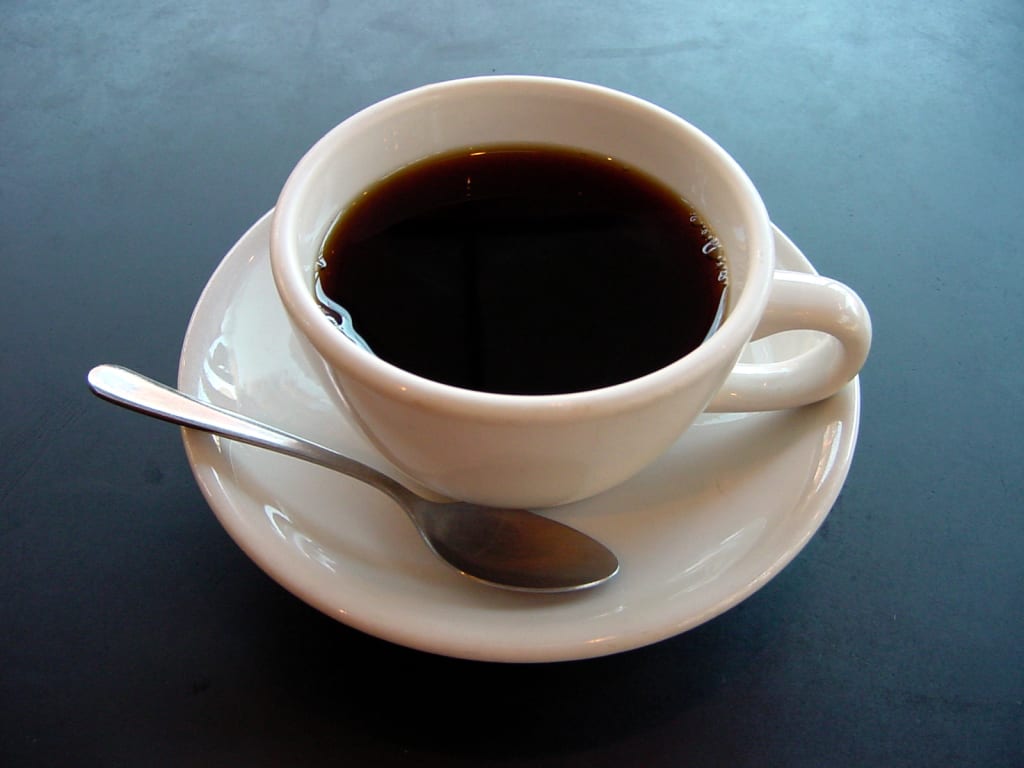
Gertrude threw the envelope out and brought the little book to her kitchen counter, setting it beside a mug of coffee she hadn’t managed to finish before it went cold. She sipped it, wincing slightly despite already knowing its temperature. She did things like that. Small things, miniature feelings, committing to them like an exercise regimen. Saying “oh!” when the water in the shower was too hot, or “mm!” when a bite of food was especially satisfying, or “ah!” after the first sip of a refreshing drink. Even when she was alone. A force of habit now thirty-some years deep.
It was the same as noting the weather to strangers and acquaintances, frowning cutely at unremarkable inconveniences and disappointments, exchanging “hellos” and “how are yous” if only because each recognized the other’s face. A performance of the fill-in-the-blank scripts manufactured by and for the sake of a redundant society. For Gertrude, it was an act like waving her arms within her pool of wet-less water, to feel the resistance, to remind herself that, yes, she was still there.
She pushed the mug of coffee out of easy reach, ran a finger under the journal’s elastic band and slid it aside. The cover opened with the a faint crack. New, then. Not only blank but unused. The same, but different. Blank meant un-written in, a kinetic sort of possibility. Unused meant sterile, aloof. Unclaimed and untethered.
Gertrude knew only one person who would give her such a thing.
The front door opened and Mike called hello. Mike, she thought, though when she looked at him entering the kitchen he seemed more like a Brad today. Just as she had felt more like a Susan at work and a Sandra this morning.
They exchanged banal pleasantries, sculling their tepid water with cupped hands. Choreographing the faint, imaginary current of married life. What was for dinner, who would cook it, which utensils and pots they would use, the dance of dishes and wiped counters and a bag of trash needing to go out. It was all interchangeable. Chicken or beef or vegetarian or order in. The good pan or the one that’d begun to stick. A single knot in the trash bag’s ties or double. Mike or Brad or Frank or Shelby or Gertrude or Suzanne. Sometimes a stranger’s hand held her fork as she lifted it to her mouth. A cousin she’d never met looked back at her from within the mirror. And a man-shaped, low-pitched keen slept beside her, as she reached out to touch his bare arm, skin to skin, both the temperature of the water, the air, the coffee, the performance, the farce, so she was as unsure of his true name as she was her own.
Before he left for work that last Wednesday morning, she watched him, blinking, focusing, forcing his features to settle into place on an otherwise blank face. The journal was warm from her pocket. She held it tightly in one hand, tracing the outline of the key beneath its back cover with her thumb as she waited a ten count once he drove away.
Then Gertrude left. Everything. Her clothes, on their hangers. Her purse, on the table in the entryway. Her keys, on the hook by the front door.
She walked. The day was brisk. A blue sky and crisp air that gathered on her once-tepid cheeks like rime. A reality she might flake off if she wanted, a chill she might warm with a few backwards steps, rewinding these spare minutes, climbing back into her pool with each movement repeated in reverse. She wanted her breath to fog, wanted to exhale those infinite ice crystals straight from her lungs.
The teller at the bank smiled and nodded when she asked about the number written on the paper. A scrap with rough edges, torn from a different notebook or piece of unnecessary mail. Tucked into the small black book’s interior pocket with the key. She’d found it while Mike or Mark or Matt read beside her last night in bed. “What’s that?” he’d asked, eyes not leaving the pages of his book. “Nothing,” she’d answered, and he’d let it go because he hadn’t cared much anyway. Scripts and motions and winces in response to cold coffee.
Now a manager led her down a hallway to the right of the lobby, his leather-soled steps tap, tap, tapping ahead of Gertrude’s soft tread on the generic stone tiles. The door he gestured to was heavy, official. Behind it, a small room with an empty table in the center and walls crowded by metal safe deposit boxes.
“Number and key?” the manager prompted.
Gertrude retrieved both from the pocket inside the rear cover of the little notebook. Number 627. It held no significance for either her or Diane, was likely randomly assigned by the bank. The key, in her hand in one lock while the manager held a second in the other, was warm from her grip on the black book.
Together, they turned. The manager pulled the box free from the wall, set it on the table, then excused himself to give Gertrude privacy.
She remembered this. Her mother had had one. She’d kept birth certificates and social security cards in it. All the things Gertrude and Marty kept in a firebox in his closet at the house. Those, and the coins. She’d loved the coins. Collectible silver dollars, shiny as if they’d never been touched. Nestled tight in a box lined with velvet. Blue velvet. Worthless coins.
The box itself used only one key. She inserted hers, still gripped between thumb and index finger, turned, and opened the levered lid. Inside sat a small, unremarkable black bag. A passport.
And twenty thousand dollars, cash.
She checked the passport’s picture, then ran a finger along the top bundle of bills. They were new, unused. Pure kinetic possibility. Untethered. So fresh their edges might cut, sever a connection clean.
An hour later, she stood in line at her gate, new passport in hand, cash in the bag with its strap looped over her shoulder. She kept forgetting where she was going, had picked the first flight she had enough time to make. It didn’t matter. Wherever she decided to go, her old life was dissipating like steam.
“Miss?”
She shook her head, apologized to the gate attendant and handed over her flimsy paper ticket.
“No apologies necessary,” the attendant said with a wide, red-lipped smile. She scanned the ticket, glanced at it again, then handed it back. “Enjoy your flight, Diane.”
About the Creator
Keep reading
More stories from writers in Humans and other communities.
Whiskey At Dusk
Guess the whiskey was more important to you in the end, wasn’t it? It was more than the well-being of your friends; more vital than showing up to the places you promised you would and could come to; more critical of a matter than fulfilling your damn responsibilities and getting the press off your back.
By Snarky Lisa6 days ago in Humans
Living in a hemp house
Hemp, a multi-purpose crop that delivers fibres, shivs, seeds, and pharmaceuticals is currently used in insulation materials and bio-composites for a more sustainable construction industry. Russ Martin and his wife Karon Korp tell their story as owners of the first hemp house in the U.S.
By Susan Fourtané 5 days ago in Interview




Comments
There are no comments for this story
Be the first to respond and start the conversation.