
Christmas Morning Without Bells
Hope survives where the world outside trembles

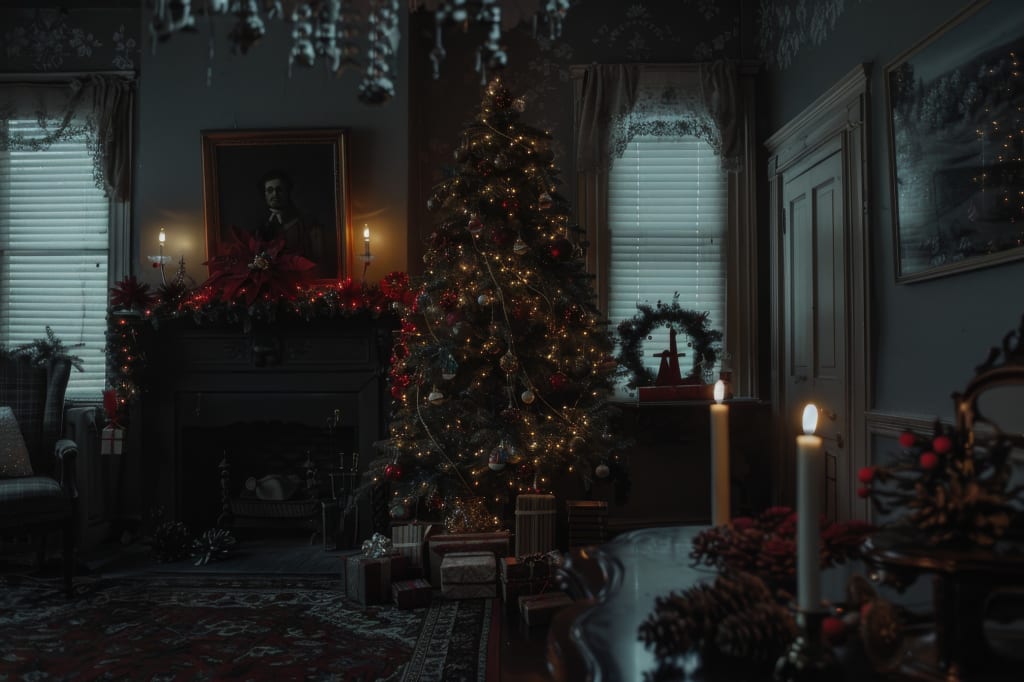
The child wakes up before dawn.
Not because of bells. Not because of carols drifting through the walls.
The morning arrives on the back of thunder—a low, metallic roar that rattles windows and turns sleep into instinctive fear. The mattress feels too thin, the blankets never enough, and even the stuffed bear pressed against their cheek cannot chase away the tension that hums in the air.
Outside, winter holds the city in its frozen hands. Frost etches delicate patterns on broken windows, and the wind sneaks through cracks in the walls, biting at exposed skin. Inside, parents move quietly, faster than they should have to on Christmas morning. They smile on purpose. They whisper calm words that are meant to sound ordinary. They become shields, storytellers, magicians—anything but frightened adults. Every movement is measured, deliberate; every gesture designed to make a child believe that some normalcy remains.
In this part of the world, war has learned how to knock. Sometimes with artillery. Sometimes with drones that hum like mechanical insects above the rooftops. A child does not know the difference, only that the sound means stop breathing for a second and wait. Yet even in these moments, parents find small ways to weave hope—folding paper stars, setting out a modest tree, humming a forgotten tune that softens the harshness outside.
Yet the table is still set.
A small gift waits under the modest tree, wrapped in crumpled paper and tied with string.
Someone has drawn stars on paper because the real sky feels dangerous tonight. The smell of cocoa lingers in the air, sweet and warming, contrasting the metallic chill that drifts in from the shattered windows.
This is how childhood is protected here—not by silence, but by love louder than fear.
Cold has a different meaning in winter.
It is not romance.
It is not scarves and laughter and red cheeks.
Cold is calculation.
Will there be light tonight?
Will the radiators stay warm?
How many layers does a child need to sleep safely when power stations and transformers have become targets instead of infrastructure?
Parents learn to read the dark the way others read weather forecasts. Candles are counted. Batteries are guarded. Each flicker of light is a small victory, a reassurance that warmth and safety, however fragile, still exist. Warmth becomes a strategy, not a comfort. Yet even strategy can carry a hint of tenderness—hot drinks poured into chipped mugs, blankets arranged just so, whispered encouragements that nothing outside can hear.
And still—still—they find a way to make cocoa taste like Christmas.
They talk about small miracles, about tiny joys hidden in the frost. They tell stories about past winters, about memories that make the cold and fear shrink just enough to allow for a moment of peace.
Somewhere else, not far in distance but impossibly far in reality, another world glows.
Shop windows spill gold onto clean streets.
Music plays on repeat.
People complain about traffic, about sales ending too soon, about nothing at all.
That world scrolls past on screens.
It speaks in slogans.
It offers sympathy in carefully measured doses.
Two realities coexist, side by side.
One wrapped in luxury and denial.
The other wrapped in blankets, listening for the next sound outside.
Neither world is imaginary.
That is the most uncomfortable truth.
And yet—this story is not finished in darkness.
Because Christmas, even here, refuses to die.
It lives in hands held a little tighter.
In a parent blocking a window with their own body.
In laughter that sounds fragile but survives anyway.
In a whispered joke that only a child and a parent understand.
Hope is stubborn.
It whispers about justice when the night is loud.
It insists that the future is not owned by violence.
It believes that cruelty is temporary, even when it feels endless.
And love—love is the brightest light of all.
Not decorative. Not performative.
But fierce, quiet, unbreakable.
Love says: We are still here.
Love says: You are not alone.
Love says: Morning will come—and one day, it will come without fear.
In a world that feels shattered beyond repair, family becomes the last lamp burning in the dark.
Even a cracked window, a frayed blanket, a chipped mug can become symbols of endurance, of warmth, of survival.
And as long as it burns, Christmas—real Christmas—still exists.
A light in the shadow, a whisper of hope, a reminder that no matter how loud the world grows, love will always speak louder.
About the Creator
Alina Westmore
Explores beauty, wellness, and lifestyle trends with a focus on practical simplicity.
Core themes: skincare essentials, product deep-dives, and real-world results.
Writes about the small things that make life feel better.
Maskory Shop Owner
Keep reading
More stories from Alina Westmore and writers in Humans and other communities.
Lost and Alone in the French Alps
Looking back, I can trace some of my life’s biggest adventures to a simple action from my sister. She’d introduced me to Tommy (a very long time ago), a colleague of hers, who had overshared his penchant for Italian-looking women, and I ticked that box.
By Chantal Christie Weiss12 days ago in Humans
How Can You Plan Your December Trip to Costa Rica Around the Weather?
December is one of those months when travel dreams feel extra alive, and if Costa Rica is on your mind, you are already on the right track. I have seen many travelers get overwhelmed by tropical weather myths, but once you understand how December really behaves, planning your trip becomes exciting instead of stressful.
By Amanda Glen6 days ago in Humans


Comments