
Chevak Alaska
"Fond memories dance in my head as I turn it back to see those areas as long as I possibly can."
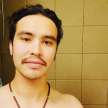
My name is Cody. I was born on August 8, 1989. My dad named me. The day I was born he was firefighting out in the great Alaskan wilderness. When word of my birth reached him, his squad cheered in honor of my dad conceiving a little gay son, muah. On the plane ride to meet me for the first time he came up with the name Cody Tucker Ferguson. I am the seventh son of Harry and Lena Ferguson.
I am one-sixteenth Russian and Cup’ik (CHOO-PICK) Eskimo on my mother's side, and one-sixteenth Tlingit Indian and Scottish/Irish on my father’s side. The Cup’ik heritage is similar to the Yup’ik (YOU-PICK) heritage. The only difference being slight differentials in the language and dialect. Both the Yup’ik and Cup’ik people inhabit Southwestern Alaska. The Tlingit heritage belongs to the indigenous natives who inhabit Southeastern Alaska. “It pays to be an Indian!” my father would exclaim as he danced around waving his small dividend check in the air.
In 1971 Richard Nixon passed the Alaska Native Claims Settlement Act. The settlement established Alaska Native claims to the land by transferring titles to twelve Alaska Native regional corporations and over 200 local village corporations. It was meant to resolve long-standing issues surrounding aboriginal land claims in the state, and to stimulate economic development throughout Alaska, as well. He is a shareholder of one of the regional corporations. My brothers and I wouldn’t have to be asked twice to make a run down to the local grocery store in our childhood home town out in the boondocks of Alaska to buy soda and doughnuts to celebrate.
One very far flung and unorthodox fact about me is I am the biological father of my step-mother’s only son; my youngest brother. After my mother passed away my father met and married a woman from Udon Thani, Thailand. Her name is Thabthimtong, or Thim for short. He moved there and they built a home together. Eventually, they wanted a child. The problem was my dad had a vasectomy. For the sake of keeping the baby in the bloodline they asked me to be the donor. I was a bit apprehensive about it at first, but because I love them, I agreed to it. It’s not like I’m ever going to have children of my own. I traveled to Thailand to do the deed, and as it turned out, my genes have spread. Lord help the world. They named him after my younger brother who passed away, Kash.
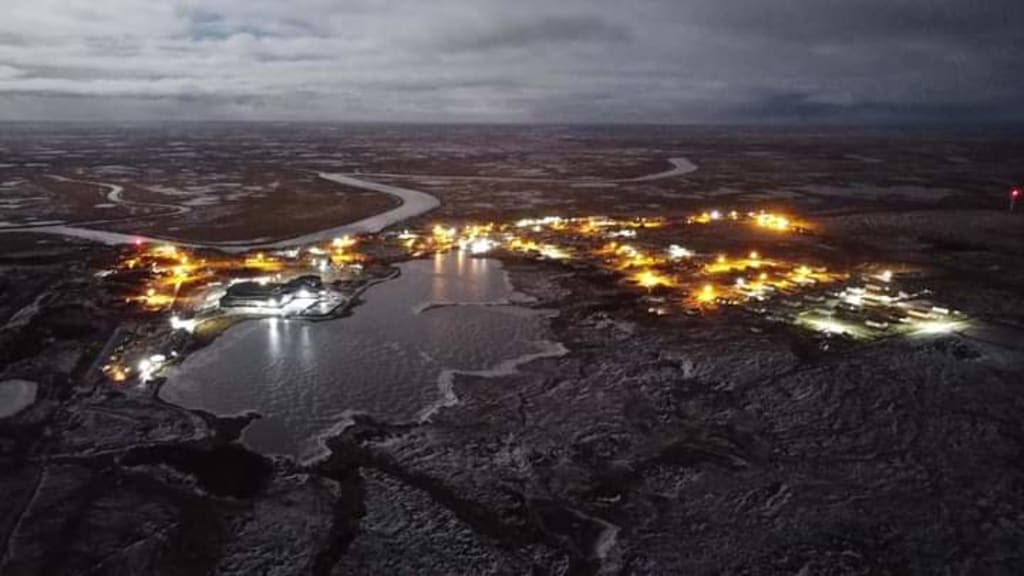
I grew up in a small southwestern Alaskan Eskimo community called Chevak that is stretched on top a grand, rolling bluff that overlooks the winding Ninglikvak (NING-LICK-FUCK) river which empties out into the Bering Sea. My mother was born on the banks of this river during the spring after the snow begins to melt, and when the mosquitoes begin to buzz around in the air. My father met and fell in love with my mother while working a construction job one summer building the old K-12 grade public school building in Chevak that they both would eventually begin teaching in. On the last day there he attended a dance and saw my mother for the first time. In his mind he told himself that he was going to marry my mother. The next day he hopped on a plane to his hometown of Wrangell, Alaska, packed his belongs, and flew straight back to Chevak where they built a life together for the next 23 years.
About a thousand people, mostly Cup’ik Eskimos, call Chevak home. It is located twenty miles inland from the coast of the more than choppy Bering Sea; in between the infamously mighty Yukon River to the north, and the Kuskokwim River to the south. The only way you are able to access Chevak is by plane.
It is a bare, flat terrain that resembles a white desert during the relentlessly unforgiving winter. Howling winds blow dunes of snow that constantly alter the landscape. It isn’t unusual for whole houses to be completely buried. Walls of snow barricade families inside their home, and they literally have to dig themselves out. Everything revolves around the weather and how much daylight there is. On the shortest day of the year less than five hours of daylight offer a short time frame for people to part-take in winter activities. When the weather cooperated my family and I would often cruise across the tundra on snow-mobiles in every direction to either ice-fish, hunt for winter game such as willow ptarmigan or moose, or to gather logs of driftwood that washed up along the coast during the summer which kept our home toasty warm.
During the summers, sitting on a bush plane looking down onto the terrain, an eye piercing green is poke-a-dotted by a myriad of shaped, deep, dark brown colored lakes as far as the eye can see. Rivers and sloughs wave towards the ocean that eye line the green grass with a very dark gray color of icky mud during the low tide, and it’s normal to see skiffs skidding around bends to family fish camps scattered along the river banks. There isn’t a concept of time for people camping out on the land during the summer because the midnight sun hovers across the horizon never really dipping low enough for it to be completely out of sight. This creates heavenly sunsets that consist of deep shades of pink, orange, purple, and blue that look like God himself painted across the sky. During the long, bright evenings thousands and thousands of waterfowl that migrate from every part of the earth's corners orchestrate a symphony with their calls indicating to the people that it’s evening tea time after a long hustling day. Every time I fly over my ancestral lands my eyes are aimed at familiar seasonal camp sites. Fond memories dance in my head as I turn it back to see those areas as long as I possibly can.
There isn’t much to the town itself. The newer part of Chevak consists of several hundred boxed wooden houses that rise up a few feet from the marshy tundra balancing on wooden and steel stilts that come in a plethora of bright colors. They’re all neatly arranged in orderly lines and neighborhoods much like the quaint suburbs in ultra modern cities on the road system. In contrast to the older part of town which resembles the coordinates of a location the United Nations did a flyby mission on using helicopters to drop huge boxes filled with the bare essential supplies.
There are a number of community buildings which provide services to the community such as a City Office building which is connected to the Post Office. All people have enough time for is a quick hello and goodbye as they come and go throughout the day. The City Office also employs Public Safety Officers that maintain law and order to the best of their abilities. When an occasional major incident happens that goes beyond their skill set, State Troopers are dispatched into town to enforce the law. The local residents voted for Chevak to be a “dry” community. Which means alcohol is banned. When the Troopers come into town, word quickly spreads across town like a wildfire, and all the bootleggers and weed dealers scatter into the shadows nowhere to be found.
A small clinic employs local health aides who provide basic healthcare. Due to the lack of adequate healthcare access in rural Alaska, they often refer patients who require a more complex level of care to the regional hub, Bethel, Alaska, where the only hospital is located within the southwestern region of Alaska. Being a health aide in a small community is a highly stressful career due to the fact that everybody knows everybody, and when there is a medical emergency, the patient is often someone who the health aide has a personal relationship with.
The biggest building and employer is the local k-12 grade public school that also often serves as the main community gathering place for social gatherings and events such as sports, festivals, disco dances, etc. There are several stores, including a general store owned and operated by the village corporation which the residents are shareholders of. There are two church buildings with year round residential priests/pastors. One local gas station is located at the base of the bluff down the road from a small dock where barges deliver large freight once the ice breaks up. A beloved locally owned and operated radio station provides broadcasting of all sorts in both the Cup’ik and English languages. There is a Tribal Government Office that provides social services to all tribal members. The whole town itself hugs a large, wide, shallow lake in which waterfowl swim in taunting hunters from a safe distance. To the north, at the end of “the lake”, a gravel airport rises high into the air from the natural ground enabling everyone to see airplanes taking off and landing. Far off into the distance, beyond the airport, a small range of mountains protrudes the Bering Sea and stretches east into the vast Yukon and Kuskokwim delta flats.
That is where I grew up, my home. Although I moved to the biggest city in Alaska, I left my heart in Chevak. As the saying goes, “You can take a person out of the village, but you can’t take the village out of the person.”
About the Creator
Cody Ferguson
I am an Alaskan Eskimo, Caucasian, gay, Bi-Polar, dyslexic man from from Chevak, Alaska located twenty miles inland from the infamously rough Bering Sea in-between the mighty Yukon and Kuskokwim rivers in southwestern Alaska. My home.
Keep reading
More stories from Cody Ferguson and writers in Humans and other communities.
Courage
When you have depression, you dwell on past experiences that negatively impacted your well-being. When you have anxiety, you dread over future possibilities that have yet to be manifested. When you have both, as they often go hand in hand, you can find yourself on a downward spiral toward rock bottom which can lead to some sort of ultimatum that will either force you to get better, or, unfortunately, seal your fate in misery, or worse, unless you have one thing; courage.
By Cody Ferguson4 years ago in Motivation


Comments
There are no comments for this story
Be the first to respond and start the conversation.