
Changing of the Guard
Albanese Triumphant, Dutton Defeated

Anthony Albanese Leads Labor to Historic Victory in 2025 Federal Election as Peter Dutton Loses Dickson
The Australian Labor Party won a resounding victory in the 2025 federal election, giving Prime Minister Anthony Albanese a second term in a stunning political landslide. Opposition Leader Peter Dutton lost his marginal seat of Dickson, causing the Coalition to suffer one of its worst defeats in recent memory. This resulted in a sharp decline in conservative support across the country.
A Mandate for Progress
Labor's victory has been praised as a strong testament to Albanese's visionary leadership and progressive policy platform. Voters from a wide range of demographics responded favorably to the Labor Party's main campaign pledges to boost Medicare, address cost-of-living pressures, and accelerate investment in renewable energy. The outcome was a clear shift in favor of Labor in seats that had historically been marginal and even conservative, such as Bonner, Bass, and Sturt.
Speaking to supporters on election night, Albanese referred to the outcome as a "vote for unity, opportunity, and a fairer Australia." He promised to advance Labor's second-term agenda quickly, emphasizing housing affordability, healthcare reform, climate action, and Indigenous recognition through the Voice to Parliament.
Albanese declared, "This is a victory for regular Australians who want a government that listens, cares, and delivers."
Peter Dutton's Stunning Defeat
The fall of Peter Dutton in Dickson was arguably the night's most symbolic event. Labor's Ali France, a disability advocate who had run against the Liberal leader in two prior elections, defeated the leader, who had been in office since 2001. Due to intense local campaigning and mounting discontent with Dutton's leadership style and policy platform, France's perseverance paid off with a resounding victory.
Dutton's loss essentially puts an end to his time as Liberal Party leader and raises questions about the Coalition's future course. An increasingly moderate electorate did not respond favorably to his campaign, which focused on nuclear energy, stricter immigration laws, and criticism of Labor's climate agenda.
In a quiet concession speech, Dutton stated, "I accept the decision of the people of Dickson and thank them for the privilege of serving." "The party needs to take stock, reorganize, and start over."
Coalition Faces Reckoning
Right now, the Liberal-National Coalition is dealing with its worst election result since the 1940s. Early analysis indicates that internal division, a lack of clear policy direction, and a failure to connect with younger and urban voters were major factors in the loss of seats for a number of well-known MPs.
A thorough examination of the party's leadership and strategy has already been demanded by senior Liberals. One of the few senior leaders to hold onto her seat, Deputy Liberal leader Sussan Ley, acknowledged the need for "genuine renewal and bold ideas."
She stated, "This isn't just about leadership." "It's about restoring public trust and expressing a vision that resonates with contemporary Australia."
Greens and Independents Make Gains
Independents and smaller parties also grew in the election, despite Labor's strong showing. With modest gains in their vote share, the Greens remained strong in inner-city seats like Melbourne and Brisbane. Numerous independent candidates supported by the community, many of whom ran on integrity and climate action platforms, either kept their seats or ousted vulnerable Coalition members.
Voters in Australia are becoming more inclined to look outside of the two major parties in pursuit of more accountable and responsive representation, which is reflected in this diversification.
What Comes Next
The Albanese government is now in a better position to advance important reforms thanks to a strengthened mandate. Medicare expansion, more assistance for first-time homebuyers and renters, and enshrining the Indigenous Voice in Parliament—a proposal that was unsuccessful in a 2023 referendum but is still essential to Labor's reconciliation agenda—are anticipated to be among the first legislative priorities.
But there are still difficulties. The government's capacity to fulfil its commitments will be put to the test by the state of the world economy, inflationary pressures, and housing crises. Albanese's leadership will be evaluated based on his capacity to enact revolutionary policies in a challenging political and economic environment, in addition to his ability to win elections.
A Turning Point in Australian Politics
Australia's political landscape was altered by the 2025 election, which also marked a change in the country's priorities. More than just a change of leadership, Labor's overwhelming win and Peter Dutton's downfall signify a larger desire for social justice, inclusive governance, and climate responsibility.
The challenge facing Albanese as he starts his second term is clear: to bring a changing Australia together and lead with vision, integrity, and purpose.
About the Creator
Keep reading
More stories from Mehfuj E Sobhani Jim and writers in Humans and other communities.
"Silencing the Airwaves?"
Trump Signs Executive Order to Cut Federal Funding for Public Radio and Television Washington, D.C. — May 2, 2025 Extending his long-standing criticism of public media, former President Donald Trump signed a broad executive order to cut off federal funding for the Public Broadcasting Service (PBS) and National Public Radio (NPR). Signed aboard Air Force One and made public late Wednesday evening, the directive instructs federal agencies to stop providing discretionary funding to public television and radio to the extent that the law permits.
By Mehfuj E Sobhani Jim10 months ago in Humans
A Historic Declaration
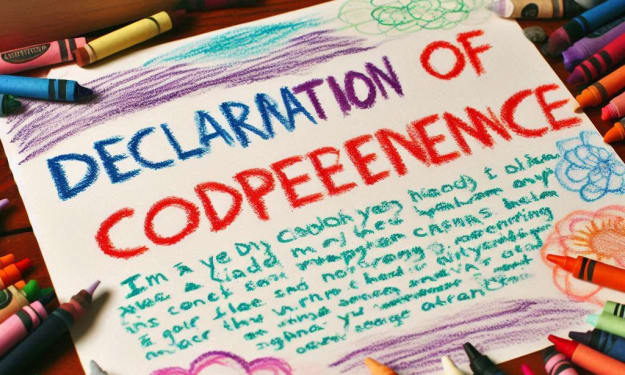
We the People of the Husbands of the United States of America, in Order to form a more perfect Union, and I mean you...with me...establish Justice, insure domestic Tranquility, provide for the common defence, promote the general Welfare, and secure the Blessings of Liberty to ourselves, after Puberty, do ordain and establish this Declaration of Co-Dependence.
By Gerard DiLeo11 days ago in Humans
Parallel Protests
I haven't written for quite some time, but I have A LOT of thoughts about yesterday's protest rally against our government's involvement and complicity in America's war on Iran, on the harbourside of my home city Bristol, and I need to put them somewhere. My gorgeous girlfriend is always a loving and listening ear and sharing it all with her will always be a healthy and happy way of processing the mental and emotional weight, but getting it straight in my brain to share means writing it all down in straight lines, so, here we are and thanks for being here.
By Steph Cole6 days ago in The Swamp



Comments
There are no comments for this story
Be the first to respond and start the conversation.