
"Caesarion: The Enigmatic Legacy of Egypt's Last Pharaoh"
WAS CAESARION TRULY CAESAR'S SON?
Introduction:
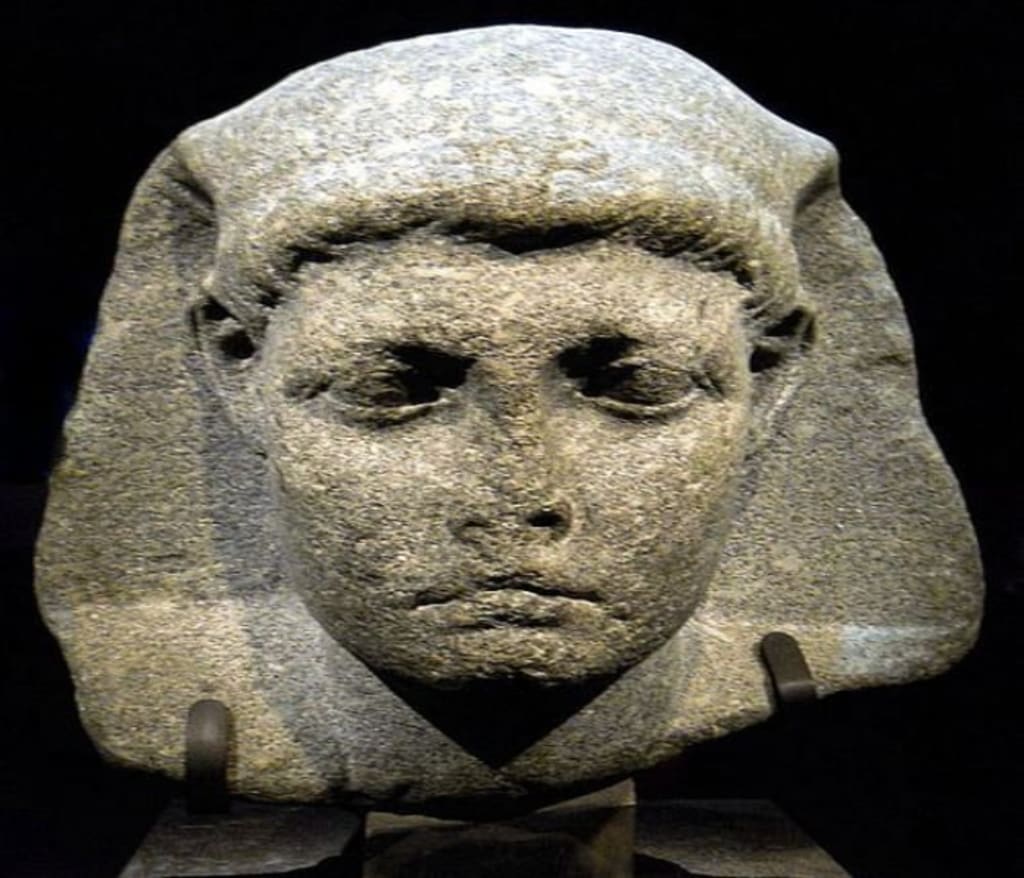
Caesarion, the son of Cleopatra and Julius Caesar stands at the crossroads of two powerful civilizations, symbolizing the union of Roman and Egyptian royalty. Born amid political intrigue and the shifting tides of power, his parentage has been a subject of historical debate and fascination. In this article, we delve into the complex narrative surrounding Caesarion's identity, exploring the evidence, controversies, and the enduring mystery of Egypt's last Pharaoh.
Chapter 1: The Union of Cleopatra and Julius Caesar
The romantic liaison between Cleopatra, the Queen of Egypt, and Julius Caesar, the Roman general and statesman, marked a pivotal moment in history. Their union was both political and personal, with Cleopatra seeking Roman support to maintain her hold on the Egyptian throne and Caesar finding in her a powerful ally.
Chapter 2: The Birth of Caesarion
In 47 BCE, Cleopatra gave birth to a son named Ptolemy XV Philopator Philometor Caesar, known to history as Caesarion. His birthplace was a nexus of power and intrigue, and his parentage became a testament to the intricate relationships between Rome and Egypt during this tumultuous period.
Chapter 3: The Ambiguity of Caesarion's Paternity
While Caesarion was widely believed to be the son of Julius Caesar, the Roman dictator's paternity was a matter of speculation. Ancient historians, including Plutarch, Suetonius, and Cassius Dio, recorded the rumors and political implications surrounding Caesarion's birth. However, the lack of definitive proof and the volatile political climate contributed to the uncertainty.
Chapter 4: Political Implications
The birth of Caesarion posed a complex political challenge. In Roman eyes, Caesar's acknowledgment of a son born to a non-Roman mother could disrupt the political order and challenge the legitimacy of his heir, Octavian (later known as Emperor Augustus). Cleopatra strategically presented Caesar as Caesar's legitimate heir, further complicating the political landscape.
Chapter 5: Caesarion's Status in Rome
Caesarion's presence in Rome, where he was taken by Cleopatra following Caesar's assassination, added a layer of intrigue to his identity. Octavian, wary of potential threats to his power, sought to diminish Caesarion's influence. The young prince lived in relative obscurity, away from the political machinations of Rome.
Chapter 6: The Decline of Cleopatra and Mark Antony
Following Caesar's assassination, Cleopatra formed a political alliance with Mark Antony. However, their defeat at the Battle of Actium in 31 BCE marked the end of their reign and the beginning of a tragic chapter. Faced with the approach of Octavian's forces, Cleopatra and Mark Antony took their own lives in 30 BCE.
Chapter 7: Caesarion's Fate
With the demise of Cleopatra and Mark Antony, Caesarion's fate hung in the balance. Octavian's consolidation of power and his determination to eliminate any potential rivals led to a direct threat to Caesarion's life. Fearing for the young prince's safety, Cleopatra sent him into hiding.
Chapter 8: The End of Caesarion
In 30 BCE, as Octavian's forces closed in, Caesarion met a tragic end. The circumstances of his death remain shrouded in mystery. Some accounts suggest that he was captured and executed, while others propose that he took his own life. Regardless of the details, Caesarion's death marked the final chapter of Egypt's Ptolemaic dynasty.
Chapter 9: The Legacy of Caesarion
The legacy of Caesarion, despite his brief and tumultuous life, endures in historical records and cultural representations. His role as the last Pharaoh of Egypt represents the culmination of a dynasty that blended Egyptian and Hellenistic influences. The ambiguity surrounding his paternity and the political ramifications of his birth add layers to the historical narrative.
Chapter 10: Historical Perspectives
Historical perspectives on Caesarion's paternity have evolved. While ancient sources hint at the rumors and uncertainties surrounding his father, modern scholars have weighed the evidence and debated the likelihood of Caesar being Caesar's biological father. DNA analysis, though challenging due to the lack of direct samples, may provide further insights in the future.
Conclusion: The Enigma of Caesarion
Caesarion's life is a tapestry woven with threads of political intrigue, cultural blending, and the shifting sands of power. The enigma surrounding his paternity remains a captivating aspect of his legacy, leaving historians and enthusiasts to ponder the complex intersection of Roman and Egyptian history in the personage of Egypt's last Pharaoh. The life and fate of Caesarion, born in the shadows of the empire and entangled in the drama of his time, continue to evoke fascination and curiosity as an enduring enigma of the ancient world.
About the Creator
Keep reading
More stories from fatima zahra ajankar and writers in Humans and other communities.
"King Arthur: Separating Legend from Reality in the Quest for a Historical Figure"
Introduction: The tale of King Arthur and the Knights of the Round Table has long enchanted audiences, weaving a tapestry of chivalry, romance, and heroic deeds. Yet, beneath the layers of medieval legend lies a lingering question: Was there a real King Arthur? The quest for a historical Arthur has fueled centuries of scholarly debate, archaeological exploration, and mythic interpretation. In this article, we navigate the labyrinth of Arthurian lore to unravel the complexities and uncertainties surrounding the existence of a real King Arthur.
By fatima zahra ajankar2 years ago in Humans
Whiskey At Dusk
Guess the whiskey was more important to you in the end, wasn’t it? It was more than the well-being of your friends; more vital than showing up to the places you promised you would and could come to; more critical of a matter than fulfilling your damn responsibilities and getting the press off your back.
By Snarky Lisaa day ago in Humans
The Monkey and the Soldier
Shahab was a kind-hearted and compassionate soldier. One day, he was returning to his village to spend his leave. On his way, he had to pass through a dense forest. As he rode through, he noticed a thorny bush shaking violently. Curious and cautious, he dismounted his horse, drew his sword, and called out: “Who’s there? Come forward, or I will cut you into pieces!”
By Sudais Zakwan4 days ago in Humans


Comments
There are no comments for this story
Be the first to respond and start the conversation.