
Beadwork and Cultural Connection
How I reconnected with my heritage and myself.

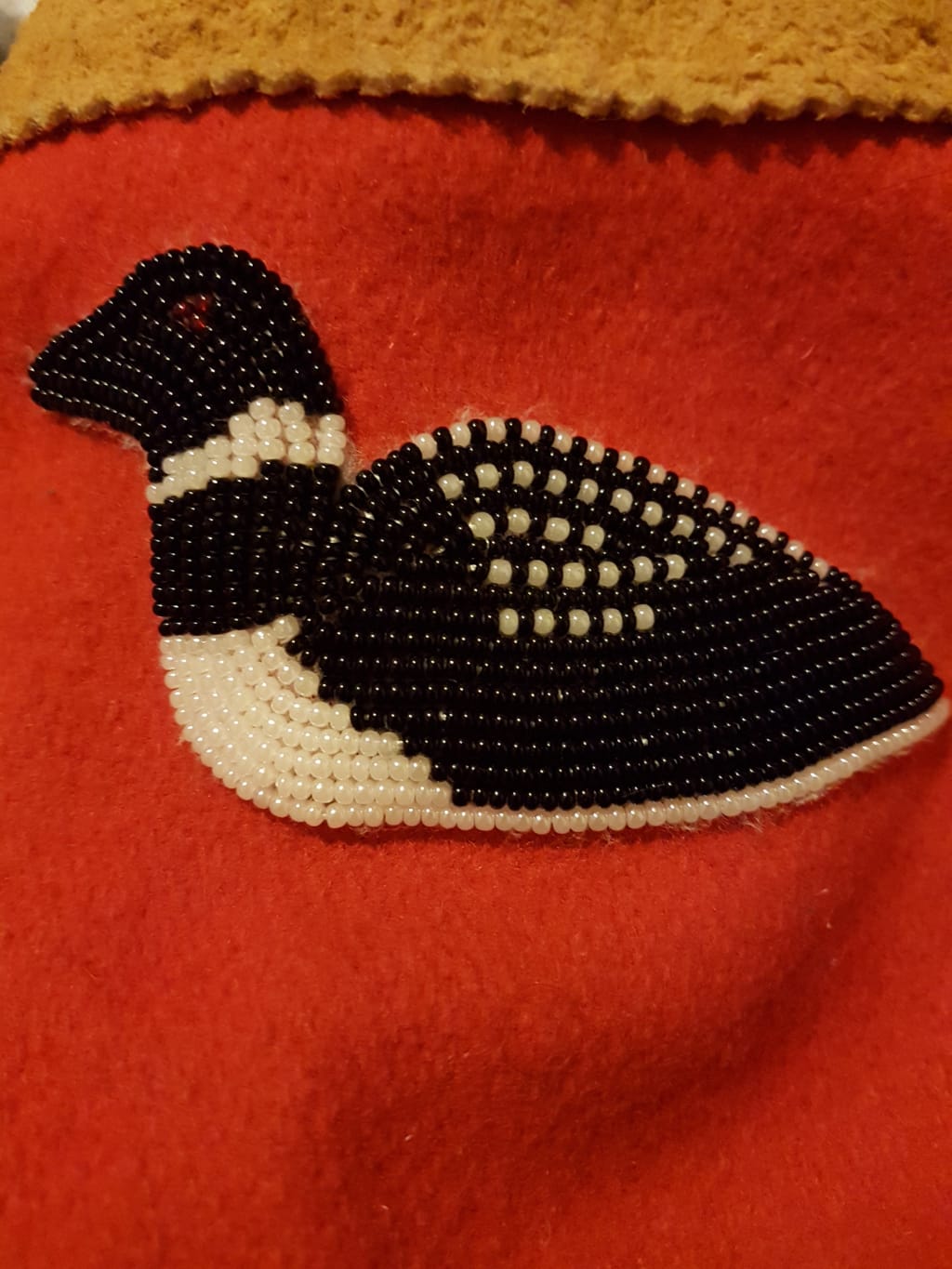
My husband told me I need a hobby. I guess watching TV mindlessly isn't considered a hobby. At first, I was slightly offended by his suggestion. It's not like I don't do anything. I enjoy gardening but as I get older, bending down for hours on end and eventually throwing my back out doesn't appeal to me anymore. So, I took some time to think about what I'd like to do, and what I hope to get out of it.
I used to be "crafty" and spent many hours sewing or cross-stitching. I gave up crafting when I had 3 kids and a full-time career. But now that the children are older and we're in the middle of a pandemic, it does seem like a good time to pick-up where I left off in the crafting world. I realized that the one thing I have been missing is beading.
I am an Anishinabe-ikwe, an Ojibway woman. Beading is like an institution in my culture; it is something that has connected my people for generations. It is sacred. It embodies the spirit and represents the resilience of my people. My mom went to Residential School and because of her own dissconnection to her heritage, we did not particularly engage in many cultural activities growing up. We sometimes went to powwows and enjoyed the singing, drumming and dancing. I would watch and feel like I was connected to my ancestors and my culture. I was in awe of the colourful regalia and intricate beadwork designs. I wished I could bead like them!
I finally got my chance 15 years ago when I lived in the Northwest Territiories, Canada. A Dene woman, an Aboriginal artist was teaching a class on how to make mukluks and I realized that this was an opportunity to connect with my culture in a way that I had not growing up.
My teacher was also my neighbour; she lived across the street. I would sometimes watch her tan moose hide in her backyard from my living room window. So, when I learned she was offering a class, I immediately signed up! I wanted to not only learn how to make mukluks but I also wanted to connect with other Aboriginal women in the community. If you know anything about Aboriginal women coming together, watch out because the laughter can be deafening. The class met for 12 weeks; we learned how to cut the pattern, sew with sinew, and piece together the mukluk. But, what I really loved was the beadwork. The different sized and colours of beads was so satisfying! I carefully chose a pattern that inspired me, a loon and a feather. I admit it took me a while to learn how to bead, but with my teacher's patience and the support from my fellow beaders, I figured out how to connect my heart and mind with my hands to create something unique. I made mistakes, a lot of mistakes. I had cuts all over my hands from sewing with sinew, but it was all worth it. I learned that beading is about tradition and healing. It is about mindfulness and self-discovery. I had a wonderful time with an amazing group of women.
Fast forward 15 years and this time around, however, I am on my own, like so many are these days. So, I started my journey to reconnect with beading. I bought beads, thread, needles and a fancy new pair of scissors! I also bought reading glasses as the eye of the needle seems to be getting smaller and smaller! I started by beading a pair of earrings and when they didn't turn out too badly, I tried a beaded feather hair clip. Every project I complete gets a little better. I am still very slow, but I am also mindful and patient.
Over tha last few months, I have realized how happy I am when I am beading. Every bead, every stitch, means something to me. Every time I poke my finger with the needle is one small sacrifice for connecting with my cultural identity, my ancestors and myself. I am calm and at peace. Beadwork is happiness.
About the Creator
Keep reading
More stories from Alison McLaughlin and writers in Humans and other communities.
Never Whistle at the Northern Lights
It was a cool, crisp October evening and I just spent the last 2 hours studying for my physics exam tomorrow. I need a break, I'm tired and my eyes are sore. I'm already anxious because I'm not quite understanding physics and I always panic before a test. "I just need to stay calm and focused. Maybe a walk will help," I thought to myself. I grabbed my jacket and phone. "I'm just going for a walk, I'll be back soon!" I shouted to my mom as I opened the front door.
By Alison McLaughlin4 years ago in Fiction



Comments
There are no comments for this story
Be the first to respond and start the conversation.