
Awakening at 25: Breaking Free from the White-Washed World I Knew
How growing up in a racially insulated environment shaped my identity

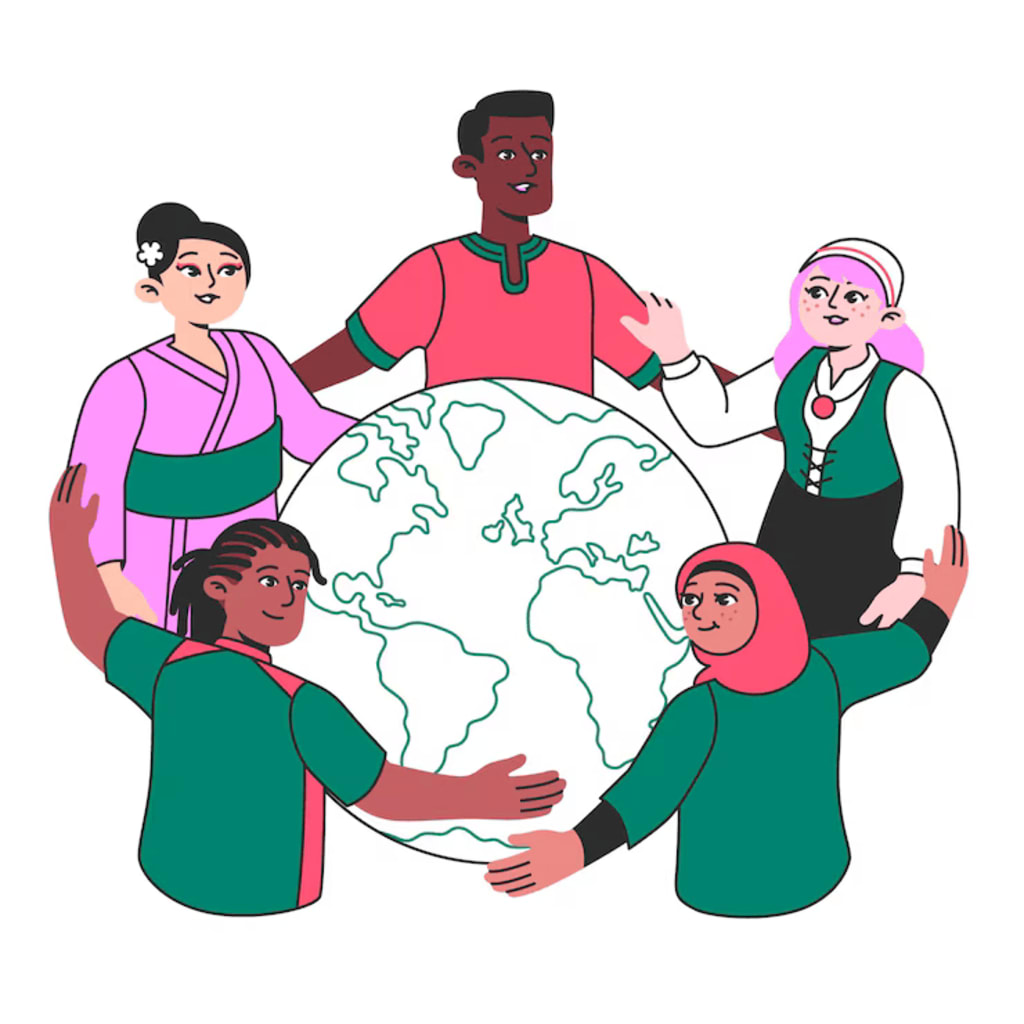
Until I was 25, I lived in what I now recognize as a White World. It wasn’t something I consciously acknowledged at the time. In fact, I was proud of how “well-adjusted” I was, how easily I blended in, and how few “issues” I had with race, culture, or identity. But looking back, I see a different picture—one painted in muted tones, one where color was not celebrated but erased.
I grew up in a predominantly white suburb, attended predominantly white schools, and absorbed a culture that centered whiteness as the norm. From TV shows and textbooks to beauty standards and even the history we were taught, the message was subtle but consistent: whiteness was the default; everything else was “other.”
As a person of color (though I didn’t embrace or even fully understand that identity then), I became fluent in the language and expectations of whiteness. I knew how to minimize my culture to make others more comfortable. I laughed along with jokes I didn’t find funny and stayed silent when someone made a comment that stung. I told myself that “not making it a big deal” meant I was mature, unbothered, and evolved.
But the truth is, I had internalized a set of values that told me fitting in was more important than being fully myself. I prided myself on being “the exception”—the one who wasn’t “like the others.” I didn’t realize that I was slowly erasing parts of myself to survive in a world not built for me.
The change began gradually. In college, I started to meet people who looked like me, who spoke about identity and injustice with clarity and passion. At first, I was defensive. I wasn’t racist. I had white friends. I didn’t “see color.” But over time, I realized that not seeing color wasn’t a virtue—it was a refusal to see reality.
What hit me hardest was the realization that I had missed out. I missed out on learning about my own heritage, on feeling pride in my roots, and on connecting with a broader community that shared my history. I’d been so busy trying to succeed in white spaces that I hadn’t questioned why I had to try so hard in the first place.
The real awakening came at 25. That’s when I moved to a diverse city, began reading books by authors of color, started attending cultural events, and engaged in uncomfortable but necessary conversations. That’s when I understood that my experience wasn’t unique—it was part of a system that rewards conformity and punishes difference.
Living in a White world for so long affected everything—how I spoke, dressed, thought, and even how I dated. I had absorbed messages that equated whiteness with desirability, intelligence, and success. It took conscious effort to undo that programming, to relearn what had been buried for years.
But there was freedom in that unlearning. I began to feel lighter as I peeled away layers of internalized shame. I started to embrace my natural hair, to speak in my own voice, and to proudly share the cultural stories I once kept quiet. I found community not just among people who looked like me, but among those who saw me—really saw me.
I also began to see the world through a clearer lens. The racial microaggressions I once brushed off became glaring. The exclusion I had tolerated became intolerable. And the systems I had once tried to navigate quietly became targets of my voice and advocacy. I realized that silence, no matter how polite or “peaceful,” was complicity.
This journey hasn’t been easy. There are days I grieve the years I lost trying to be someone I wasn’t. There are moments I still feel the pull to “tone it down” to be accepted. But I’ve also discovered power in authenticity. I no longer measure success by how closely I can mimic whiteness—but by how boldly I can walk in my truth.
To anyone else who has lived in a White World without realizing it, I say this: It’s okay to be late to the realization. It’s okay to feel guilt or confusion or even fear. But don’t stop there. Learn. Listen. Unlearn. Reclaim. The world needs your voice, not your silence. It needs your culture, not your conformity. It needs the real you, not the version you created to fit in.
Because there is profound liberation in loving yourself—not in spite of your identity, but because of it.
About the Creator
Minhaj Ul Hasan
Author and storyteller who uses words to explore life, creativity, and connection. From fiction to real-life reflections—always chasing meaning, one story at a time.
Keep reading
More stories from Minhaj Ul Hasan and writers in Humans and other communities.
The Loneliness Epidemic in a Hyperconnected World
In a world where smartphones are ever-present and social media platforms promise endless connection, one would expect loneliness to be a fading problem. Ironically, the opposite appears true. Despite the unprecedented ease with which we can connect with others, loneliness has become a pervasive and growing epidemic across the globe. It quietly affects people of all ages, backgrounds, and socioeconomic statuses, posing a significant risk to mental and physical health.
By Minhaj Ul Hasan10 months ago in Humans
Psychology Tricks That Help Singles Create Strong First Impressions Instantly
One of the best ways of making a great first impression is through body language. Being tall, having an upright posture, and having the right eye contact conveys that a person is confident and approachable. These small gestures are indicative of confidence, and this would be very appealing during the initial encounter.
By Robert Smithabout 13 hours ago in Humans



Comments
There are no comments for this story
Be the first to respond and start the conversation.