
Avian influenza Virus
1st human infection of influenza A(H5)
Introduction
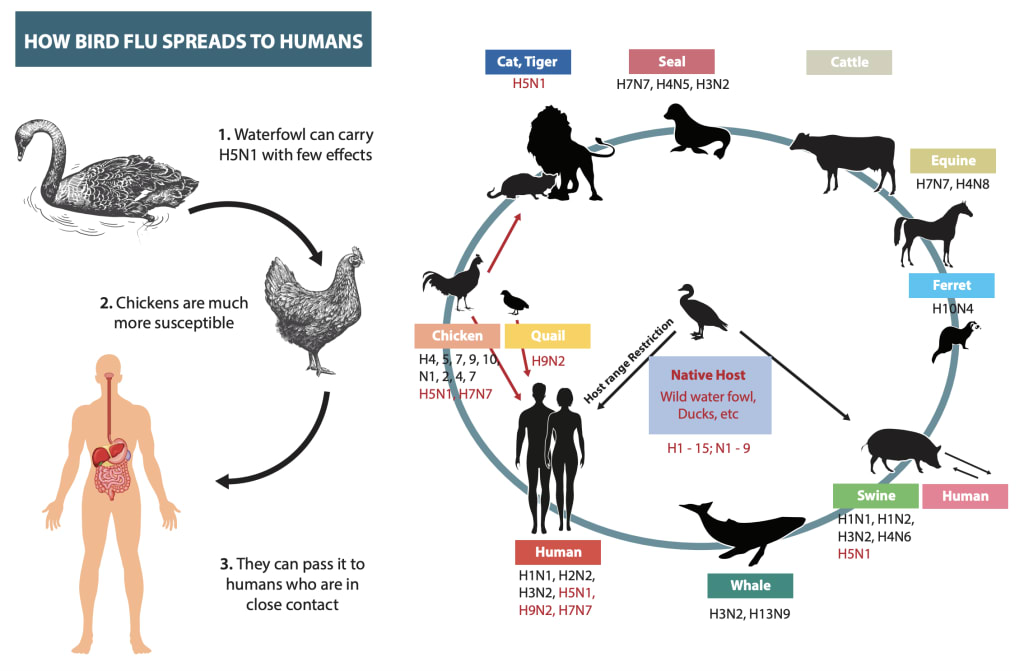
Avian influenza, also known as bird flu, is a viral infection caused by influenza A viruses that primarily affect birds, but can also infect humans and other animals.
The virus primarily affects wild birds, but can also infect domestic birds, such as chickens, ducks, and turkeys.
Classification
There are different strains of avian influenza virus, which are classified based on their hemagglutinin (H) and neuraminidase (N) proteins.
The H proteins determine the host range of the virus, while the N proteins determine the virus's ability to replicate and spread.
The H5 and H7 subtypes are considered to be of high concern due to their potential to cause severe disease in birds and to transmit to humans.
Transmission
The virus is spread through direct contact with infected birds, through contaminated feed or water, or through the movement of infected birds or their products.
Symptoms
Avian influenza can cause a wide range of symptoms in birds, from mild respiratory illness to severe disease and death.
The virus can also cause severe illness and death in humans, particularly in people with weakened immune systems or underlying health conditions.
Treatment
Prevention and control of avian influenza include measures such as surveillance, quarantine, vaccination, and biosecurity.
In addition, it is important to report any suspected cases of avian influenza to relevant authorities.
The World Organization for Animal Health (OIE) and World Health Organization (WHO) provide guidance on the control and prevention of avian influenza.
To prevent avian influenza virus infection, it is recommended to take the following measures:
Avoid contact with sick or dead birds, as well as their droppings.
Practice good hygiene, such as washing your hands with soap and water before and after handling poultry.
Cook poultry and eggs thoroughly to kill any potential viruses.
Do not use raw or partially cooked eggs or poultry in food products.
Keep backyard flocks away from wild birds and other poultry.
Report any sick birds to the appropriate authorities.
Vaccination of poultry and biosecurity measures are also important strategies to prevent avian influenza virus infection.
For human, avoid contact with sick birds or contaminated environments and use personal protective equipment, such as gloves and masks, when handling poultry.
In addition to the measures mentioned above, there are several other steps that can be taken to prevent avian influenza virus infection:
Biosecurity measures should be implemented at all poultry farms, including the use of protective clothing, footwear, and equipment, as well as the segregation of different flocks and the use of disinfectants.
Surveillance systems should be in place to detect and respond to outbreaks quickly.
Movement controls should be implemented to prevent the spread of the virus between farms and regions.
Research and development should be conducted to improve vaccines and antiviral drugs for use in poultry.
International cooperation and information-sharing are crucial for preventing and controlling avian influenza outbreaks.
In case of human, if you work with poultry or live near poultry farms, it's important to be aware of the symptoms of avian influenza, which include fever, cough, sore throat, and difficulty breathing.
If you experience any of these symptoms, seek medical attention immediately and inform your healthcare provider of your exposure to poultry.
In case of human, it's also important to be aware of the risks of avian influenza and to avoid traveling to areas where outbreaks are known to have occurred.
Overall, preventing avian influenza virus infection requires a multi-faceted approach that includes good hygiene practices, biosecurity measures, surveillance, research, and international cooperation.
About the Creator
Kavithran Shakthi
A person who is concerned with designed to have little or no damaging effect on the humanity
Keep reading
More stories from Kavithran Shakthi and writers in Humans and other communities.
Unwanted Sexual Behaviour or Attention
Introduction Sexual harassment is any unwanted sexual attention or behaviour that is offensive, intimidating, or threatening. Examples include sexual advances, comments or jokes, physical touching, and display of sexually explicit materials.
By Kavithran Shakthi3 years ago in Humans
Ludacris and Nelly draw backlash over bookings at MAGA-coded music festival
Ludacris and Nelly headlining a mostly right-wing event is good for them. It’s also great for the genre of hip hop. The two rap veterans have showcased their talents on other stages. Why can’t they perform for mostly MAGA folks and grab that bag?
By Skyler Saunders4 days ago in Beat




Comments
There are no comments for this story
Be the first to respond and start the conversation.