
As Above, So Below
Astrology: a growing spirituality

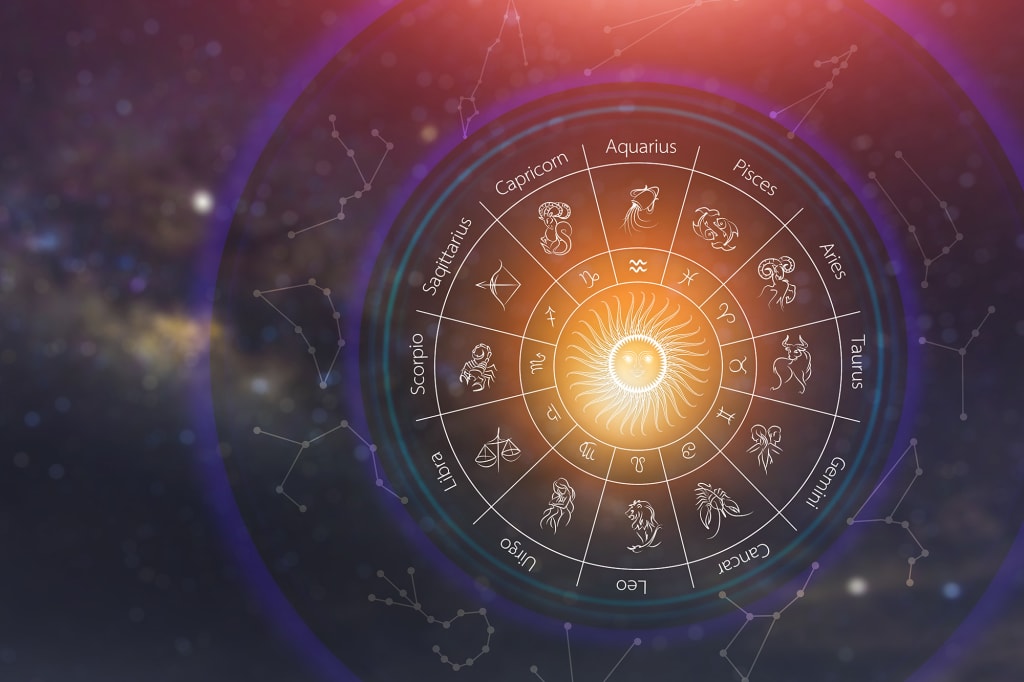
In recent years spirituality, especially in the form of astrology, has become increasingly popularized over conventional religious practices. Although astrology can be broadly defined, Virginia Rosenburg states that “it was originally intended [to act] as an ancient symbolic language and a healing art,” (2017, 0:40). In essence, it is a way of translating the movements and interactions of celestial bodies to draw interpretations about the characteristics of human beings and the natural world. This practice of studying the stars has endured for centuries, experiencing resurgences in times of instability and uncertainty. I would posit that the exponential rise in the popularity of astrology within the last decade is facilitated by the practice’s strong inclusion of myth, symbolism, and worldview as indicators of a way to understand the changing modern world and, more so, to understand ourselves. Astrology also provides followers with a ritualistic practice and specialists to turn to. At the very least, even if you do not habitually check your horoscope in the newspaper, checking in every now and then is fun and occasionally, a little magical.
Astrology, like other religious and spiritual practices, is highly influenced by myth and symbolism developing a particular worldview. The five characteristics of myth are as follows: being set outside of “normal” time, accounting for the creation of the world, divine characters, a specific language, and performance of the myth (Plett 2021a). Astrology fulfills the above characteristics notably with the characters of the zodiac, it being classified as “the language of the gods,” (HISTORY 2020, 2:35) and the Sumerian view of Aquarius as the god of creation, Enki (3:10). Myth functions through symbolic stories that help us to understand the world as well as to help us deal with the existential uncertainties of the human experience. The myths surrounding astrological practices are portrayed through the symbolic figures of the zodiac drawn in the stars. These symbols create a worldview allowing us to understand the nature of reality and the concept of ourselves and how to behave in society (Plett 2021a). This worldview is what tells me that as an Aquarius, I am an independent thinker, very stubborn and should stay away from Scorpios for the best luck in love. Cristine Smallwood writes, “The popularity of astrology is often explained as the result of the decline of organized religion and the rise of economic precariousness […] In times of crisis, it is often said, people search for something to believe in,” (2019). The current neoliberal influences on the Western world prioritize independence and material wealth over community and social wellbeing. The growing globalized world generates large amounts of doubts, anxieties and fears regarding occupational success, love and family and individual health. One characteristic of an anthropological perspective is holism: that “culture is a […] integrated “whole”, with “parts” that operate in specific ways in relation to each other and that contribute to the operation of the whole,” (Eller 2007, 8). Rosenburg argues that astrology provides the same approach to life, seeing everything as interconnected, from the stars above to all life on Earth. She declares that “seeing life through separation and an individualist lens has gotten us into a calamity,” (Rosenburg 2017, 3:42) and that astrology can we change the way that we live by ending the current disconnect facing humanity. Astrology also has ways of providing quick reassurances and explanations in times of crisis. The current COVID-19 pandemic has seen a colossal jump in the number of people turning to astrology (Baig 2020).This is driven by our desire for control over the uncontrollable and our need for answers when there are none to be given. A documentary entitled, The Astrology of Pandemics, details the cosmic patterns and their correlation with large-scale pandemics, citing the interaction between Pluto, Jupiter, and Saturn as the dawn of the Black Plague, New World Smallpox, the Spanish Flu, HIV/AIDS and COVID-19: “We say that the distant and first cause of this pestilence was, and is, the configuration of the heavens,” (2021, 14:46). Although impossible to scientifically prove, the relationship between the planetary alignments and global deaths greater than 1 million is chilling. The rise in the popularity of astrology can be explained thanks to the myth and symbolism involved in creating a vibrant worldview. This worldview not only tells us who we are and who we would be best matched with, but it also provides individuals with easily accessible guidance, community, and comfort in the hectic modern world. It promises to tell us things that we do not already know and grant us explanations for the things we cannot rationally explain.
Rituals play a heavy role in religious and spiritual practices. Astrology utilizes a form of therapeutic ritual. These highly social aspects of astrology form the instruction manual for community values and societal structures. They involve action, repetition, and the intensification of social bonds (Plett 2021b). The popularity of astrology is even more prevalent among millennial women. Amelia Harnish reasons that this is the case “because [astrology is] a lived faith. It requires routine practice, and that brings a level of mindfulness,” (2018). She goes on to further argue that in a world where many religious practices stem from patriarchal beginnings and glorify male prophets, astrology is a way to “link the feminine to the divine,” (Harnish 2018). Unlike other archaic religious groups, astrology has no exclusory histories and is available to everyone, therefore, the popularity amongst women and queer individuals is understandable. Colin Bedell writes that “astrology has provided a safe, empowering space in service to women for well over a century,” and even goes as far as claiming that “astrology might be facilitating fourth-wave feminism,” (2021). The ritualistic practices of astrology are also extremely low maintenance, perfect for the rapidly moving contemporary world. They are as easy as checking your horoscope from your phone when you wake up. These rituals are also highly individualized, you complete them on your own time, and they are all about you. This individualization allows for each person to interpret their own conclusions for their own lives. There is no set rule book like the 10 Commandments of Catholicism. No two people are the same and therefore, astrology “allows you to find yourself, understand what it means to be human and to service humanity to the best of your ability [based on a] unique celestial identity,” (Norrie 2020, 6:40). However, there are limitations to ritualistic practices of astrology. With the growing popularity of astrology comes the realisation of a strong financial opportunity for some. Louis Turi refers to himself as a Clinical Hypnotherapist and passionately practices, teaches and documents astrology and his predictions regarding the natural world as is written in the stars. He claims to have been contacted by extraterrestrials and led to uncover the secrets of the cosmic code. He is the narrator of a new documentary, Divine Astrology, and is extremely characteristic in his preaching. He declares that those who become educated in astrology and use it to learn about themselves and their lives will be able to obtain power, unity, health, and wealth, while those who do not, will pay a heavy penalty (2020). Turi accepts cliental from all over the world charging upwards of $350 for a Zoom appointment. Numerous reviews described Turi as a charlatan, unprofessional, rude, and unwilling to provide refunds after unhelpful appointments. This, as well as Nancy Reagan turning to an astrologer seeking advice for political management, is an example of the potential manipulations of astrological specialists and an indicator of why some feel astrology is a “global cult,” (VICE 2016).
When I was little, I used to anxiously await the arrival of the Tooth Fairy, Santa Claus, and the Easter Bunny. I remember laying awake at night with my window open hoping for a glimmer of pixie dust to trickle through my bedroom and a boy’s feet to land softly on the sill. But undoubtedly, Peter Pan never arrived to sweep me away to Neverland and upon discovering “Santa’s” signature wrapping paper in the back of my mother’s closet, I no longer slept with the window open. Young children are blessed with a beautiful innocence, the unquestioned belief in the unbelievable, which is eventually shattered by the stark realities of our contemporary lives. The loss of that innocence is the beginning of a maturity that is required to survive in our highly technological, commercial, and individualized society. Edward Tylor postulated that magic, religion, and science all acted as explanations of the world and the events in it. Magic is the idea that the effect of an act is caused by something unknown, a mystical connection. Divination uses magic to understand and predict the future (Plett 2021c). Astrology is often referred to as magical, justified by astrologers practicing the art of divination and James Frazer’s Law of Contagion where things once in contact will influence that thing or person. The position of celestial bodies at the time of our birth supposedly influences all aspects of our lives, thereby applying the Law of Contagion. This way of magical thinking is a psychological concept typical in young children but seen as problematic in adults (2021c). Astrology is neither a science nor a religion, it is a way a believing that everything that is fated can and will come to pass, regardless of present struggles and not being a tangible entity. As Turi phrases it, “if you do not see the other side of my hand, it doesn’t mean it doesn’t exist,” (Norrie 2020, 11:05). Perhaps the irrefutability of science is the problem, it can tell you that you have a 3% survival rate with the upmost certainty. Astrology tends to focus on the positive along the lines of ‘even though you are facing disease, your strength will land you with an unexpected opportunity’. It breeds hope and innocence in contrast to bluntness of our scientific world.
The recent rise in popularity of astrology can be easily explained from an anthropological point of view. Astrology is an inclusive spiritual practice that provides followers with comfort and hope during uncertain times, explanations for themselves and the world around them, and the ability to regain a little bit of the innocent belief that is lost after childhood. Not only is it a fun conversation piece in a world that is becoming increasingly less prone to genuine human connection, but a way for individuals to not be restricted to supporting only science or religion when the two have no overlap and often find ways to be discriminatory. Instead, astrology is a neutral third option, one that has been there longer than both science and religion, longer than even human beings themselves. Therefore, it is easy to understand the appeal of the stars, the little glimmers of light in a night sky spanning a distance larger than we could even imagine. Plus… we all need a little magic in our lives.
About the Creator
Keep reading
More stories from writers in Humans and other communities.
When True Love Never Questions Your Soul
“And she’s going to learn that this life will hit you, hard, in the face, wait for you to get back up, just so it can kick you in the stomach but getting the wind knocked out of you is the only way to remind your lungs how much they like the taste of air.” — Sarah Kay’s Poem — If I Should Have a Daughter
By Chantal Christie Weiss4 days ago in Humans
Nicole Curtis: Breathing Life Into Forgotten Homes
Walking into a house that has been abandoned for years is like stepping into someone else’s memory. Dust covers the floors, walls sag with age, and the echoes of laughter or heartbreak linger in empty rooms. For Nicole Curtis, these houses are more than just buildings they are stories frozen in time, waiting for someone to listen and care. Watching her work is like watching a quiet miracle unfold. She restores not only wood and walls, but the dignity and history of the people who once called these spaces home. Her work is a delicate balance of skill, patience, and empathy, showing that homes can carry hope back into communities that had long been forgotten.
By Muqadas khanabout 8 hours ago in Humans



Comments
There are no comments for this story
Be the first to respond and start the conversation.