
Art of Vik Muniz and Alexander Rodchenko
Works of various artists allow developing a personal vision of art and its different areas.

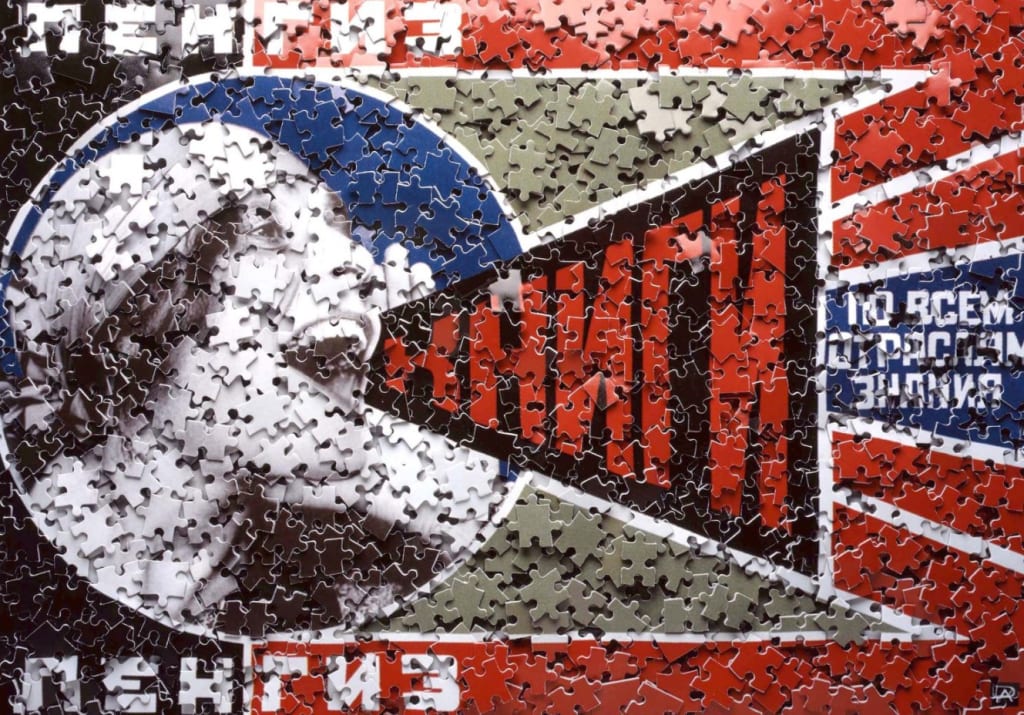
Reflections on a specific work of art allow an individual to understand its importance to the society and the idea conveyed by its artist. Works of Vik Muniz and Alexander Rodchenko stand out among others due to their originality. Both artists have used innovative approaches. Their works are prominent because of emotions that cause the desire to comprehend the idea and focus on social issues. Masterpieces of the authors are noteworthy as they change the perception of the world, have political and cultural implications, and make viewers want to understand values of life and norms of the society.
Vik Muniz deserves attention as his attitude to life reflects the realities of the today's world in an unusual manner that draws attention to topical problems. The artist also notes that simple things can be used in a new manner, for example, it is possible to create extraordinary masterpieces that will please the audience out of ordinary things. Muniz combines fine arts with photography and creates a whole series of works using everyday objects such as garbage, diamonds, and sugar.
Vik Muniz’s “Medusa, After Caravaggio” (from pictures of junk) was created in 2009 in the form of digital C-Print. The Brazilian artist uses landfill detritus to form the basis of his palette. Muniz not only creates an image, but also makes extraordinary works of art from waste (Lindner & Meissner 20). His works always have deep meanings and viewers are forced to think about problems of the modern world.
It should be noted that the uniqueness of his art consists in its capacity to encourage other people to try creating something. The artists engages in cooperation with young people to help create a new vision of well-known masterpieces. The artist’s collaboration with ordinary people and the youth in particular is symbolic because it makes clear that every person should think about important values of life and the society. The artist’s approach has resulted in the emergence of a new direction in art that can be called a public team artist. It sets him apart among other artists.
The author's work is important for the cultural development of the society as it helps transfer knowledge to younger generations. Cooperation with the youth is a wonderful educational experiment that develops artistic vision and spreads respect for nature. When young people work with waste with a view to creating works of art, they begin to realize that the planet should be protected. People think about the problem of trash only when they have first-hand experience with it. Thus, it is an artist’s personal way of reminding people about environmental pollution and emphasizing that recycling is a means to preserve this amazing world for future generations.
The artist shows that the modern society is an example of an excessive consumption of goods. Through his work, Muniz encourages people think about a need to lead a simpler life and observe stunning things in unusual combinations. A lot of things that can still be used, yet were thrown away show such contemporary veracities of life as a careless attitude to finances and natural resources, as well as people's desire to gain recognition and respect through the acquisition of unnecessary things. The artist emphasizes that excessive consumption and pride lead to the waste of time needed to reflect upon art, nature, and spiritual values. Just like a peculiar type of jellyfish called “Medusa”, greed destroys people’s lives with unnecessary things and steals space and time.
Muniz often uses small parts and items to create installations. Each piece has a specific meaning and provokes various feelings. Visual perception helps to reinterpret the whole picture. The combination of symbolic meanings of different parts creates a common understanding of the idea conveyed by the work. Viewers can see children's learning tables, tires, a shovel, and other items that symbolize different aspects of the reality and represent everyday life.
This picture has changed my attitude to the combination of historical masterpieces and the contemporary art. In my opinion, the result produced by the artist is somewhat ironic, but it conveys a serious message. It is reasonable to use art history as it allows him to ensure the commercial success of the work. The masterpiece has received positive critical acclaim and is famous in the world.
Alexander Rodchenko is the author of the famous Soviet poster called “Books!”. He is one of the leading artists of the Russian avant-garde movement. His work has been shown in various galleries of the world and gained worldwide recognition. Photography started developing in the Soviet Union after the 1917 Social Revolution. Alexander Rodchenko understood that photography would become more popular than paintings as a contemporary presentation of the new artistic approach (Getty Museum). This artist adapted photos to promote social issues. In particular, he tried to show the real life of Soviet citizens.
Works of this artist have political and cultural meaning, as well as importance. Alexander Rodchenko is one of the innovators in the field of the 20th-century avant-garde. The international community has recognized him as one of the most prominent figures of constructivism and an outstanding representative of the Russian art (Getty Museum). His work has influenced not only art, but also design, architecture, and photography.
His work stands apart among others because it has become a symbol of the Soviet people. Rodchenko depicted the Soviet five-year plans and their ideological content. The artist used political issues as a ideological basis of his masterpieces. The artist is known for trying to portray the discrepancy between lofty moral values and real problems of the Soviet society. The culture of the Soviet Union was in a challenging situation because it was locked within the framework of political ideas and social problems. Rodchenko’s work has changed my attitude towards constructivism and rationalism and improved the knowledge of the Soviet art and photography.
The author combined traditional techniques with innovative approaches that he developed on his own, for instance, he was among the first to use photomontage. Thus, Rodchenko created innovative collages consisting of photos of one object from different angles and perspectives (CSUN.edu). He used the birds’ principle of vision of objects, which was borrowed from biology, by examining a thing or a person from various angles.
In conclusion, cooperation of Vik Muniz with the youth gives rise to a belief that that art will continue developing in the future. The artist has showed that daily consumption of different items and debris can be used to create artistic compositions and works, which draw attention to the humanity’s problems. In turn, Alexander Rodchenko has proved that even in difficult times it is possible to develop art and try to teach the society to follow noble moral values. Both authors draw attention of the public to urgent social issues. Muniz emphasizes over-consumption, contamination, and greed, while trying to change people’s attitude to these issues. Alexander Rodchenko influenced the Soviet society through photography and his personal vision of life. The artist conveyed the idea of a five-year plan in the Soviet Union with the help of images that became clear to the whole world.
This text was written by Bryan Morrell who is a writing editor at https://essaysprofessors.com
About the Creator
Bryan Morrell
My literary destiny was such that all my works followed the ups and downs of my life. I'm not afraid to write at all, it's not a scary process.
Keep reading
More stories from writers in Humans and other communities.
How Bad Are Energy Drinks for Teens, Really?
You go to school and look at desks that have pencils, textbooks, computers, and energy drinks? Students in schools now have cans of Monster, Celsius, Bang, among others, which are even sold in vending machines in many schools. Teens usually buy these drinks for energy after a lack of sleep or just for the temporary satisfaction, even with their overall bad reputation with older adults, but what does the science actually say about this?
By Seliyan Selvakumar6 days ago in Humans




Comments
There are no comments for this story
Be the first to respond and start the conversation.