
Arkansas Boys
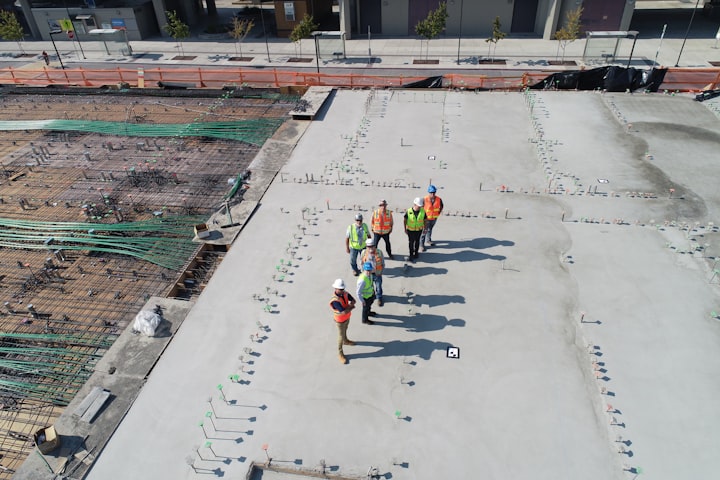
The 95 degree humid heat was beating down on the Arkansas-Missouri border. It was mid-day without a cloud in the sky. Arkansas native red rock baked on my sweaty skin as I sat under the only shade on the job-site. I was tired and sore, but wouldn’t dare mention it. I ate my lunch savouring every second of rest. I heard the rough sounding engine of Ben’s old beat-up white chevy and knew my time of peace was coming to an end. He’d returned from his quick trip to the gas station for his essentials: cigarettes and blue flavoured powerade. Ben opened his car door and sat there with the engine turned off. He gave his cigarette a couple of last big puffs, got out, and signaled rest time was over. I’m convinced Ben was part grizzly bear; his 290 pound body was covered in hair, and his hands looked strong enough to crack open a coconut. He was strong and good at his craft. He was a carpenter by trade, but worked construction while Covid disrupted his plans. I had only been working for two-weeks and had an end in sight a month later when school started back up again. Ben was 33 and there was no end in sight, he worked longer hours than the boss, putting up 13-14 hour days regularly. The man drove from job-site to job-site, making steady progress at each site. The first time I met Ben was on my second day of work, and the first thing he did was come over to me and insist on me having one of his powerades. He said I’d die if I didn’t find some shade, as he could see I was overworking myself with not enough water intake. He talked rough though, the first sentence I ever heard him say contained a racial slur. It was very offensive language, but I kept my mouth shut not giving him the reaction he was looking for. At first I reacted with passionate hate towards him wondering how he could say those things, and whenever I would see him I wouldn’t talk or look at him. I was forced to work more with him, as it was often just us on the jobsite working. I soon started to realise however that he was a giving man that lived to make his daughter happy. There was no other reason for anything he did. Money didn’t matter to him, as long as he had enough to provide for his daughter he was content. I saw him give and offer more things than anyone else all summer. He was making minimum wage, working harder and longer than everyone else and always remained positive even in the harshest conditions. One morning he broke his toe after dropping a concrete panel sheet on it, and after a 30 second break of cursing and swearing he kept working and didn’t mention it again all day. He was tough, and understood that when a job is at hand, you finish it at all costs. The man took immense pride in finishing his daily tasks, but would often get lit-up by the boss for not working fast enough. Time was money for the boss, and Ben worked weekends and holidays. Some days the boss would pull up to the job-site and he would be angry for no reason. No “good mornings”, no “goodbyes”; just yelling and cursing. On other days the boss would be happier than a kid on christmas, and would tell everyone to take a break and take time to teach me new things on the site. Consistency and patience had no place in the bossman’s life. Whenever the bossman pulled up in his Ford super-duty truck, everyone knew the next couple hours would most likely be hell. Days that we had to pour concrete were the most stressful and intense times. The SAT seemed like a walk in the park, compared to the stress levels of pouring concrete. The boss was a hothead who couldn’t contain the pressure of the pour. The pour is the most important part of the build because if the foundation didn’t pass inspection everything had to be redone: diggings, footings, rebar, plumbing, etc. It would set us back weeks. After the concrete trucks were gone and the concrete smoothed, the stress dried up with the wet concrete, and everything was back to normal. I learned that this was and has always been their way of life. These boys were raised on the job-site, and for many of them it’s the only thing they’re good at. They live in their job-site bubble with little to no diversity, and they’ve lived in the same small towns their whole lives. I realised it’s harder than you think to know who someone is, and right when you make an assumption your perspective can change.
About the Creator
Keep reading
More stories from Luke McCullough and writers in Humans and other communities.
The Importance of Gaming in Formula One
Luke McCullough September 8, 2021 The Importance of Gaming in Formula One The first Formula 1 racing video game, Namco, was released all the way back in the 1970’s, and involved the player trying to last as long as possible without hitting another race car. Six years after the release of Namco, the same developers released “Pole Position” which was a racing game far ahead of any of its competitors. Players could qualify for races in timed trials, and it was the first video game that followed the basic format of a real F1 race. We all know how far technology has come in recent years, and the world of F1 gaming is no exception. In 2000 Electronic Arts released F1-2000 and has continued to release yearly video games ever since. Each year the game gets progressively better, as it becomes more realistic and accurate with controls and graphics. The games feature real F1 tracks and drivers competing on the F1 circuit for that particular season. The regular Xbox and Playstation controllers that you use for most video games started to have very technical and realistic alternatives for controlling your car. Although you can still play the game with a standard controller, it’s much harder and essentially impossible to keep up with the best players. Logitech is at the forefront of consumer race technology that combines a steering wheel, racing seat, and even pedals together to create a basic race-like feel. The controller steering wheels have become so realistic in recent years that they are nearly identical to the ones used in real F1 cars. The prices of these pieces of equipment can range from a couple hundred dollars to tens of thousands of dollars. In 2017 the Formula One eSports Series began giving online racers a chance to compete with one another for cash prizes. In 2020 the prize money was $750,000. Each team in F1 now has a team in eSports that competes for them. Drivers can potentially work their way up from the online team to the real team. Believe it or not some of the biggest names in F1 made an appearance online first before becoming a real F1 racer. Since the game has become so realistic, making a name for yourself in the virtual world can translate over to the real world of racing. Lando Norris, a current member of team Macleren, and George Russell, currently with team Williams, are two F1 drivers that have had past success in online F1 and real life racing to secure themselves a spot in Formula 1. Since there are only 20 drivers in F1, it’s incredibly hard to make it to the top and be consistent. Racing online, however, has given drivers a chance to learn and memorize every detail about tracks and the speeds at every turn and straightaway. Now every racer trains in racing simulations that the team provides for them. These simulators are worth millions of dollars and can simulate the forces acting on the driver, track downforce, wind resistance, and many other things that can ultimately help not only the driver and his abilities, but the overall design of the F1 car to make it go faster. In the simulator the driver can practice for as long as they want without having to worry about damaging the actual F1 car which would be an extremely costly mistake. Also, since drivers only get 4 hours of practice before a race weekend it’s crucial they get as much race-like conditions as possible which is best achieved through the simulation. Video games in F1 have become so realistic that it’s an essential part of every driver's training, and has become a way for drivers to climb up the ranks and make themselves known in the world of Formula One.
By Luke McCullough4 years ago in Gamers
Amber Glenn’s Quiet Rise Through Pressure, Pain, and Perseverance
Amber Glenn is not the loudest name in figure skating, but her presence lingers long after she leaves the ice. Her career has been shaped by moments of promise, heartbreak, resilience, and steady growth that rarely follows a straight line. For years, she stood on the edge of major breakthroughs while carrying pressure few could see. Amber Glenn’s story is not about overnight success. It is about staying when leaving would have been easier. It is about learning to trust her body again, believing in her place in the sport, and showing up even when the spotlight felt heavy. To understand Amber Glenn today, you have to look beyond scores and medals and into the quiet determination that defines her journey.
By Muqadas khan4 days ago in Humans




Comments
There are no comments for this story
Be the first to respond and start the conversation.