
An Artist's Self Portrait Demonstrates His Own Descent Into Alzheimer's Hell
The pictures tell the story



In my Alzheimer’s articles, I give you solid, proven information on how to deal with Alzheimer’s behaviors. In the last two articles, Learning Not to Argue, and Communication Strategies, I discussed the difficulty of communicating with a person with Alzheimer’s Disease. I explained the reasons for, and solutions to how to deal with the unusual, difficult to understand, often inexplicable behaviors related to communication disorders, displayed by your Alzheimer’s loved one. I did this by giving you a glimpse of what it’s like to live inside the Alzheimer’s brain -Blankness, confusion, and fear.
I mentioned in one of my articles that the information about what a person with Alzheimer’s Disease feels and thinks comes from my interaction with extraordinary people, who, at the beginning of their Alzheimer’s Disease, were willing to share their stories. Later articles will discuss two of these people — Richard Taylor, Ph.D, a psychologist who was diagnosed with Alzheimer’s Disease at age 61, and became a writer, speaker, and advocate on behalf of those with Alzheimer’s Disease. The other was Tracey Mobley, an ordinary Mom, and wife, who was diagnosed with Early Onset Alzheimer’s Disease at age 38, and became an author, speaker, and advocate for those with Early Onset Alzheimer’s Disease.
They felt it was vital that you know and understand how they thought and felt, so you could be a help, not a hindrance to your loved one with Alzheimer’s Disease. Their premise was that if you understand how they think and feel, you should be better able to smooth the way for them in their Alzheimer’s life. I heard Richard speak in person and read his newsletters religiously. Tracy wrote guest blogs for my website.
I am a writer. I inform you of what I feel are important issues, like Alzheimer’s Disease, my own Weightloss Journey Through Bariatric Surgery, and entertain you with what I hope to be amusing stories — through my writing.
But sometimes, a story comes along that is so powerful, that only the paintbrush can give it justice. Only your eyes can absorb the enormity of the message. And so it was with William Utermohlen, “…….. an American figurative artist who became known posthumously for his self-portraits created after his diagnosis of Alzheimer’s disease in 1995. Utermohlen’s career lasted from 1957 to 2001…….Wikipedia”.
I have not yet read a written description by anyone who characterized the descent into Alzheimer’s Hell better than he did. He described how it is to lose oneself into Alzheimer’s Disease. He described the confusion, but most eloquently the loss of self. He did it with a paintbrush, not a pen. These are a series of self-portraits he painted as he descended into Alzheimer’s Disease.
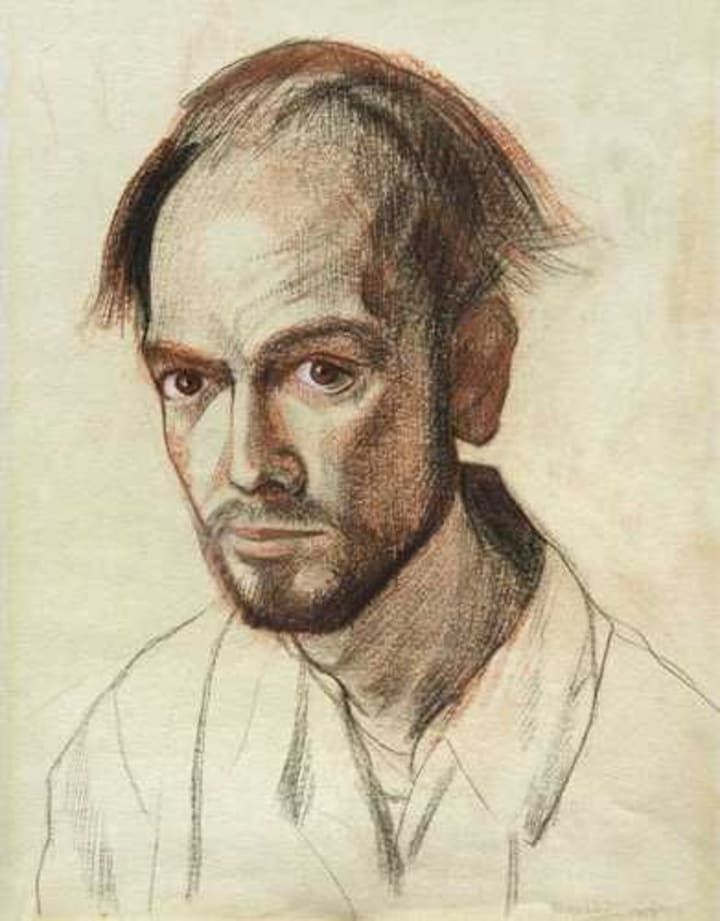
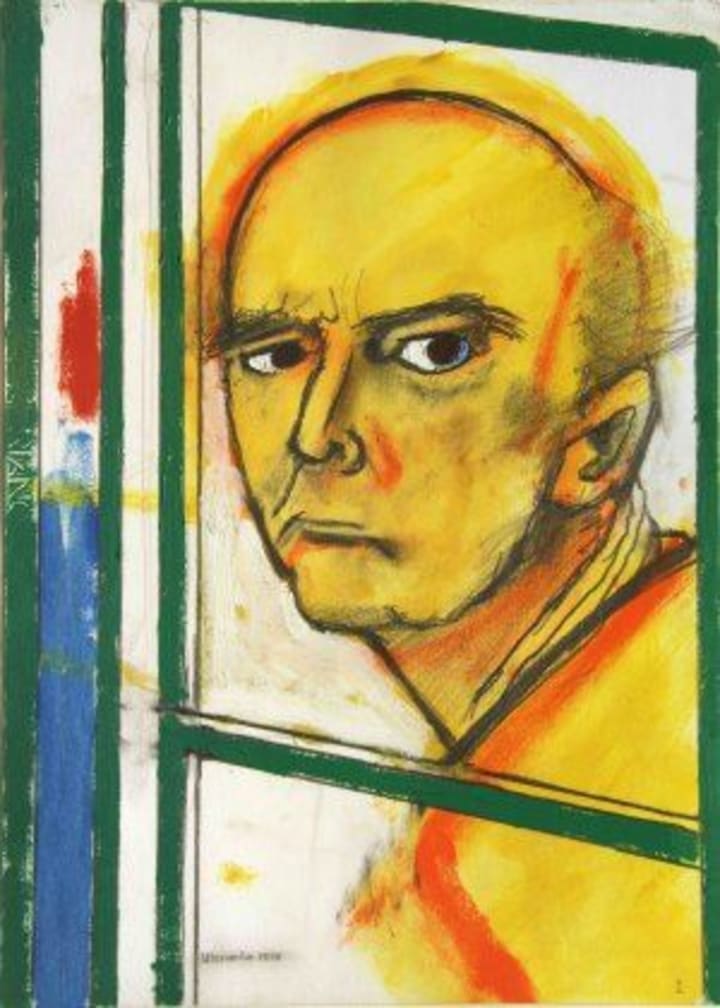
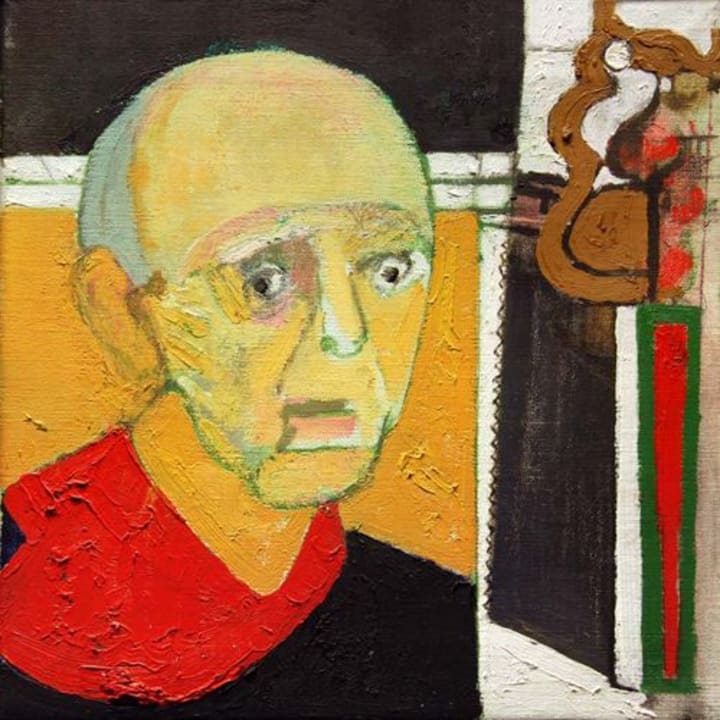
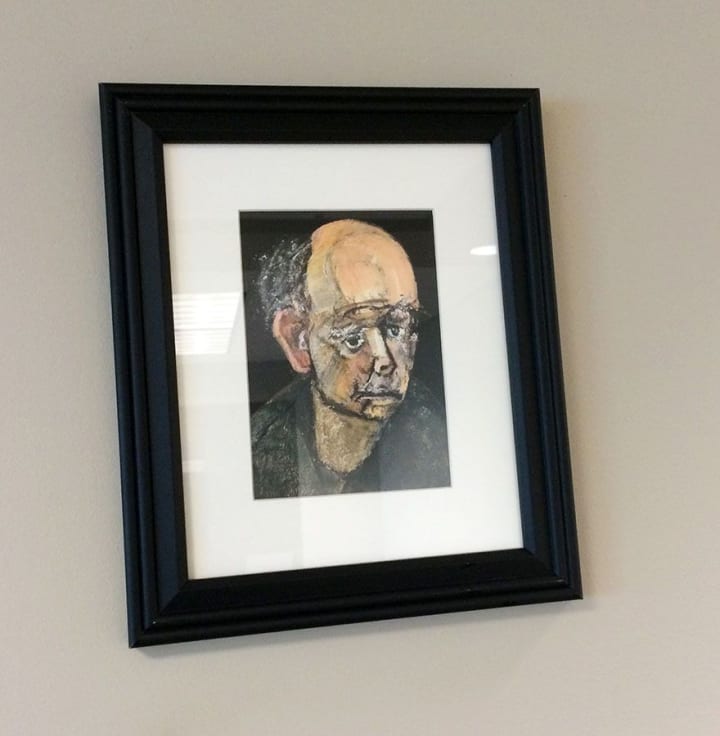
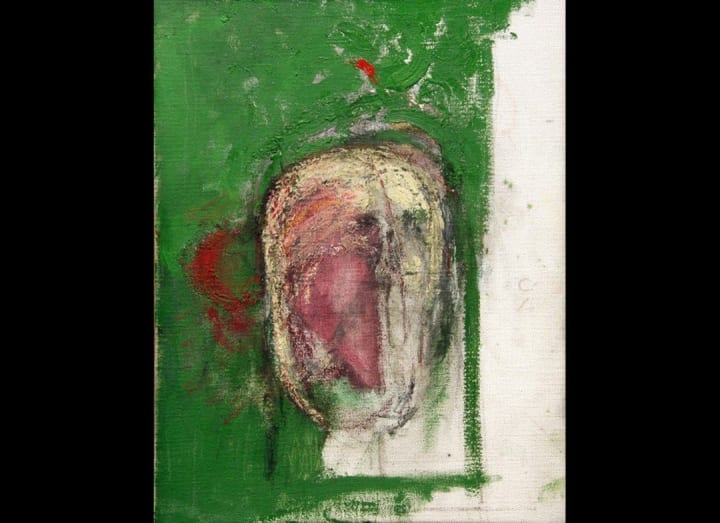
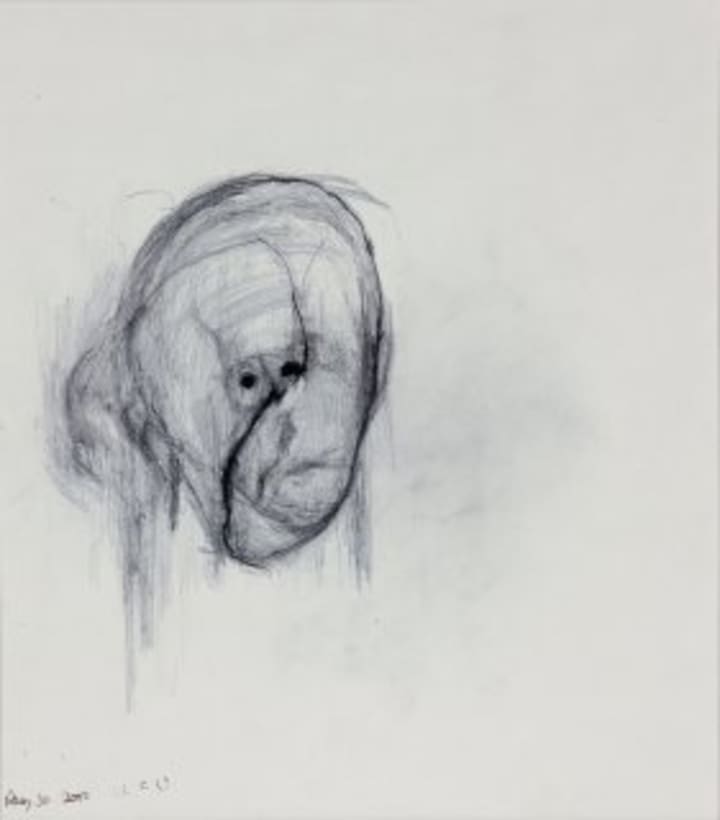
William Utermohlen died in 2007 at the age of 73.
These pictures hit me particularly hard emotionally as they brought back memories I had when the husband I fell in love with at first sight; when the husband I adored; and the husband I had lived with and loved for over 30 years, first started to disappear.
His behavior was erratic and irrational, and communication was constantly a challenge. One night, I broke down, threw my arms around his waist, buried my head into his chest, and cried, “I miss you. I miss you so much.” He quietly answered me — “I miss me too.” As William Utermohlen so heart-wrenchingly depicted in his self-portraits, he knew, as did my husband, that he was disappearing into Alzheimer’s Disease.
Yes, being an Alzheimer’s caregiver, particularly to a spouse, is frustrating, stressful, and depressing, but as a caregiver, you can get respite occasionally. There is no respite for one living with an Alzheimer’s brain. Think about that when you get overwhelmed with dealing with your Alzheimer’s diseased loved one.
Coping With Alzheimer’s Disease Series:
The Top 5 Early Symptoms of Alzheimer’s Disease — It’s not always about memory
Alzheimer Day Care — 7 Things to Know Before You Sign on the Dotted Line
6 Basic Rules for Communicating with an Alzheimer’s Patient
Resources for this article:
William Utermohlen — Wikipedia
©Copyright 2022 Joan Gershman
About the Creator
Joan Gershman
Retired - Speech/language therapist, Special Education Asst, English teacher
Websites: www.thealzheimerspouse.com; talktimewithjoan.com
Whimsical essays, short stories -funny, serious, and thought-provoking
Weightloss Series
Reader insights
Outstanding
Excellent work. Looking forward to reading more!
Top insights
Eye opening
Niche topic & fresh perspectives
On-point and relevant
Writing reflected the title & theme
Heartfelt and relatable
The story invoked strong personal emotions
Easy to read and follow
Well-structured & engaging content
Excellent storytelling
Original narrative & well developed characters
Expert insights and opinions
Arguments were carefully researched and presented
Compelling and original writing
Creative use of language & vocab
Masterful proofreading
Zero grammar & spelling mistakes
Keep reading
More stories from Joan Gershman and writers in Humans and other communities.
How to Check Loyalty in Relationship Before You Get Hurt
Loyalty does not imply perfection. It is all about consistency, honesty, and emotional safety. When loyalty is there, trust increases. When it is missing, uncertainty gradually erodes the partnership. Many people disregard early warning signs, believing that things will improve. We feel it is better to observe, ponder, and comprehend loyalty before emotional damage occurs.
By Bloom Boldly5 days ago in Humans




Comments
There are no comments for this story
Be the first to respond and start the conversation.