
Abraham Lincoln – The President Who Preserved the Union
A Legacy of Leadership, Emancipation, and Enduring Courage


Abraham Lincoln, the 16th President of the United States, remains one of the most revered figures in American history. His presidency, during one of the nation’s most turbulent times—the Civil War—was marked by extraordinary leadership, moral integrity, and a steadfast commitment to preserving the Union and ending slavery.
Early Life and Rise to Politics
Abraham Lincoln was born on February 12, 1809, in a log cabin in Hardin County (now LaRue County), Kentucky. Raised in a poor family, Lincoln had limited formal education but developed a passion for reading and self-education. His early life was marked by hard labor and personal losses, but his sharp mind and determination set him apart.
He began his political career in the Illinois State Legislature and later served a term in the U.S. House of Representatives. His debates with Senator Stephen A. Douglas during the Illinois Senate race in 1858 brought him national attention. Although he lost that election, his eloquence and strong stance against the expansion of slavery made him a rising star in the Republican Party.
Election and Challenges as President
In 1860, Lincoln was elected President of the United States amid growing tensions between the North and South. His election triggered the secession of several Southern states who feared his anti-slavery policies, leading to the outbreak of the Civil War in 1861.
Lincoln faced immense pressure from all sides. Many doubted his leadership, and the war’s early years were filled with setbacks. However, he remained focused on his two main goals: preserving the Union and abolishing slavery. He showed immense resilience and wisdom in dealing with divided public opinion, military failures, and political opposition.
The Emancipation Proclamation
Perhaps Lincoln’s most defining moment was his issuance of the Emancipation Proclamation on January 1, 1863. This executive order declared that all slaves in Confederate-held territories were to be set free. Although it did not end slavery outright, it was a major turning point in the war, giving the Union a moral cause and discouraging foreign powers from supporting the Confederacy.
The Emancipation Proclamation also paved the way for the passage of the 13th Amendment to the Constitution, which formally abolished slavery throughout the United States. Lincoln’s deep belief in the principle that all men are created equal guided these actions, even though they came at great political risk.
Leadership During the Civil War
Lincoln’s leadership style was marked by empathy, humility, and a willingness to listen. He frequently visited troops, spoke directly to ordinary citizens, and worked tirelessly to hold the Union together. He managed strong and often conflicting personalities within his Cabinet and navigated a deeply divided Congress.
One of his most famous speeches, the Gettysburg Address, delivered on November 19, 1863, redefined the purpose of the war. In just 272 words, Lincoln honored the fallen soldiers and reaffirmed the ideals of democracy, liberty, and national unity.
Assassination and Legacy
As the war neared its end, Lincoln was re-elected in 1864. With the Confederacy collapsing, he focused on healing the nation. His second inaugural address called for “malice toward none” and “charity for all,” highlighting his vision for reconciliation rather than revenge.
Tragically, Abraham Lincoln was assassinated by John Wilkes Booth, a Confederate sympathizer, on April 14, 1865—just days after General Robert E. Lee’s surrender at Appomattox Court House. Lincoln died the following day, leaving the nation in mourning.
His death was a tremendous loss, but his legacy lived on. He is remembered not only as the president who saved the Union but also as the Great Emancipator who laid the foundation for civil rights in America.
Conclusion
Abraham Lincoln’s life story is one of humble beginnings, moral conviction, and visionary leadership. He led the United States through its most perilous era with grace and determination. His decisions shaped the course of American history and helped define the nation's ideals of freedom and equality.
Today, Lincoln stands as a symbol of courage, justice, and the power of democracy. His words and actions continue to inspire leaders and citizens around the world to uphold truth and fight for the dignity of all people.
About the Creator
Keep reading
More stories from Movies Channel and writers in Humans and other communities.
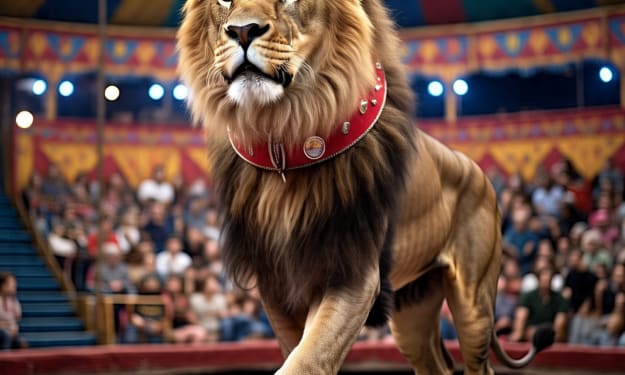
The Lion of the Circus
The crowd roared in excitement as the spotlight swept across the dusty floor of the Grand Royale Circus. Children screamed in delight, vendors shouted for peanuts and popcorn, and a drumroll signaled the arrival of the star of the night — Caesar, the majestic lion.
By Movies Channel7 months ago in Humans
Bob Saget Remembered: Laughter, Loss, and the Man Behind It
For many people, Bob Saget felt familiar in a way few public figures do. He was the voice that closed childhood evenings, the face of a comforting sitcom father, and later, the unexpected source of sharp, adult humor. When news of his death spread, it landed with quiet shock. It felt personal, even for those who never met him. Bob Saget existed in many phases of life for his audience. He grew with them. This article looks beyond the surface of fame to understand who he was, why his loss still hurts, and how his work continues to echo. To remember Bob Saget is to remember laughter mixed with tenderness, and a man more complex than his roles suggested.
By Muqadas khan5 days ago in Humans
Wild Card Weekend Recap: What Happens Now?
I think I figured out why I love Wild Card Weekend so much. It's because it's the first playoff anything of the calendar year. The NFL season starts in the fall, and once upon a time, the champion was crowned either on or slightly before New Year's. The evolution of the NFL schedule has resulted in the playoffs starting just into the New Year, and currently, the final week of the season falls on the first weekend of the New Year, with Wild Card Weekend coming a week after that. So yes, chronologically, the NFL's Wild Card Weekend serves as the first playoff anything of the calendar year.
By Clyde E. Dawkins6 days ago in Unbalanced



Comments
There are no comments for this story
Be the first to respond and start the conversation.