
A Silent Room Full of Memories
What I Found When I Finally Faced the Space I’d Been Avoiding

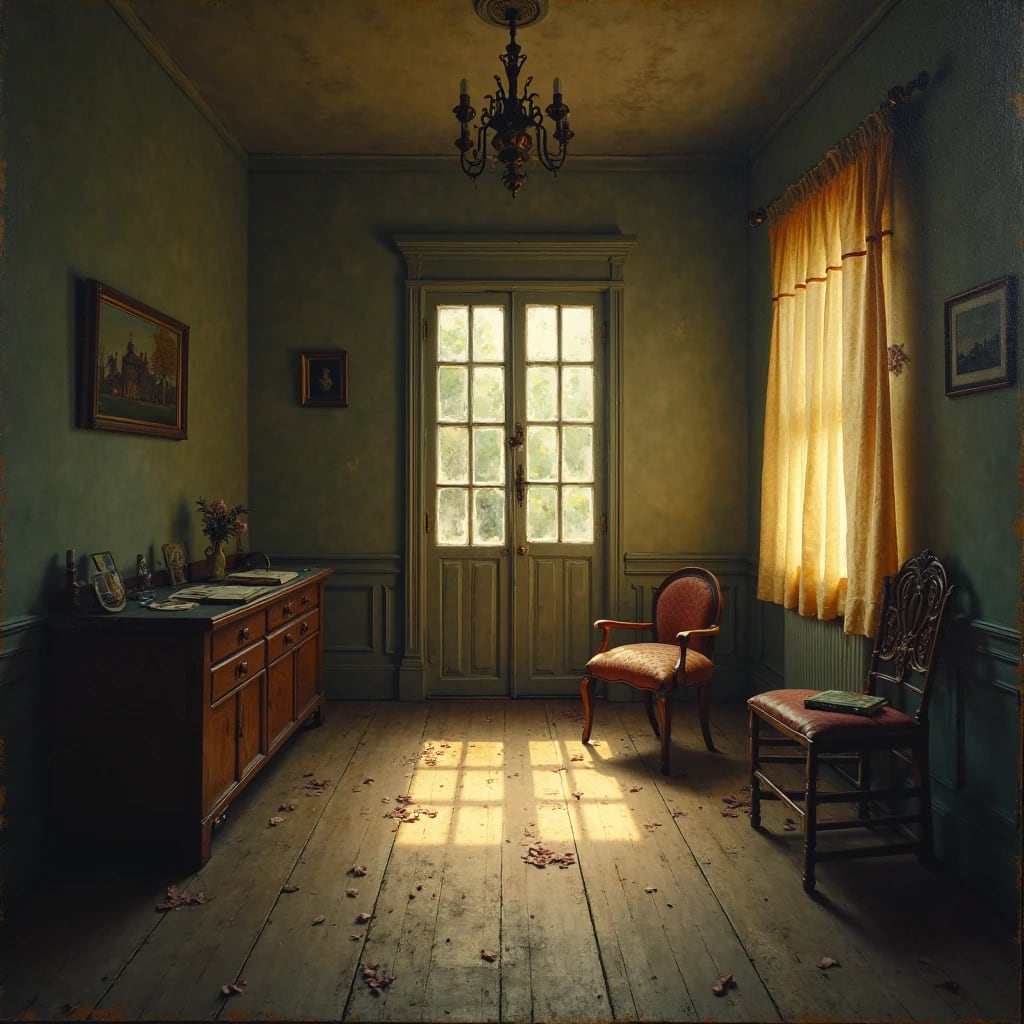
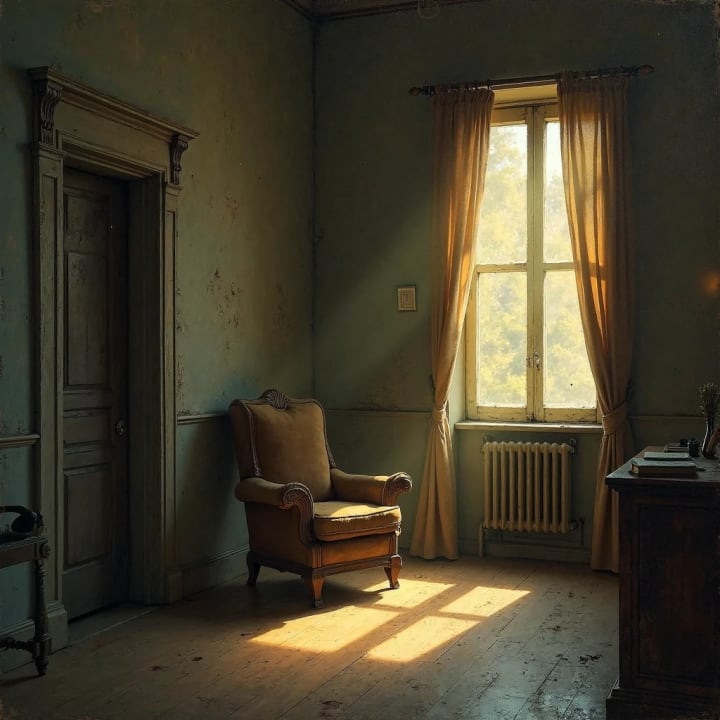
A Silent Room Full of Memories
There’s a small room at the end of my hallway. The door is always closed, not locked, just closed. It’s been that way for three years. People assume it's a guest room, or maybe a storage space, and I let them. What do you say? “Oh, that’s where my mother died” or “That’s where I keep the life I haven’t been ready to unpack.” There are no simple words for a silent room full of memories.
I avoided it religiously. I'd walk down the hallway and glance at the door without ever touching the knob. It wasn’t out of fear. It was grief. The kind of grief that crawls under your skin and whispers, “Not today.” And for a long time, I listened.
The Day I Opened the Door
It started on a rainy Saturday. One of those moody afternoons where the sky grumbles and the whole world feels like it’s exhaling. I was doing some spring cleaning — not because it was spring, but because my heart was cluttered and I needed to clean something that wasn’t emotional for once.
I passed by the room like I always did, but this time, I stopped. My hand reached out before I had time to overthink. The knob felt colder than I remembered, almost unfamiliar. I turned it slowly, half-expecting something to push back. But the door opened silently, as if it had been waiting for me too.
The smell hit me first — lavender and old books. My mother’s scent. Her favorite lotion and the pages of novels she never got to finish. Dust floated in the light that spilled in from the hallway, like soft ghosts dancing in the air.
I stepped in.
Everything Was As She Left It
The room was still. Untouched. The bed neatly made, with the faded quilt she loved folded at the foot. A half-filled crossword sat on the nightstand beside her reading glasses. A teacup, still stained at the rim, had become a home for dust rather than chamomile.
I didn’t cry.
I thought I would, but I didn’t. Instead, I sat on the edge of the bed, ran my fingers over the quilt, and breathed it all in. This was her space. It held more than just things — it held the fragments of who she was: a lover of mystery novels, a hummer of 80s love songs, a quiet observer of people and life.
In that silence, I could almost hear her say my name.
The Journal I Never Knew Existed
As I moved slowly through the room, I opened drawers, peeked into boxes, and unearthed trinkets I hadn’t seen in years. Then, tucked under a stack of old greeting cards, I found a journal. Worn, soft leather cover, her initials pressed in gold: M.L.
I hesitated. Reading someone’s journal feels like trespassing, even when they’re gone. But something in me needed to know. I opened it.
Most entries were short. Observations about the day, memories of my childhood, little pieces of her heart scattered in ink.
"Emma cried today. Her first heartbreak. I made tea and listened. I didn’t have words to fix it, but I think listening helped. She’s growing so fast."
"The doctor said the cancer’s spread. I didn’t tell Emma yet. I’m not ready to put that weight on her shoulders."
"It’s hard to breathe today. But the birds still sang. There’s always something beautiful, even in the pain."
That last line stayed with me. I read it over and over again. There’s always something beautiful, even in the pain.
The Memories I Had Buried
As I sat in that room, pages open, my mind wandered to all the moments I had packed away in boxes — emotional boxes I was too afraid to unpack.
I remembered her hands, always warm, always gentle. I remembered the time we danced in the kitchen while baking brownies, laughing at how terrible our moves were. I remembered her voice when she told me to chase my dreams, even when they scared her.
And I remembered the day she left. Peacefully, quietly, after telling me, “You’ll be okay, even when it doesn’t feel like it.”
I wasn’t okay. Not for a long time. I filled my life with distractions — work, travel, people who didn’t really know me — because it was easier than being alone with my grief.
But grief waits. It doesn’t disappear just because you pretend it's gone. It lives in unopened rooms, in unread journals, in the parts of your heart you shut down to survive.
Healing Doesn’t Look Like the Movies
No dramatic music played. No single tear rolled down my cheek in slow motion. Healing, real healing, was quiet. It came in the form of wiping dust off picture frames, folding clothes I had left untouched, reading her words and finally letting them sink in.
It came when I sat on that floor and whispered, “I miss you,” and didn’t feel broken for saying it.
It came when I allowed myself to laugh at a memory without guilt, or to cry at a song without shame.
Healing wasn’t about forgetting. It was about remembering without breaking apart.
The Last Page
I reached the last page of her journal. There was just one line:
"I hope one day Emma walks into this room and finds peace, not pain."
I closed the journal, held it to my chest, and smiled through the tears that finally came.
I had found peace.
The Lesson I Carried Out of That Room
That day, I left the door open.
Not just the literal door, but the emotional one too. I stopped running from the spaces in my life that reminded me of what I had lost. Because they also reminded me of what I had — the love, the laughter, the life.
Loss doesn’t mean we shut down. It means we carry forward, sometimes slowly, but always carrying the love with us.
Moral of the Story
Sometimes, the rooms we avoid hold the healing we need most.
Avoiding pain doesn’t make it disappear — it just delays the peace we might find when we face it. Grief is not the enemy. Silence isn’t always empty. And memories, even painful ones, are proof that we lived, we loved, and we were loved.
Don’t be afraid to open the doors you’ve kept shut.
Inside, you might find a version of yourself waiting to come back to life.
About the Creator
Fazal Hadi
Hello, I’m Fazal Hadi, a motivational storyteller who writes honest, human stories that inspire growth, hope, and inner strength.
Keep reading
More stories from Fazal Hadi and writers in Humans and other communities.
A Dart at Dusk
Seconds ago, the sullen sun set on the two of us… my exuberant furry companion and me. A fresh breeze embraces us, delivering welcome relief from the day’s oppressive heat. His typical stumbling and staggering along — apace with a sloth — has turned into trip-trapping, high-stepping, almost skipping along.
By Angie the Archivist 📚🪶2 days ago in Petlife


Comments
There are no comments for this story
Be the first to respond and start the conversation.